From Spray-and-Pray to Precision Collections

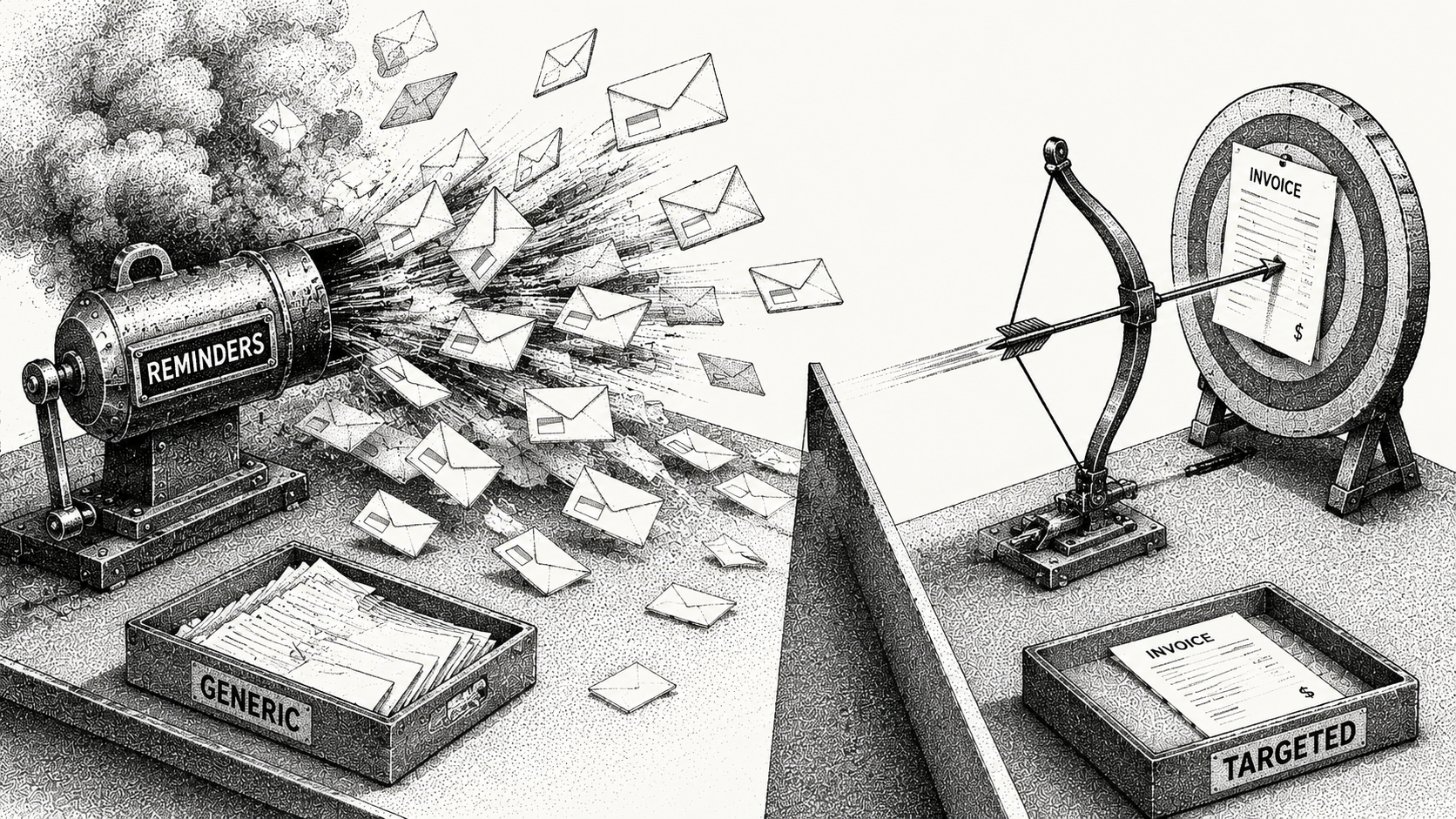
Spray-and-pray collections sends the same reminders to every overdue account and hopes something lands. Precision collections targets the right account at the right time with a message that reflects what the account has already done. The shift matters because overdue cash is rarely spread evenly: a handful of accounts hold most of the risk, so treating all of them the same wastes effort on invoices that would pay anyway and under-serves the ones that need attention. Monk's intelligent collections runs the precision approach, using the context of each account to decide how and when to follow up.
This guide covers what separates the two approaches and how to move from one to the other.
What is spray-and-pray collections?
Spray-and-pray is the fixed-dunning model: every overdue invoice gets the same sequence of reminders on the same schedule, regardless of who the customer is or what they have said. It is easy to set up and it scales, but it treats a reliable customer who is three days late the same as one who has ignored every message for a month.
The cost is twofold. Reliable payers get needlessly chased, which strains relationships, while the genuinely at-risk accounts get the same generic nudge that was never going to work on them.
What is precision collections?
Precision collections decides each follow-up from the state of the account. It reads payment history, whether the invoice was engaged with, whether a promise-to-pay exists, and whether a dispute is open, then chooses the timing, channel, and message that fit.
The result is effort concentrated where it changes the outcome. High-confidence accounts get a light touch or none, and the accounts most likely to slip get earlier, sharper attention.
Why does precision collections recover more cash?
Because most overdue cash sits in a small share of accounts, and those accounts need more than a generic reminder. Precision routes attention to them early, while they can still be saved, instead of spreading the same effort thin across the whole book.
It also protects revenue you were going to collect anyway. Choosing not to chase a reliable customer who is briefly late keeps the relationship healthy, which matters for renewal and expansion later.
What signals make collections precise?
Four signals do most of the work: the customer's payment history, whether they engaged with the invoice, whether a promise-to-pay is on record, and whether a dispute is open. Each says something a due date cannot about whether and when the cash will arrive.
How do you move from spray-and-pray to precision?
Start by tiering open invoices by risk using the signals you already have, then vary the follow-up by tier instead of running one cadence for everyone. Automating that tiering is what makes it sustainable across hundreds of invoices, so the precision holds without adding manual work.
How does Monk enable precision collections?
Monk's intelligent collections ingests the context of prior conversations and responds more effectively than standard dunning, so each follow-up reflects the account rather than a fixed script. Playbooks let a team define how each tier is handled, and anything that needs judgment escalates to a person. Monk customers reach customers with a 24% higher response rate than standard dunning, resolve 90% of collections with zero human intervention, and see a 40% average reduction in DSO.
Frequently Asked Questions
What is spray-and-pray collections?
It is the fixed-dunning model, where every overdue invoice gets the same reminder sequence regardless of the customer or their behavior. It scales but treats reliable and at-risk accounts identically.
What is precision collections?
It decides each follow-up from the state of the account, using payment history, engagement, promises-to-pay, and disputes to choose the timing and message. Effort concentrates where it changes the outcome.
Why does precision collections recover more cash?
Because most overdue cash sits in a few accounts that need more than a generic reminder. Precision routes attention to them early while they can still be saved.
What signals make collections precise?
Payment history, invoice engagement, promises-to-pay, and dispute status. Each predicts whether and when cash will arrive better than the invoice due date.
How does Monk do precision collections?
Monk's intelligent collections reads each account's context and responds more effectively than standard dunning, with playbooks per tier and escalation to a person when needed. Customers reach customers with a 24% higher response rate than standard dunning.





.avif)