When to Put a Customer on Credit Hold (and How to Decide) in 2026

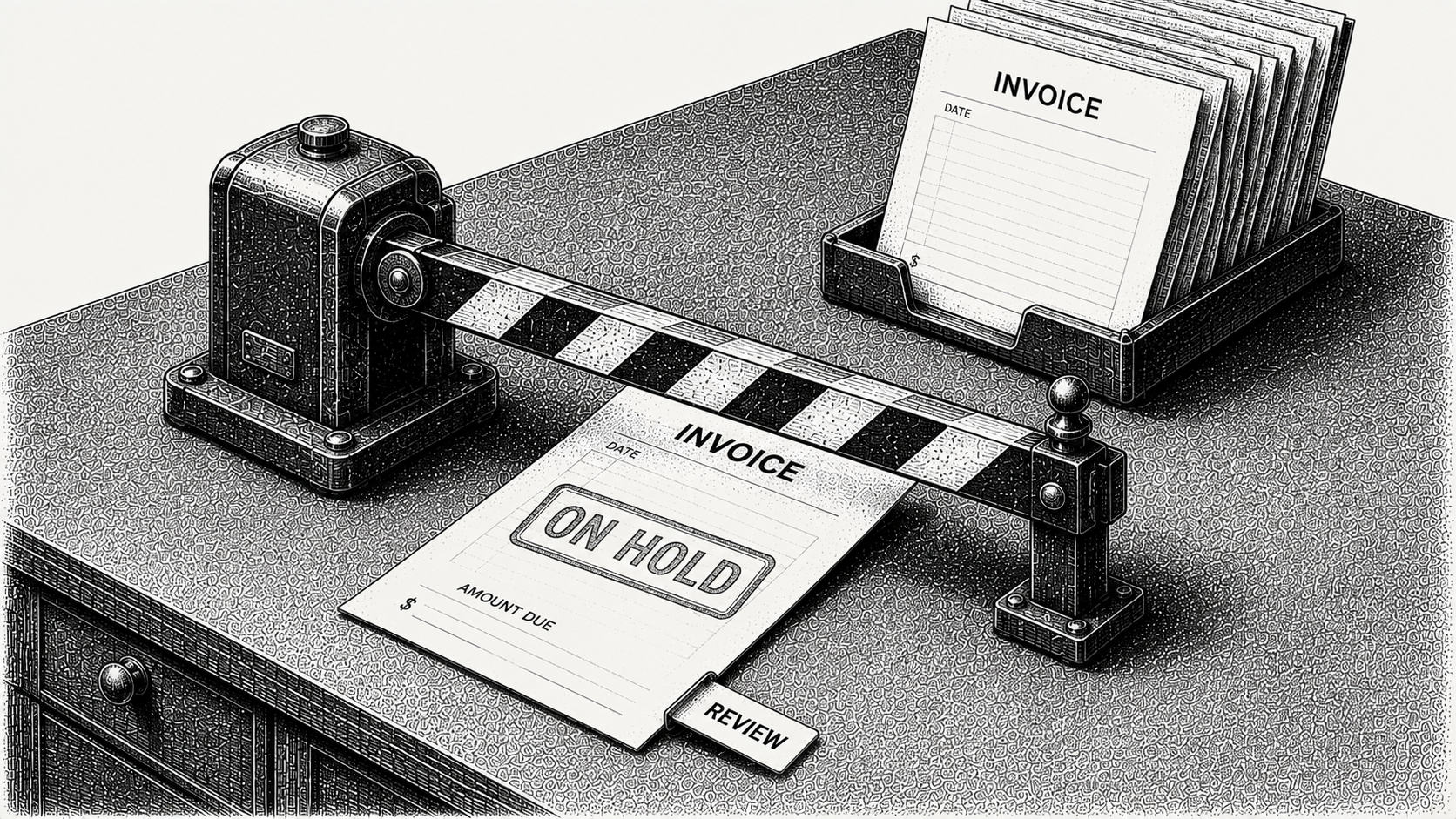
A credit hold pauses new orders or shipments to a customer until their account is back in good standing. Put an account on hold when it goes over its credit limit, ages far enough past due, or shows a sharp jump in risk, and lift it once they pay down the balance or agree to new terms. The point is to stop exposure from growing without severing a relationship you want to keep, so define the triggers in advance and communicate the hold clearly.
What is a credit hold?
A credit hold is a temporary block on doing more business on credit with a customer. New orders wait, shipments pause, or terms switch to prepayment until the underlying problem is resolved. It is a control on exposure rather than a punishment. Used well, it protects your cash on an account that is drifting while giving the customer a clear path back. Used poorly, as a surprise, it damages a relationship you would rather keep.
When should you put a customer on credit hold?
The trigger should be defined before you need it, so the decision is consistent rather than emotional. This table covers the common situations and the lighter alternative when a full hold is too blunt.
| Situation | Put on hold? | Lighter alternative |
|---|---|---|
| Account exceeds its credit limit | Yes, until the balance drops | Approve a one-time increase with sign-off |
| Invoices aged well past due (for example 60 plus) | Usually | Require prepayment on the next order only |
| Sharp jump in risk score or a public red flag | Yes, review immediately | Tighten terms and shorten the cycle |
| A single disputed invoice | No | Resolve the dispute, keep other orders moving |
| Slow payer, but within limit and terms | No | Monitor and adjust terms at renewal |
How do you decide without damaging the relationship?
Separate the account that cannot pay from the one that will not, and from the one with a legitimate dispute. A customer withholding payment over a billing error needs the dispute resolved rather than a hold. An account that has quietly exceeded its limit needs the exposure capped. Base the decision on the data, apply the same triggers to everyone, and give the customer a clear reason and a clear path back. A hold that is predictable and explained lands very differently from one that arrives without warning.
A quick example shows the difference. An account that has always paid you on time suddenly ships an order that pushes it 15% over its limit. A hard hold with no context reads as a broken relationship. A short note that says the order takes them over the agreed limit, that you can release it once the current balance clears or with a small approved increase, keeps the deal moving and the relationship intact. The exposure is capped either way, but only one version costs you goodwill.
How do you communicate a credit hold?
Directly and early. Tell the customer what triggered the hold, what it affects, and exactly what clears it, whether that is paying down the balance, settling the oldest invoices, or moving to prepayment. Keep the record on the account so anyone who picks up the relationship sees why the hold exists and what was agreed. Silence is what turns a routine control into a lost customer, so the communication matters as much as the decision.
When should you lift a credit hold?
The moment the trigger is cleared. If the hold was for an over-limit balance, lift it when the balance drops below the limit. If it was for aged invoices, lift it when the oldest are settled. If it was a risk spike, lift it once the account has stabilized or agreed to tighter terms. Define the release condition when you set the hold, so lifting it is a clear call rather than a negotiation, and the customer knows what to aim for.
How does Monk handle credit holds?
Because Monk runs your collections and scores credit on the same platform, a customer crossing a limit or aging past due surfaces automatically, with the payment behavior and risk score attached. That means holds are triggered by data rather than by whoever happens to notice, and every hold, extension, and release is logged with the reason and the evidence behind it, audit-ready from day one. Teams on Monk reduce DSO by 40% on average, and more than $2B in receivables runs on Monk today, including for Profound and ElevenLabs. See how the risk read is built in credit intelligence, and for setting the limit a hold enforces, see how to set customer credit limits.
Frequently Asked Questions
What is a credit hold?
A temporary block on new orders, shipments, or credit terms for a customer until their account returns to good standing, used to stop exposure from growing.
When should I put a customer on credit hold?
When they exceed their credit limit, age far enough past due, or show a sharp jump in risk. A single disputed invoice is usually resolved rather than held.
How is a credit hold different from a dispute?
A dispute is a contested invoice that needs resolving. A hold is a control on total exposure. An account can be on hold without a dispute, and a dispute does not always warrant a hold.
How do I put an account on hold without losing the customer?
Use consistent, predefined triggers, base the decision on data, and communicate the reason and the path back clearly and early. A predictable hold protects the relationship.
When should I lift a credit hold?
When the trigger is cleared: the balance drops below the limit, the oldest invoices are settled, or the account stabilizes or agrees to tighter terms. Define the release condition up front.
Can credit holds be automated?
The trigger can. A platform that scores credit and runs collections together can flag an over-limit or past-due account automatically, with the evidence attached, while a person approves the hold.




.avif)