How to Forecast Cash Flow From Your AR in 2026

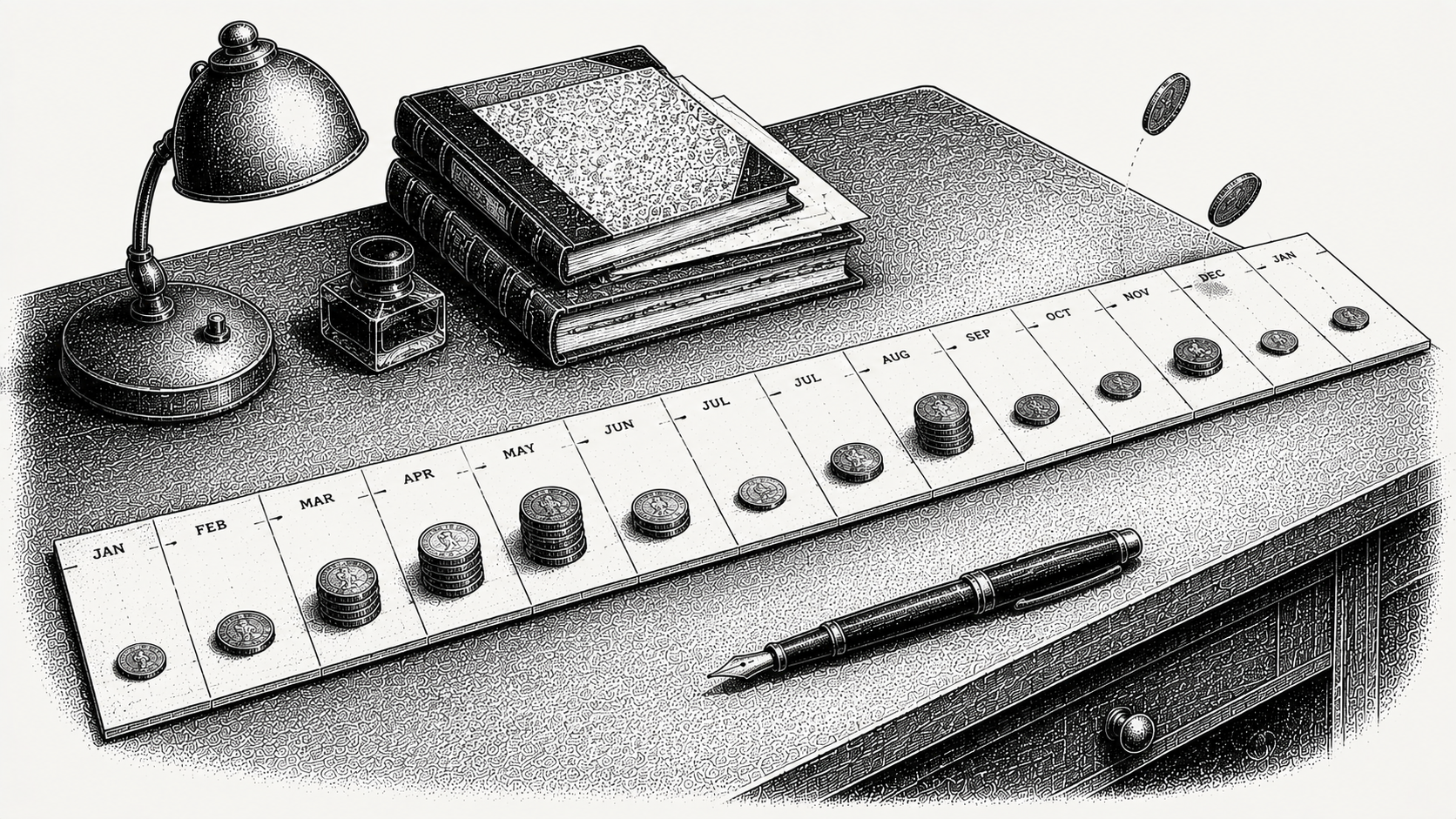
An AR cash flow forecast predicts when your open invoices will actually be paid, based on how each customer pays rather than on the due date printed on the invoice. To build one, start from each invoice's remaining balance, score how likely it is to be paid and when, weight it for risk, and update the forecast as customers reply, promise, and pay. Done this way, a forecast becomes a number you can plan around instead of a hopeful guess that misses every week.
What is an AR cash flow forecast?
It is a forward view of the cash your receivables will bring in, and in which week. A weak forecast assumes every invoice pays on its due date. A strong one uses each customer's real payment behavior to estimate what actually lands. The difference shows up fast: one is precise on paper, the other is accurate in the bank.
Why do due-date forecasts miss?
Because customers do not pay on the due date. A customer who has paid 20 days late for two years will not suddenly pay on time because a spreadsheet expects it. When you forecast from due dates, every late payer inflates the near-term number, the forecast overshoots, and finance loses trust in it after a couple of quarters. The fix is to forecast from behavior rather than from the calendar.
How do you forecast cash from your AR?
- Start from each invoice's remaining balance after partial payments and credits.
- Score how likely each invoice is to be paid, and when, using that customer's history.
- Weight for risk, so a shaky account does not inflate the near-term number.
- Account for partial payments, credit memos, write-offs, and refunds.
- Update the forecast as new signals arrive, like a promise to pay or a new dispute.
Due-date forecast vs behavior-based forecast
| Due-date forecast | Behavior-based forecast | |
|---|---|---|
| Basis | The date on the invoice | How each customer actually pays |
| Accuracy | Precise on paper, misses in reality | Calibrated to real behavior |
| Updates | Static until someone rebuilds it | Moves as customers reply and pay |
| Handles partial pays | Poorly | Built in |
| Flags risk | No | Yes, per account |
What is a 13-week cash flow forecast?
A rolling view of expected cash over the next thirteen weeks, the standard horizon finance teams use to manage liquidity. It shows expected receipts against what actually comes in, week by week, so you can see where cash is tracking against plan and act before a gap becomes a problem. Thirteen weeks is long enough to plan and short enough to stay accurate.
What makes a cash forecast accurate?
The signals behind it. A calibrated forecast weighs each invoice using payment history, current engagement, and account context, and updates the moment a customer promises to pay or raises a dispute. A customer who always pays 20 days late should never be forecast like one who pays on time. More signals, calibrated per account, beat a single blended collection rate every time.
How does Monk forecast cash?
Monk forecasts collections invoice by invoice from how each customer actually pays, rather than a flat rate. Because forecasting runs on the same platform as collections, a promise to pay or a dispute flows into the forecast the moment it happens, and a paid invoice drops out immediately. The output shows expected cash, a forecast range, and the specific accounts most likely to move the number, so your team can focus effort on the cash most likely to slip.
Who needs an AR cash flow forecast?
Any team where cash timing matters, which is most of them. A founder-led company uses it to know whether payroll is covered without refreshing the bank feed. A controller uses it to brief the CFO before the board meeting. A fractional CFO uses it to manage several companies at once. The common thread is that they all need to know what is landing, and when, before it lands.
What are the common cash forecasting mistakes?
Three show up again and again: forecasting from due dates instead of behavior, treating every customer the same instead of weighting by history, and rebuilding the forecast by hand once a month so it is stale within a week. Each one makes the forecast look confident and land wrong. A forecast that updates as customers act avoids all three.
How is a cash forecast different from an aging report?
An aging report looks backward at what is already overdue. A cash flow forecast looks forward at what will land and when. You need both, but only the forecast helps you plan payroll, hiring, and spend with confidence.
Frequently Asked Questions
What is an AR cash flow forecast?
A prediction of when your open invoices will be paid, based on each customer's real payment behavior.
How accurate should a cash forecast be?
Aim for it to land within a small margin of actual receipts each week. Behavior-based forecasts get closer than due-date forecasts because they reflect how customers really pay.
Can I just forecast from invoice due dates?
You can, but it will overshoot, because customers rarely pay on the due date. Behavior-based forecasting is far more accurate.
What is a 13-week cash flow forecast?
A rolling forecast of expected cash over the next thirteen weeks, the standard horizon for managing liquidity.
What data makes a forecast accurate?
Payment history, current engagement, promises to pay, disputes, partial payments, credits, and write-offs.
How often should I update a cash forecast?
Continuously. The best forecasts update as customers reply, promise, and pay, so the number is current whenever you open it.
How does Monk forecast cash?
Invoice by invoice, from real payment behavior, updated live as customers reply, promise, and pay.
See how Monk runs this end to end in intelligent collections, or book a demo to see it against your own ledger.
Related reading: how to read an AR aging report and how to reduce DSO.



.avif)