Net Terms Automation Software in 2026

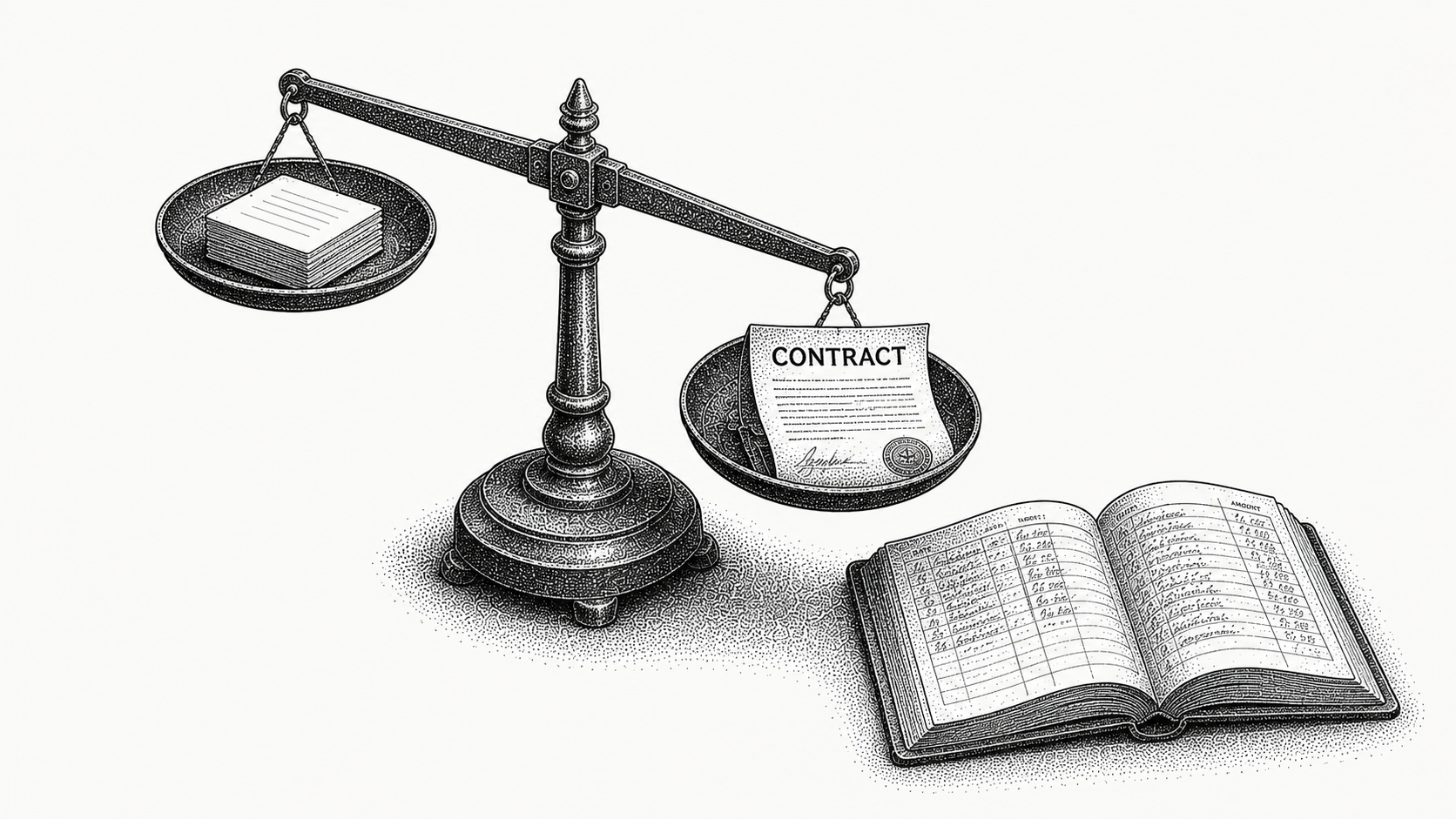
Net terms automation software decides what payment terms a customer should get, applies them consistently, and adjusts them as that customer's behaviour changes. Monk does this from the payment data it already holds, tracking credit and payment history for net terms and billing cycles as part of the same platform that runs collections and cash application. This is a different product from net terms financing, which pays you early and collects from your customer later, and confusing the two is the most common mistake buyers make in this category.
The distinction is worth being precise about, because a search for net terms automation returns mostly financing companies. Financing solves a cash timing problem. Automation solves a decision problem. You may want both, but they are not alternatives.
What is the difference between automating net terms and financing them?
Financing is a balance sheet product. A provider advances the invoice value, takes a fee, and assumes some or all of the collection risk. Your cash arrives sooner and your customer's terms are unchanged.
Automation is a decision and enforcement product. It answers whether this customer should have net 30 or net 60, whether the limit should move after eighteen months of clean payment, and whether an order should ship when the account is already over its limit. No third party capital is involved and no fee is deducted from the invoice.
The two can coexist. What causes trouble is buying financing when the actual problem was that nobody could say why a particular customer was on net 60 in the first place.
Why do most companies handle net terms badly?
Because terms are usually set once, during the sale, by someone whose job is closing the deal.
That produces a predictable pattern. Terms are inherited from whatever the customer asked for. Nobody revisits them. A customer who has paid on day 12 for three years sits on the same terms as one who pays on day 74. Sales offers net 60 to win a deal and finance discovers it at the first aging review. Meanwhile the company that would happily pay early in exchange for a small discount is never asked, because nobody knows they are a reliable payer.
The underlying issue is that the data needed to make the decision well already exists inside the business and is not being used. Every invoice, every payment date, every dispute and every broken promise is a signal about how that customer behaves. Most companies rely instead on a credit report describing how the customer behaves toward everyone else.
What does net terms automation software actually do?
Five functions make up the category, and few tools cover all of them.
Term assignment. Setting the initial terms for a new customer based on a repeatable rule rather than a negotiation.
Limit management. Establishing a credit limit and adjusting it as the relationship develops, in both directions.
Behaviour scoring. Building a view of how the customer actually pays. Days beyond terms, promise reliability, dispute frequency, seasonal patterns.
Enforcement. Applying the decision at the moment it matters, which is usually order approval or invoice issuance, rather than discovering the breach at month end.
Review cadence. Surfacing accounts whose behaviour has diverged from their terms, in either direction, so terms can be tightened or rewarded.
The last one is where the money is, and it is the function most often missing. Tightening terms on deteriorating accounts prevents write offs. Loosening them on excellent accounts is a commercial lever most companies never pull.
Why is payment behaviour better than a credit report?
A credit bureau knows how a company pays its trade lines in aggregate. You know how it pays you.
Those are different facts, and yours is more predictive for your own decision. A customer can be a reliable payer generally and consistently slow with you because your invoices lack a purchase order number, or because your terms conflict with their approval cycle, or because a dispute from last year was never closed. None of that appears in a bureau file.
This is the structural advantage an AR platform has in this category and a bureau cannot replicate. The platform running your collections and cash application already holds the payment history, the promise to pay record, the dispute history and the aging pattern for every customer. That is the raw material for a behavioural credit view.
Bureau data still matters, particularly for a customer you have never invoiced. The point is that after the first few invoices, your own data is the better signal and most companies stop looking at it.
How does Monk handle credit and net terms?
Monk tracks credit and payment history for net terms and billing cycles as part of the platform, which means the terms decision draws on the same record as collections, cash application and disputes.
That matters because the signals are connected. A customer whose promises to pay have started slipping, whose disputes are rising, or whose days beyond terms are drifting is telling you something about credit risk before any of it reaches an aging bucket. When collections and credit sit in separate systems, that pattern is visible only in hindsight.
Monk's Intelligent Collections is powered by Julia, its AI agent, which reads the context of each conversation rather than advancing a fixed dunning sequence. Julia reaches customers with a 24% higher response rate than standard dunning, and 90% of collections are resolved with zero human intervention. The same account context that makes those follow ups effective is what makes a behavioural credit view possible. Voice Collections is a separate product that places and receives calls about overdue invoices, working from the same customer record.
Across Monk's customer base, teams see a 40% average reduction in DSO, save 26 hours a month on receivables work, and see cash on hand rise 37% in month one. Monk holds $2B+ in accounts receivable under management, is SOC 2 Type II compliant with integrations for QuickBooks, NetSuite, Salesforce, HubSpot and Stripe, and goes live in less than one week.
For related reading, see our guides on AR financing versus AR automation and promise to pay as a predictive signal.
What are the alternatives?
Five kinds of vendor appear in this search, solving different problems. Working out which one you actually need saves a lot of demo time.
| Category | Examples | Decides terms | Uses your own payment data | Provides capital |
|---|---|---|---|---|
| AR platform with credit and payment history | Monk | Yes | Yes, from collections and cash application | No |
| Dedicated credit management software | Bectran, Nuvo, Credit Pulse, NetNow | Yes | Partial, bureau led | No |
| Enterprise order to cash suite | HighRadius, Esker, Sidetrade, Serrala, Emagia | Yes | Yes, within a large suite | No |
| Net terms financing | Resolve, Credit Key, TreviPay | No | No | Yes |
| Credit bureau | Creditsafe, Dun and Bradstreet, Experian | No | No, third party trade file | No |
AR platforms with credit and payment history tracking. Monk sits here. Terms decisions are made from your own payment data, in the same system that collects the invoices. Best fit when the problem is that nobody owns the terms decision.
Dedicated credit management software. Bectran, Nuvo, Credit Pulse and NetNow focus specifically on credit applications, limits and approval workflow, often with bureau integrations. Strong choices if credit is a distinct function with its own team and you need a formal application process.
Enterprise order to cash suites. HighRadius, Esker, Sidetrade, Serrala and Emagia include credit modules within larger invoice to cash platforms. Appropriate for enterprises with dedicated credit departments and appetite for configuration.
Net terms financing and embedded trade credit. Resolve, Credit Key and TreviPay extend terms to your customers and pay you sooner. Genuinely useful, and a different product. Buy it when the problem is cash timing rather than decision quality.
Credit bureaus. Creditsafe, Dun and Bradstreet and Experian supply the third party view. Most of the above integrate with them. Necessary for new customers, insufficient for existing ones.
How do you know it is time to automate net terms?
Start with the simplest test. Nobody can explain why a specific customer is on their current terms. If the answer is that it came over from a spreadsheet, the decision is not being made.
Then look at whether terms are ever revisited. If no customer has had terms changed in the last year, you are neither managing risk nor rewarding good payers.
Watch for sales setting terms unilaterally. That is not a tooling problem on its own, but automation gives finance a defensible rule instead of a case by case argument.
Finally, consider whether your write offs surprise you. Accounts that fail rarely do so without warning, and the warnings usually sit in payment behaviour nobody was watching.
Frequently Asked Questions
What is net terms automation software?
It is software that decides and enforces customer payment terms using rules and payment behaviour rather than one off negotiation. It typically covers term assignment, credit limits, behavioural scoring, enforcement at order or invoice stage, and periodic review.
Is net terms automation the same as net terms financing?
No. Financing advances the invoice value and collects from your customer later, for a fee. Automation decides and enforces what terms a customer should have. They solve different problems and can be used together.
Can I set net terms without a credit bureau?
For an existing customer, yes, and often better. Your own payment history, promise to pay reliability and dispute record are more predictive of how that customer pays you than an aggregate trade file. Bureau data is most useful for customers you have never invoiced.
What data is needed to score payment behaviour?
Invoice and payment dates to calculate days beyond terms, promise to pay records and whether they were kept, dispute frequency and resolution time, and payment method and pattern. Platforms that already run collections and cash application hold all of this.
How often should net terms be reviewed?
Quarterly is a reasonable default for most B2B sellers, with exception based alerts in between. The point of automation is that deterioration surfaces when it happens rather than at the next scheduled review.
Does automating net terms upset customers?
Applied well it does the opposite. Consistent, explainable terms are easier for a customer to plan around than terms that change with whoever negotiated them, and reliable payers can be rewarded with better terms rather than being treated identically to slow ones.
Where does net terms automation sit relative to collections?
Upstream, and the two work best connected. Terms determine when an invoice becomes overdue, and collections activity generates the behavioural data that should feed the next terms decision. Splitting them across two systems means neither has the full picture.



.avif)