Overdue Invoices Are Not Always a Payment Problem

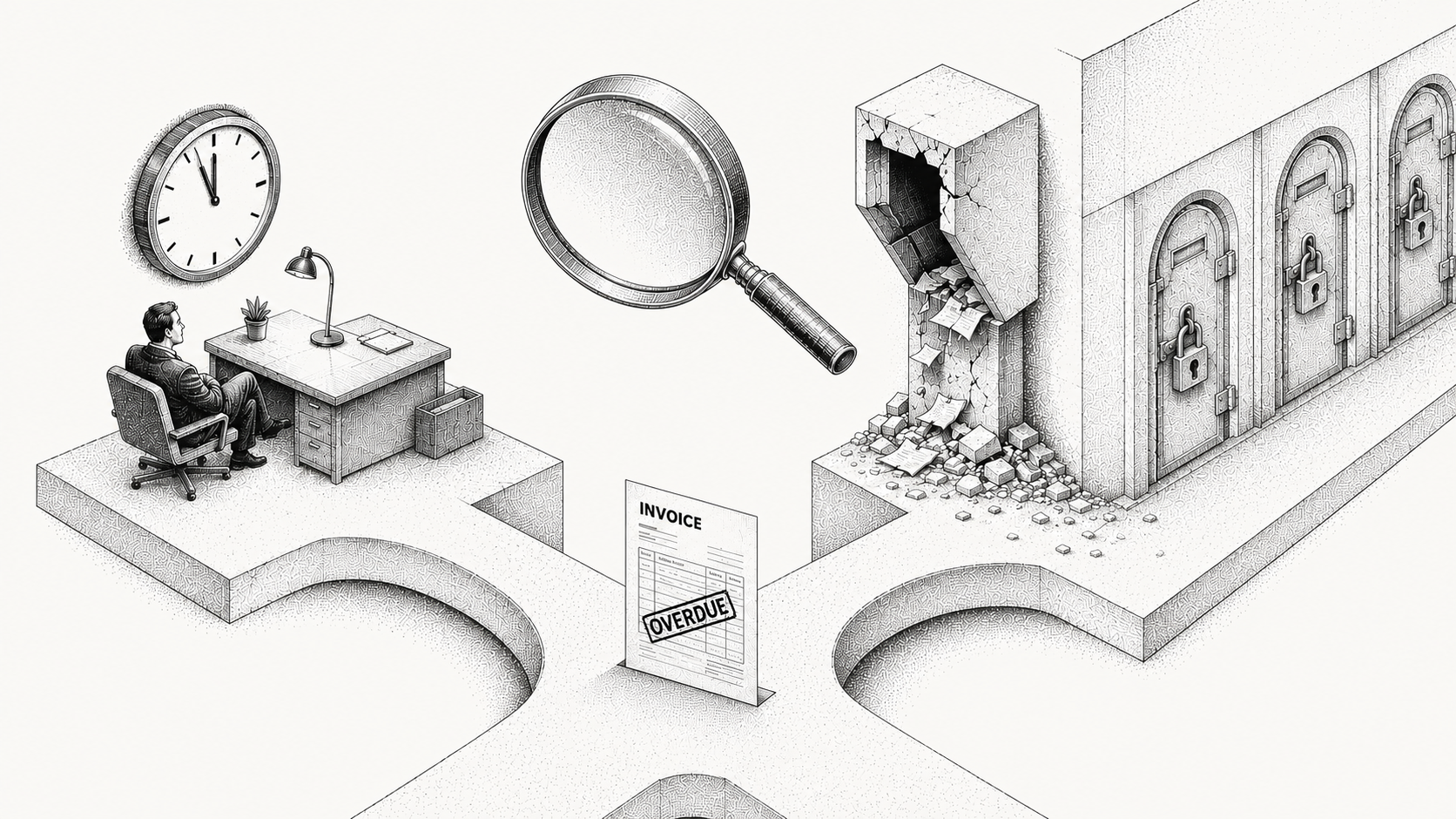
Why Are So Many Invoices Past Due Even After Reminders?
When an invoice is 60 days late, most teams treat it as a collections problem and send another reminder. For much of what sits on the aging report, that is the wrong move: it wastes time, annoys the customer, and still does not get you paid. Some invoices are late because the customer is slow to pay, but many are late because the invoice never reached someone who could pay it. Those are different problems with different fixes, and most tools treat them identically.
The faster path to cash is to diagnose the cause before chasing, which is part of why Monk resolves 90% of collections with zero human intervention. This guide breaks down the two types of late invoices, why legacy AR tools miss the root cause, and how to triage your aging report so your team only chases the invoices that are genuinely late by choice. For the broader picture of why receivables stay high despite automation, see Monk's guide to accounts receivable automation.
What Causes an Invoice to Go Past Due?
Late invoices fall into two broad types, and naming them is the first step toward fixing the right one. Behavioral lateness means the customer received and understood the invoice and simply has not paid yet, which is the problem collections software was built for. Structural lateness means something broke before the customer could pay at all.
Structural failures are quiet and common. A billing contact left and the invoice now goes to an inbox no one reads. An AP portal needed a PO number or cost center you did not include and rejected the submission with no error returned to you. The format was wrong, or the invoice simply landed somewhere it was never seen. In each case, another reminder accomplishes nothing because the problem is not the customer's willingness to pay.
| Type | Root cause | Right action |
|---|---|---|
| Behavioral | Customer is slow to pay | Context-aware follow-up |
| Structural: contact | Billing contact left | Find the new contact |
| Structural: delivery | Portal rejection or bad format | Fix and resubmit |
| Structural: silent fail | Invoice never received | Confirm delivery, reroute |
Should You Send Another Reminder or Fix the Delivery?
The right question is not "how should we follow up?" but "why is this invoice late?" If the contact left, find the new one rather than emailing an empty inbox. If a portal kicked it back, resubmit rather than escalating. If the customer is genuinely slow, follow up in a way that fits their history.
The cost of getting this wrong is more than wasted effort. Send an escalation to a customer who never received the invoice and you signal that you do not understand your own process, turning a simple fix into a relationship problem. Triage protects the customer relationship as much as it protects your DSO. This is the same dynamic explored in why timely invoicing does not guarantee payment, where sending on time is no guarantee the invoice ever reaches a payer.
Why Do Most AR Tools Miss the Root Cause?
The first wave of AR software was built around one loop: make the invoice, send it, wait, remind, escalate. That sequence assumes the invoice was delivered and the customer is choosing to ignore it. For enterprise sellers, that assumption often fails.
Large AP teams run on platforms such as Coupa, Ariba, and custom portals, each with its own field and format rules. One missing cost center or GL code can silently kill an invoice, with no error returned. Your system says "sent" while theirs says nothing. Legacy tools then begin dunning a customer who received nothing, and they keep emailing contacts who have moved on, so the aging report grows while the actual problem stays invisible.
The deeper issue is that schedule-based tools have no concept of cause. They know an invoice is overdue and they know which reminder comes next, but they cannot ask why. A system that only counts days will always escalate, because escalation is the only lever it has. Diagnosing the cause requires reading the context around the invoice, not just its age, and that is the capability legacy tools were never designed to have.
How Does Monk Handle Overdue Invoices Differently?
Monk is built around a different question: what has to be true for an invoice to get paid? Before any follow-up, it checks whether the contact is current, whether the invoice reached the right system, and whether it met the destination's rules. Monk submits invoices into AP portals, handles the field mappings and validation, and catches failed submissions right away so they can be fixed instead of left in a dead queue.
When a contact stops responding, Monk flags the issue rather than sending reminder number five. For genuine slow payers, Monk's intelligent collections and its AR agent, Julia, ingest the context of each conversation and write follow-ups based on payment patterns and relationship history, which Monk reports is 24% more effective than standard dunning. This is not the AI teaching itself over time; it reads the documented context of each account and responds appropriately, which keeps the behavior predictable and auditable. The agent works email and voice together, placing outbound calls and answering inbound ones, and most customers go live in less than one week.
How Do You Reduce Overdue Invoices Without Just Sending More Reminders?
If your aging report is long, the instinct is to tighten the cycle with more reminders. But if a large share of overdue invoices are stuck for structural reasons, and in most B2B companies they are, that solves the wrong problem and frustrates customers who did nothing wrong.
Triage before you chase. Find the delivery failures, check that contacts are current, confirm the invoice met each portal's requirements, and only then send your team after the invoices that are truly late by choice. This is the discipline behind Monk's results: a 40% average reduction in DSO and 90% of collections resolved with zero human intervention. Siro applied exactly this approach and cut its overdue AR by 45%, as detailed in the Siro case study.
What Does Triage Look Like Day to Day?
In practice, triage turns a single undifferentiated aging report into a short set of work queues. Delivery failures route to a fix-and-resubmit queue. Stale contacts route to a find-the-payer queue. Disputes route to resolution with the relevant context attached. Only the genuinely slow payers route to follow-up.
The payoff is that your most expensive resource, a skilled collector's attention, goes to the invoices where human judgment changes the outcome. Everything else is handled or surfaced automatically. Resolving the structural cases first is usually where the largest DSO improvement hides, since those invoices were never going to respond to a reminder in the first place. For the wider field of tools that support this, see the best AR automation software for 2026.
Who Should Own Invoice Triage on a Finance Team?
On most finance teams, a collections analyst or AR specialist already owns the aging report, so triage is a change in workflow rather than a new hire. The shift is in what they look at first: instead of scanning by days overdue, they scan by cause, delivery failure, stale contact, dispute, or genuine slow pay.
Monk removes the manual scanning step entirely. Its AR agent, Julia, checks contact status and delivery success before any invoice reaches a human queue, so the analyst only sees the cases that need judgment. Customers report reclaiming roughly 26 hours a month once this triage runs automatically, time that shifts toward relationship management and forecasting instead of chasing invoices that were never going to respond to a reminder.
Frequently Asked Questions
Why is my invoice overdue even though I sent it on time?
Often because of a structural failure: the contact left, the invoice hit an unmonitored inbox, or a portal rejected it for a missing field. Sending on time does not fix a delivery problem the customer never sees.
What is the difference between behavioral and structural late invoices?
Behavioral means the customer got the invoice and has not paid yet. Structural means something broke before they could pay. Each needs a different action, and a reminder only helps the behavioral case.
How does Monk find delivery failures?
Monk submits into AP portals, validates field and format rules, and catches rejected submissions immediately so they can be fixed and resubmitted rather than sitting unseen in a queue.
Does sending more reminders reduce overdue invoices?
Not when the cause is structural. Triaging the root cause first, then following up only on genuine slow payers, works better and protects the customer relationship.
How effective is Monk's follow-up on real slow payers?
Its context-aware outreach ingests the context of each conversation and is 24% more effective than standard dunning, and Monk resolves 90% of collections with zero human intervention.
How quickly can Monk go live?
Most customers are live in less than one week, and Monk charges a flat platform fee rather than taking a percentage of the revenue it collects.
Ready to triage your aging report and turn revenue into cash? Book a demo.
Worth reading next: Why Timely Invoicing Does Not Guarantee Getting Paid, How to Reduce Overdue Invoices: A Practical Guide, Revenue Automation Attacks DSO from Eight Angles, Not Just One, Persuasion at Scale: How Behavioral Science and AI Reshape Collections for Accounts Receivable and Stripe Failed Payment Recovery: Recover More Revenue.



.avif)