The Hidden Cash Problem

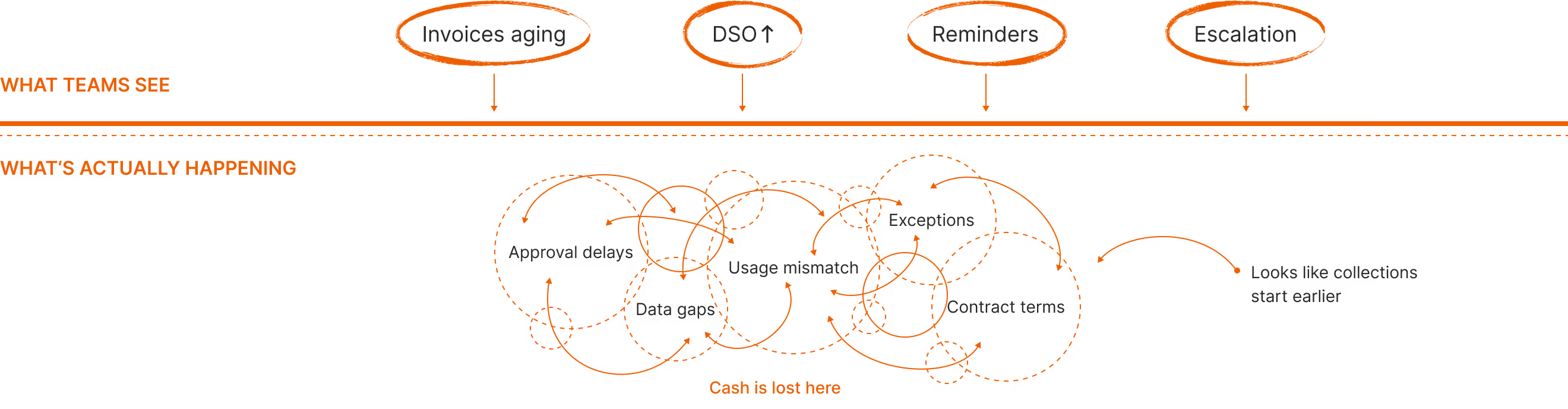
Most B2B finance teams have a cash problem that looks like a collections problem. Invoices age. DSO creeps up. The instinct is to send more reminders and escalate faster.

This series argues the problem starts earlier — and that most of what gets sold as AR automation doesn't actually touch the places where cash gets lost.

Ten posts. Five failure points. One underlying pattern.
Who this is for

This series is most relevant to B2B companies billing other businesses on invoices — SaaS, data products, API platforms, professional services, or any business where payment isn't automatic. If your customers pay by credit card on a self-serve plan, most of what's in here won't apply.

If you're sending invoices, have more than a few dozen customers, and have a finance team spending meaningful time on AR manually — chasing payments, reconciling cash, handling exceptions — this is written for you. Whether you're a CFO evaluating whether to build or buy, a RevOps leader trying to understand why DSO stays high, or a finance or AR ops team looking for the infrastructure explanation, the series covers the full picture.

Five things most AR teams get wrong

They assume invoice creation has to be manual.
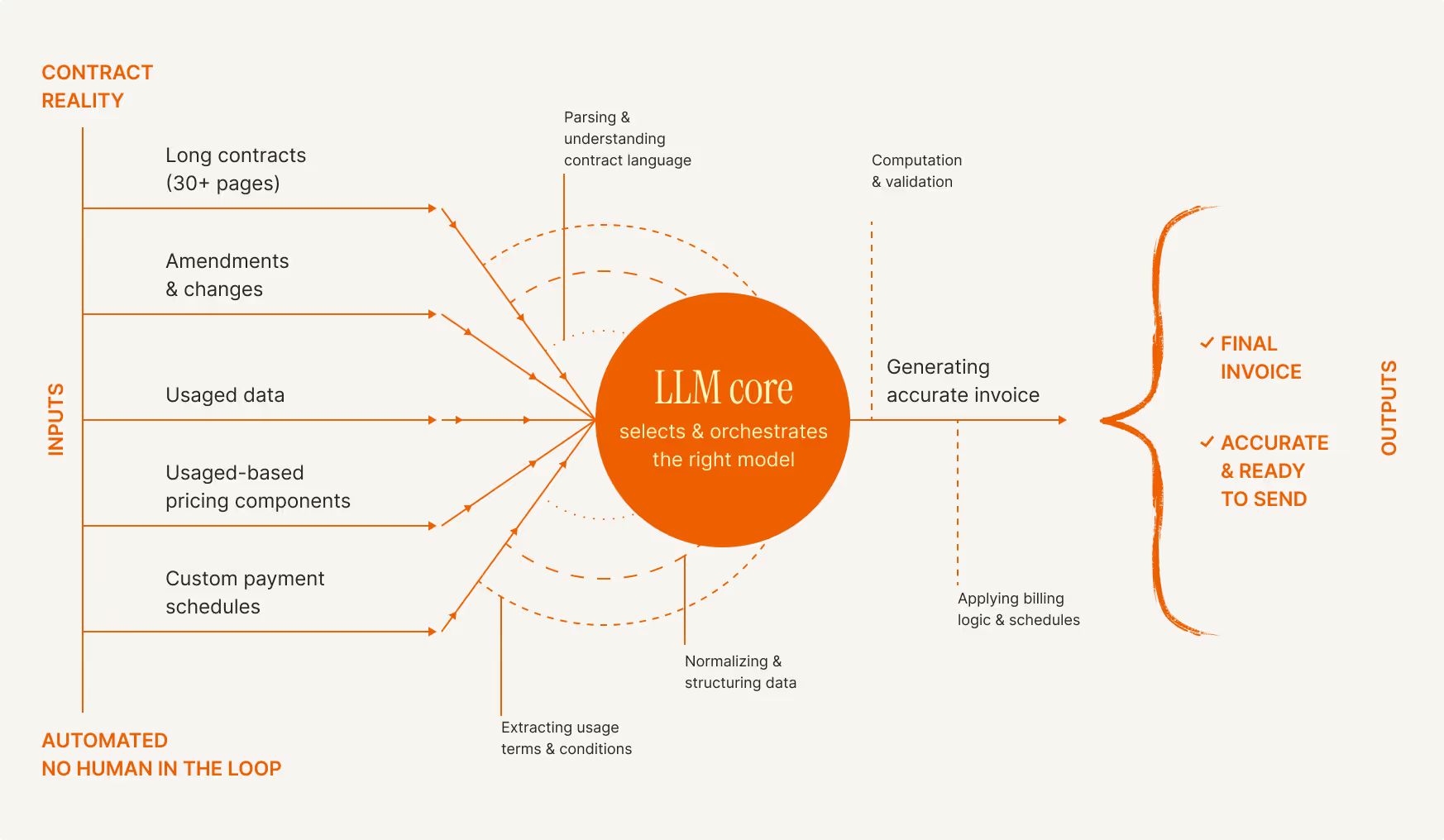
Most finance teams treat contract-to-invoice as a copy-paste job — someone pulls the terms, checks the usage data, and builds the invoice by hand under deadline pressure at the end of the month. It doesn't have to work that way. An LLM that actually understands contract language can parse terms, pull the right usage figures, and generate an accurate invoice without a human in the loop. The hard part isn't the automation — it's finding a model that handles thirty-page contracts with amendments, usage components, and custom payment schedules as reliably as it handles the simple cases.

They treat every late invoice the same.
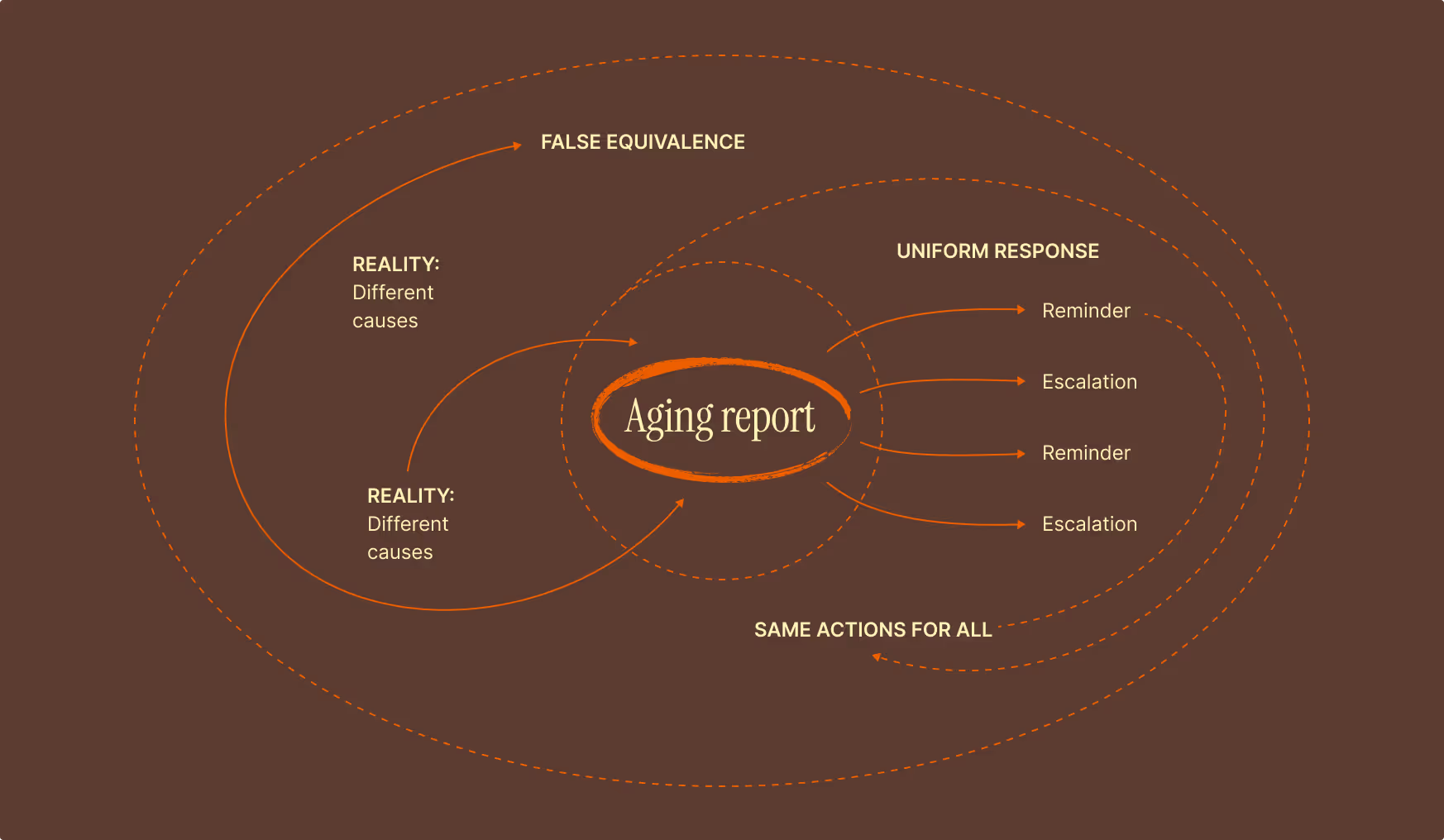
The aging report makes all overdue invoices look identical. A thirty-day invoice sitting in a dead inbox looks exactly like one where the customer is slow to pay. Most AR teams respond the same way to both — another reminder, another escalation — which is why the same invoices keep aging. The first question before any collections activity isn't how to follow up. It's why the invoice is late.

They handle the same exceptions manually every quarter.
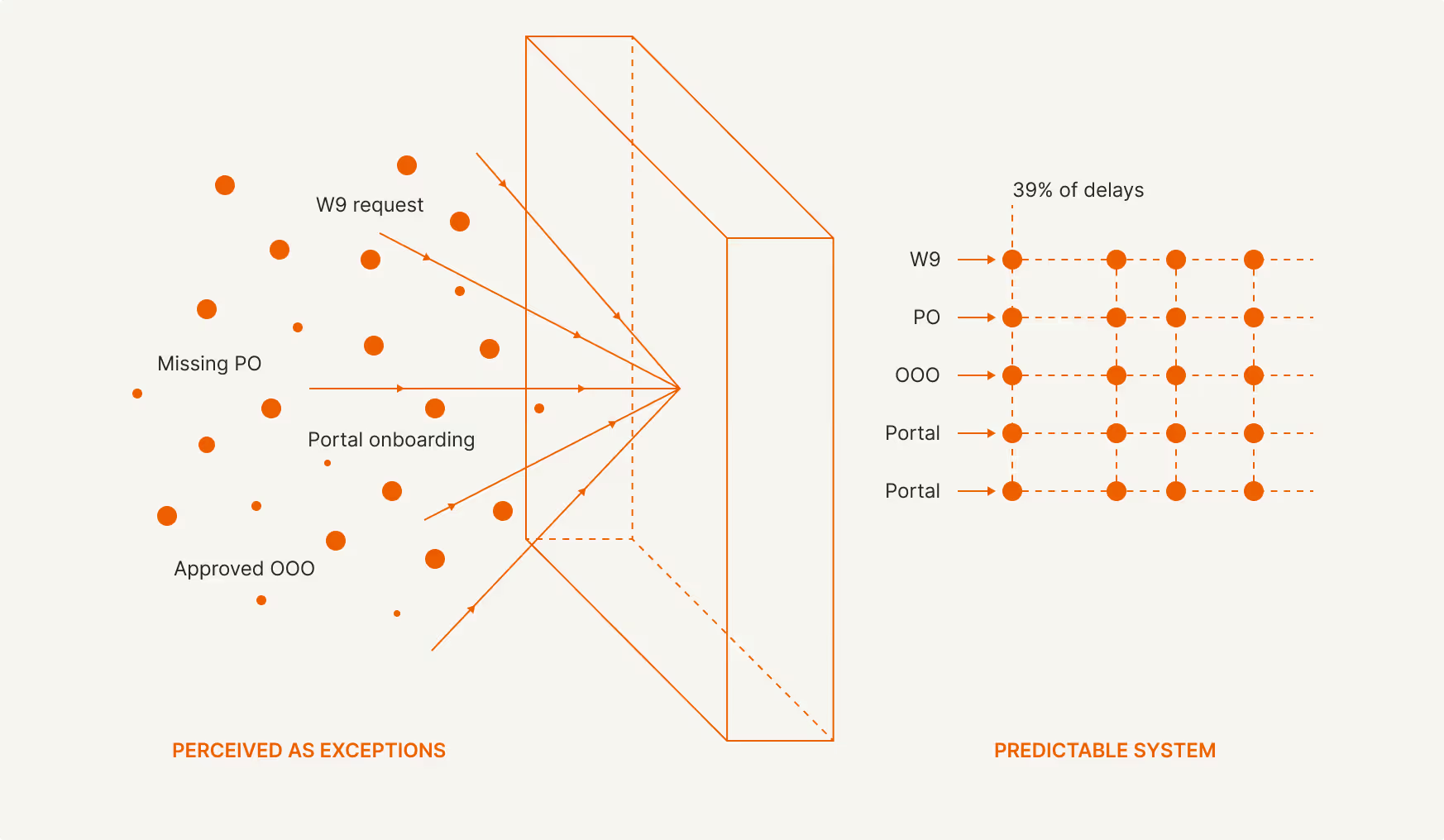
W9 requests. Missing PO numbers. Out-of-office approvers. F500 portal onboarding that takes three to four weeks before a single invoice can be submitted. Every AR team has a version of these and every AR team treats them as one-off surprises. They account for 39% of cash flow slowdowns. They are not surprises — they are a predictable category of problem that should be handled systematically, not resolved ad hoc in someone's inbox every billing cycle.

They mistake dunning for intelligent collections.
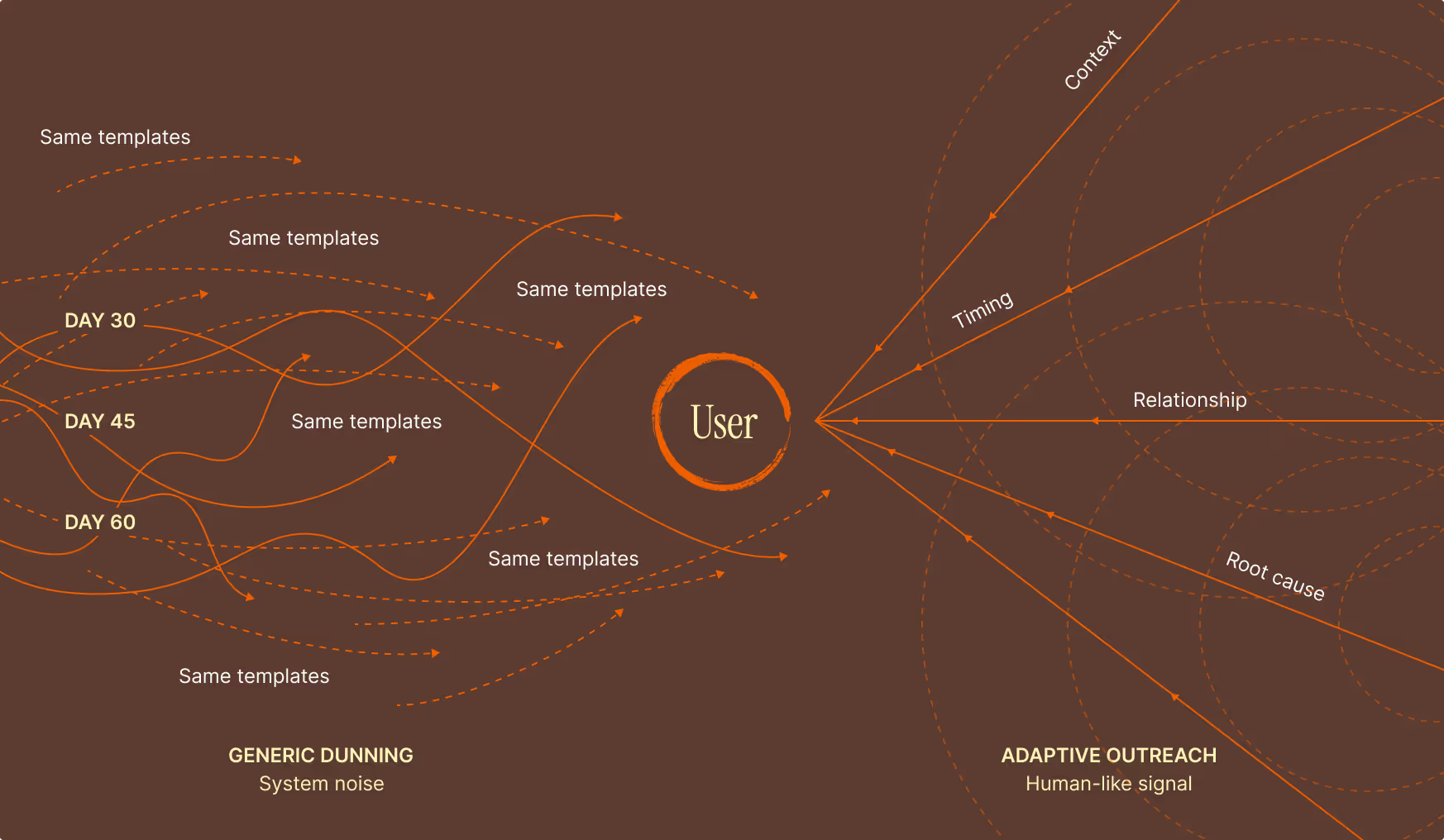
A cron job that sends the same template on day 30, 45, and 60 is not automation — it's a mail merge with a timer. Customers learn to ignore it because it reads like system noise, not a real person asking about a real invoice. Intelligent collections means outreach calibrated to the customer's history, the relationship, and the root cause of why the invoice is late. It means knowing when to pause, when to escalate, and when the problem isn't behavioral at all. Generic dunning generates 24% fewer responses than outreach that sounds like it came from a human being.

They close the books before the cash is actually applied.
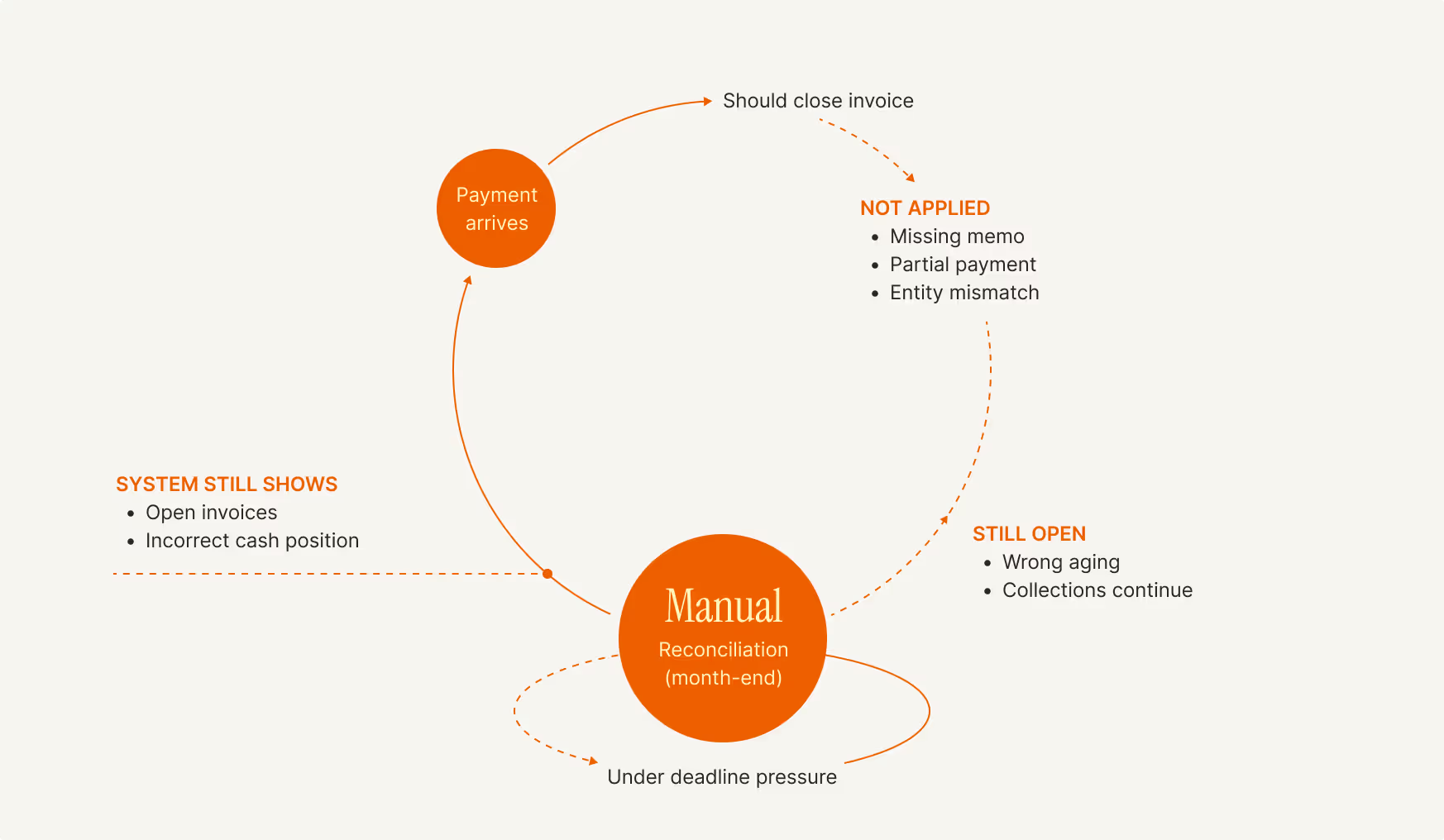
Payment arrives. In a manual workflow, it may not close the invoice for days — or longer if the wire memo is blank, the payment is partial, or the entity name doesn't match. The aging report stays wrong. Collections may have continued on invoices that were already paid. The finance team's view of their cash position is off until someone reconciles it by hand at month-end. The loop doesn't close until someone closes it — and in most workflows, that someone is doing it under deadline pressure once a month.
Post 1
Sets up the modernization gap.
Posts 2 and 3
Cover where errors get baked in before the invoice ever leaves your system — the contract-to-invoice gap, and why usage-based billing breaks traditional invoicing in ways that don't surface until the customer flags them.
Post 4
Reframes how to think about what's already overdue: most late invoices aren't a payment problem, and treating them like one is why the same invoices keep aging.
Post 5
Is about the exceptions that fall out of every AR workflow and land in someone's inbox every quarter without ever getting systematically fixed.
Post 6
Makes the case that a meaningful share of what shows up as overdue was never actually received by anyone capable of paying it.
Posts 7 and 8
Cover the back half of the lifecycle. What intelligent collections actually looks like versus a scheduled email — and why cash application is where DSO quietly ages after payment has already arrived.
Post 9
Is the full lifecycle in a single reference — good starting points if you want the lay of the land before going deeper.
Posts 10
If you're being asked to evaluate whether to build or buy, read Post 10 before you scope the project.

By the numbers

40%+
reduction in DSO with full lifecycle automation
39%
of cash flow slowdowns caused
by predictable, recurring exceptions
24%
lower response rate from generic dunning versus human-sounding outreach
26+
hours per month recovered by finance teams running intelligent collections

Where this came from

This series is drawn from working across B2B companies running the full contract-to-cash lifecycle — from early-stage SaaS teams billing their first hundred customers to finance teams managing complex enterprise contracts with usage components, amendments, and multi-entity structures.

The same breaks show up in the same places regardless of company size: errors baked in at invoice creation, structural delivery failures that look like slow payers, exceptions that get handled manually every single quarter, and cash sitting unmatched at month-end while the aging report says  otherwise.

These posts are the infrastructure explanation
for why that keeps happening.