AR Automation with AI vs. Manual Processes: Complete ROI Breakdown for 2026

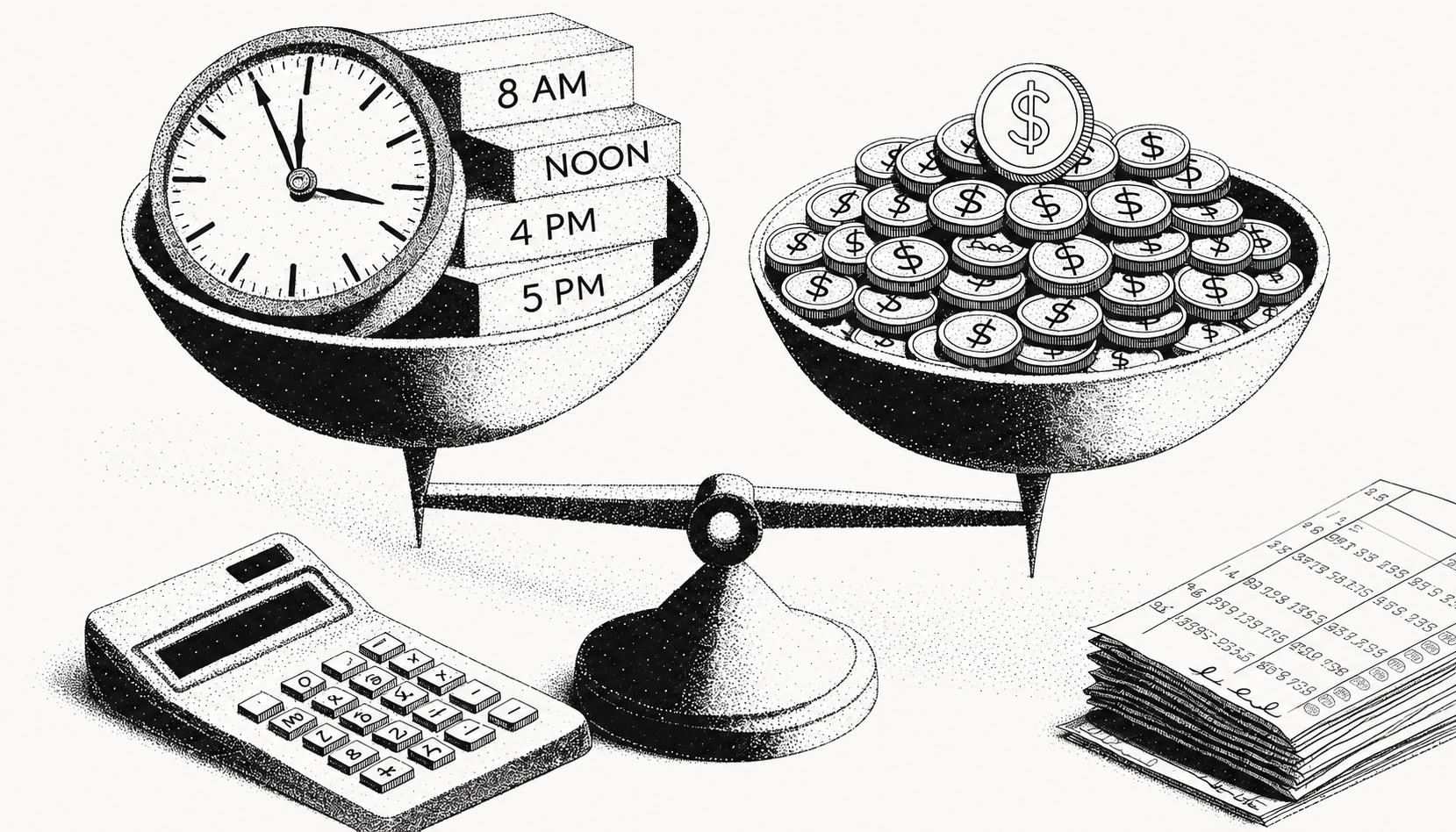
What Is the ROI of AR Automation Compared to Manual Processes?
AI-native accounts receivable automation pays for itself by reclaiming the working capital and labor that manual AR quietly burns. With a platform like Monk, finance teams save an average of 26 hours per month, cut AR outstanding by more than 40%, and see a 2.4x increase in cash on hand in the first quarter. Manual AR, by contrast, locks cash in receivables for 45 to 60 days and spends most of its hours on follow-ups, portal logins, and dunning that a system can run on its own.
This post breaks down the true cost of manual AR, the measurable return of switching to AI-native automation, and a side-by-side framework you can apply to your own numbers before you buy. For the bigger picture of why DSO stays high despite automation, see Monk's Definitive AR Guide.
Why Does Manual Accounts Receivable Cost More Than It Looks?
The cost of manual AR is rarely a line item, which is exactly why it goes unmanaged. The expense shows up in two places: the labor your team spends chasing payments, and the cash that sits uncollected while they do it.
Consider a typical company with $5M in annual revenue and 200 customers. The AR function spends roughly 10 hours per week on manual follow-ups, AP portal logins, and dunning sequences. That is about 40 hours per month. At a fully loaded cost of $40 per hour, the company is spending around $1,600 every month on low-value, repetitive AR tasks.
The larger cost is the cash itself. At an average DSO of 45 to 60 days, that same company carries $400K to $500K in receivables outstanding at any given time. Every day an invoice sits unpaid is a day that capital cannot fund payroll, growth, or runway. A 40% improvement in DSO frees $160K to $200K in working capital, money the business already earned but has not collected.
Manual AR also scales badly. As invoice volume grows, edge cases multiply: PO mismatches, W9 requests, enterprise AP portals, and disputes. Each one pulls a person away from higher-value work, and the labor cost climbs in lockstep with revenue.
What Does AI-Native AR Automation Actually Change?
AI-native AR automation does not just digitize the same manual steps. It changes who does the work, replacing repetitive human effort with software that handles the routine and escalates only the exceptions.
With Monk, the verified results from monk.com are concrete: 26 hours saved per month, a 40%+ reduction in AR outstanding, 88.2% of invoices resolved without escalation, a 2.4x increase in cash on hand in the first quarter, and an average go-live time of 1-3 days. Monk also covers AP portals like Coupa and Ariba, which removes one of the most time-consuming parts of selling into enterprise.
A core driver of this return is Intelligent Collections. Rather than blasting the same dunning email on a fixed schedule, Monk automates collections with personalized follow-ups, escalations, and workflows. Agents shift voice and style based on each customer's history to maximize replies, route tasks through a smart queue for approval or editing, and handle complex AP processes, F100 enterprise portals, PO mismatches, and W9s. Monk resolves issues where it has 100% confidence and flags the rest to your team. The result, per monk.com, is an approach that is 24% more effective than dunning.
How Do Manual AR and AI-Native AR Compare Side by Side?
The clearest way to see the return is to put the two models next to each other. The table below uses Monk's verified performance data against a manual AR baseline.
| Manual AR | AI-Native AR with Monk | |
|---|---|---|
| Time on collections | 40+ hrs/month | 26 hrs saved/month |
| Invoice resolution | Frequent escalation | 88.2% resolved without escalation |
| DSO | Baseline | 40%+ reduction |
| Cash on hand (Q1) | Baseline | 2.4x increase |
| Go-live time | Months | 1-3 days avg |
| AP portal coverage | Manual logins | AP portals like Coupa and Ariba |
| Escalations to team | High | Only exceptions |
The pattern is consistent: manual AR consumes time and defers cash, while AI-native AR compresses both. The 26 hours saved each month is labor your team redirects to forecasting, credit strategy, and customer relationships. The 40%+ DSO reduction is cash that returns to the balance sheet quarter after quarter.
How Do You Calculate ROI for Your Own Company?
You can model your own return in three steps using numbers you already track. This framework keeps the math grounded in your actual receivables rather than generic industry averages.
First, calculate your manual labor cost. Estimate weekly hours spent on follow-ups, portal logins, dunning, and reconciliation, multiply by your fully loaded hourly cost, and annualize it. For the $5M revenue example above, that is roughly $19,200 per year in AR labor alone.
Second, calculate your trapped working capital. Take your current receivables outstanding and apply a 40% reduction. For a company carrying $450K in receivables, that frees roughly $180K in working capital, capital you can deploy instead of finance.
Third, factor in the speed of return. Monk's average go-live is 1-3 days, and customers see a 2.4x cash-on-hand increase in the first quarter. Unlike multi-month implementations, the payback window starts almost immediately, which compresses the time between spend and return.
| Cost driver | Manual AR | With Monk |
|---|---|---|
| AR labor (annual) | ~$19,200 | 26 hrs/month reclaimed |
| Receivables outstanding | $400K to $500K | 40%+ reduction (~$180K freed) |
| Time to value | Months | 1-3 day average go-live |
| Cash on hand (Q1) | Baseline | 2.4x increase |
When you add reclaimed labor, freed working capital, and faster collection together, the ROI case for AI-native AR is rarely close. The question for most finance leaders is not whether the return exists, but how much cash is being left on the table each quarter it goes unaddressed.
Where Does the ROI Show Up First?
For any B2B finance team that has outgrown spreadsheets and manual follow-up, the return tends to appear first in two places: collections speed and team capacity. These are the pressure points where growth outpaces a manual AR process the fastest.
Collections speed shows up in the cash flow forecast almost immediately. When invoices resolve in days instead of weeks, the gap between billed revenue and collected revenue narrows, and the forecast tightens. That is the difference between projecting cash you hope to collect and reporting cash you actually hold. Monk customers see this as the 2.4x first-quarter increase in cash on hand.
Team capacity shows up next. A finance team of two or three people cannot manually scale follow-ups as customer count doubles. Automation absorbs that load, which is why the 26 hours saved per month matters more for a lean team than the raw labor dollars suggest. It is the difference between hiring another AR coordinator and not needing to. James Cadwallader, CEO of Profound, described the shift directly: "We were frustrated with invoicing. Cash on hand was lagging contracts signed. My team can now focus on running the business."
What Should Finance Leaders Watch for When Evaluating ROI Claims?
Not every AR tool delivers the same return, so evaluate ROI claims against your real workflow. The biggest gap between projected and realized ROI usually comes from edge cases: the complex AP portals, disputes, and mismatches that a basic automation tool cannot handle and quietly hands back to your team.
Look for platforms that handle the full contract-to-cash motion rather than a single slice of it. Monk pairs Intelligent Collections with AR automation and AI-native cash application, so the return compounds across the whole cycle rather than stopping at the invoice. For a deeper view of how that full-cycle approach attacks DSO, see how revenue automation reduces DSO from 8 angles and the best AR automation software for 2026.
As Nico Serventi, Head of Finance at Subject, put it: "Monk gave us immediate visibility into unbilled revenue, tightened our collections process, and became a true AR system of record, without adding headcount." That last phrase is the ROI thesis in one line: more output, no incremental headcount.
Frequently Asked Questions
How much does manual AR really cost a growing company?
For a $5M revenue company, manual AR typically costs around $1,600 per month in labor and ties up $400K to $500K in receivables. The largest hidden cost is the working capital locked in unpaid invoices.
How quickly does AR automation deliver ROI?
Monk's average go-live is 1-3 days, and customers report a 2.4x increase in cash on hand within the first quarter, so the payback window opens almost immediately.
How much DSO reduction can I expect from AI-native AR?
Monk customers see an average reduction of more than 40% in AR outstanding, depending on starting DSO, invoice complexity, and customer mix.
Is AI-native AR automation only worth it for large enterprises?
No. The ROI is often strongest for any B2B finance team sending more than 30 invoices a month, across any industry, whose AR volume outpaces the team.
What makes Intelligent Collections more effective than dunning?
Intelligent Collections ingests the context of each conversation and adapts per customer history, which monk.com reports is 24% more effective than dunning.
Does AR automation replace my finance team?
No. It removes repetitive tasks so your team focuses on strategy and forecasting, flagging only exceptions that need human judgment.



.avif)