Collections, Disputes, and Cash App: Why Every A/R Team Does This Manually

Introduction: Why Modern A/R Needs a Ground-Up Redesign
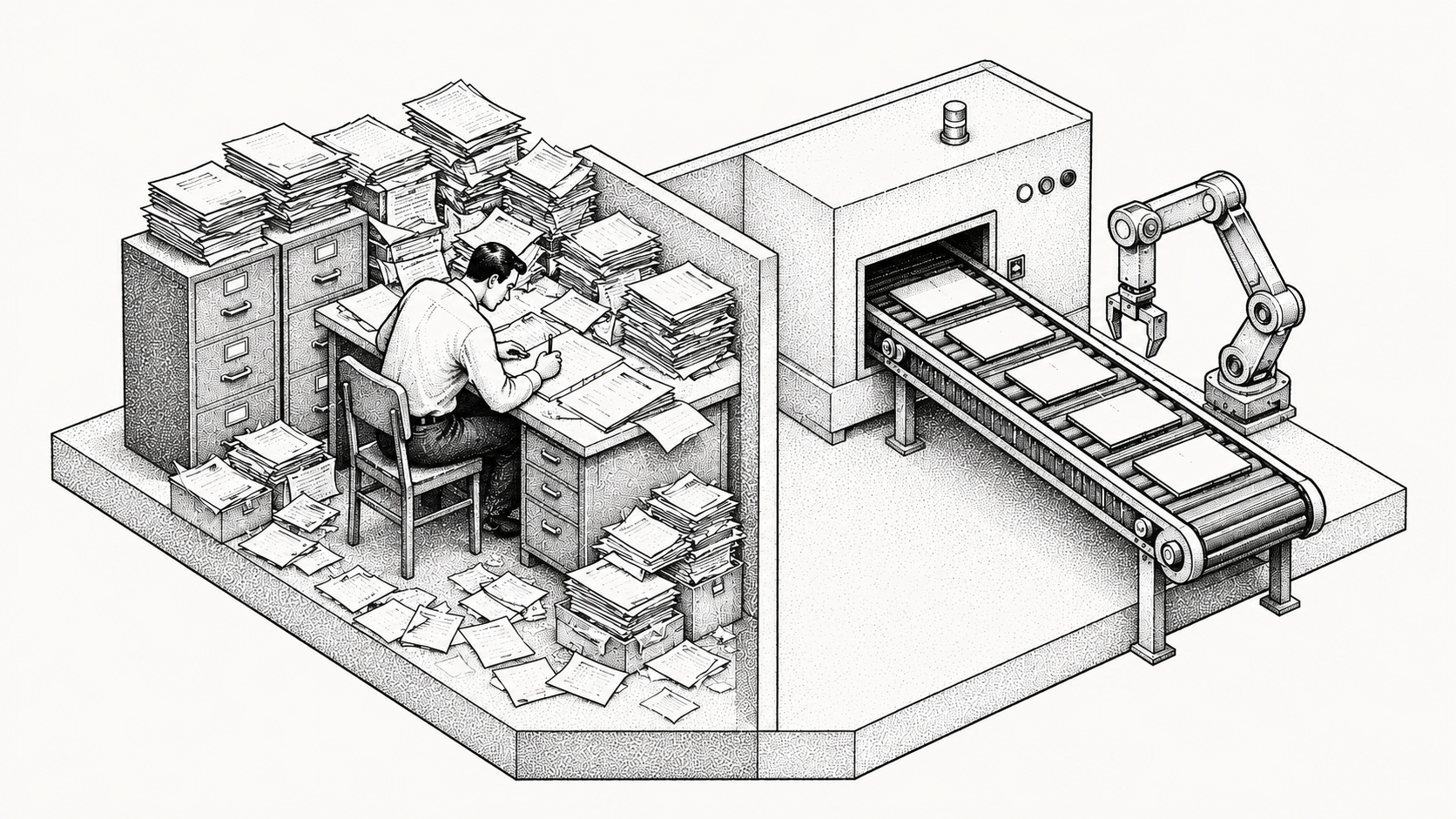
If your company still handles accounts receivable (A/R) through a patchwork of emails, spreadsheets, QuickBooks exports, and calendar reminders, you're not alone, and you're not broken. The problem is the system, not the team. Or more accurately, the lack of one. Moving from manual effort to true accounts receivable automation starts with understanding why the old core workflows fail.
Legacy A/R software was designed for a world of predictable, homogenous billing cycles. Think manufacturers sending the same invoice every month to the same customer with the same terms. But modern B2B businesses, especially SaaS, fintech, agencies, and services firms, don't operate that way. They deal with:
- Variable deal sizes
- Custom payment terms
- Mid-cycle changes
- Partial payments
- Multiple stakeholders on both sides
- Complex approvals
- Real-time expectations from customers and CFOs alike
In that world, the most critical parts of the A/R lifecycle don't happen in your ERP, they happen in the whitespace: email threads, dispute escalations, portal logins, and reconciliation back-and-forths.
This is the problem Monk was built to solve.
We're not talking about reminders, dashboards, or email sequences. We're talking about replacing the broken core workflows, collections, disputes, and cash application, with a system that works by default.
Workflow #1: Collections That Recover Cash
The Legacy State
Collections today are manual. Even the "automated" ones are just scheduled emails with a due date and a call to action. Every customer gets the same message, regardless of context. There's no awareness of:
- Whether the invoice was seen
- Whether the customer replied
- Whether a payment is already in flight
- Whether there's a dispute in progress
- Whether this customer always pays late but reliably
- Whether this is an enterprise account or a monthly SMB renewal
Finance teams compensate by keeping mental models of each account, or worse, side spreadsheets listing "who's risky," "who said what," and "who needs escalation."
This doesn't scale. It burns time, introduces risk, and erodes trust.
The Monk System
Monk ingests the context of conversations across your entire A/R footprint, email replies, portal activity, CRM notes, and historical behavior, then adapts follow-up accordingly. This is the heart of Monk's intelligent collections approach:
- If a customer replies "We'll pay next week," Monk tags that as a PTP (promise to pay), schedules follow-up the day after, and suspends further nudges until then.
- If an invoice hasn't been viewed, Monk sends a smart nudge with a fallback PDF link and audit tracking.
- If a customer opens but doesn't act for 7 days, Monk increases urgency or routes to a human depending on risk score.
- All sequences are logged in a unified timeline for finance, sales, and CS to view in real time.
This is what modern follow-up looks like: contextual, adaptive, and prioritized. Monk's intelligent collections earn a 24% higher response rate than standard dunning.
Result
Teams that move collections onto Monk concentrate effort only where it is needed, with messages that make sense to the recipient. The result is fewer redundant touches per invoice, faster payment, and a better customer experience. When predictable follow-up is handled automatically, the team can focus on the accounts that genuinely need attention.
Workflow #2: Disputes That Don't Get Lost in Inbox Limbo
The Legacy State
Disputes are the biggest hidden cost in A/R, and the least systematized.
A customer says:
- "We're missing a PO."
- "This invoice is for the wrong amount."
- "We're not paying until onboarding is complete."
Where does that message go? Into Gmail, where someone may or may not forward it to someone else. Into Slack, where someone might promise to follow up. Into a spreadsheet, if you're disciplined enough to track them.
What happens next? Best case: someone resolves it manually and closes the loop. Worst case: it festers, gets forgotten, the invoice ages 45 days, and leadership is blindsided at quarter-end.
The Monk System
Monk treats disputes as structured first-class entities, not side conversations. Here's how:
- Detection: Monk's models read customer replies and flag dispute language in real time.
- Classification: Disputes are automatically categorized (e.g., scope issue, missing PO, duplicate invoice).
- Routing: Each dispute is assigned to a resolution owner with an SLA and tracked to closure.
- Visibility: Every stakeholder, Finance, Sales, Success, can view dispute status and comment on resolution.
- Sequencing: All automated collections pause until resolution is complete, preventing escalation missteps.
The entire process is traceable, structured, and operationalized.
Result
Giving the team a structured system to triage and resolve issues at speed removes the inbox chaos that lets disputes age. With Monk, 90% of collections are resolved with zero human intervention, which keeps disputes from quietly turning into write-offs at quarter-end.
Workflow #3: Cash Application That Just Works
The Legacy State
Payment arrives. Now what?
- Was it for invoice #184 or #190?
- Was it the full amount or a partial?
- Was that $5K line item part of the dispute?
- Did the wire memo help? Nope, it's blank.
- Is there an existing credit memo to apply?
- Who has the login to Stripe again?
This is where A/R teams burn massive hidden time. The manual matching process slows reconciliation, creates accounting errors, and kills close speed.
Worse: finance teams build parallel Excel logs just to track what the ERP won't tell them.
The Monk System
Monk turns payments into structured, instantly actionable events:
- Real-time ingestion from Stripe, Plaid, and your bank
- Machine-learning matching that allocates payments to open invoices even when metadata is vague or incorrect
- Auto-resolution of bundled or partial payments
- Exception flagging when allocations can't be confidently made
- Two-way sync with your accounting platform for clean books
Finance sees payment, Monk does the match, books update automatically. Monk achieves an 80% automatic cash application match rate, rising to 95% once teams enable suggested rules, so reconciliation stops being a weekly fire drill.
Result
Teams that move cash application onto Monk recover hours each week that used to go to manual matching. Across customers, Monk saves an average of 26 hours per month, time that finance can redirect from reconciliation to forecasting and analysis.
Why This Matters: The System Is the Strategy
Each broken workflow above doesn't just waste time. It destroys operational leverage:
- Your controller becomes a ticket manager
- Your CFO makes decisions on shaky data
- Your board hears DSO and cashflow excuses
- Your sales team gets dragged into payment escalations
- Your customers lose trust in your billing maturity
And the root cause is always the same: you're running core revenue workflows on systems that aren't built to coordinate them. Tightening these workflows is also one of the most reliable ways to reduce DSO, because cash moves faster when collections, disputes, and cash application stay in sync.
Monk = Systematized Revenue-to-Cash
At Monk, we don't believe A/R is a workflow problem. It's a systems problem.
- Collections is not email automation, it's risk-aware behavioral sequencing.
- Disputes aren't noise, they're structured issues to route and resolve.
- Payments aren't transactions, they're signals that must trigger reconciliation, status changes, and downstream syncs.
When all three workflows live in one platform, Monk, you get more than automation. You get orchestration. The same shift in discipline shows up when teams stop confusing cash flow with profitability and start treating collected cash as the real scoreboard.
| Workflow | Manual approach | Automated with Monk |
|---|---|---|
| Collections | Generic scheduled emails sent on a fixed cadence, with no awareness of replies, payments in flight, or open disputes; finance tracks risk in side spreadsheets. | Context-aware follow-up that reads replies and portal activity, detects promises to pay, escalates by risk, and logs every touch in a unified timeline. |
| Disputes | Issues scattered across Gmail, Slack, and spreadsheets, often forgotten until the invoice ages and leadership is blindsided at quarter-end. | Disputes captured as structured entities: detected in replies, classified, routed to an owner with an SLA, visible to every stakeholder, with collections paused until resolution. |
| Cash application | Manual matching of payments to invoices using vague wire memos, parallel Excel logs, and guesswork on partials, bundles, and credit memos. | Real-time payment ingestion from Stripe, Plaid, and your bank, with machine-learning matching, auto-resolution of partials and bundles, and exception flagging. |
Your finance team stops reacting.
They start operating.
And your company stops leaving cash on the table.
If your A/R workflows feel like spreadsheets, guesswork, and duct tape, it's not because your team isn't great.
It's because the system is broken. Strong credit discipline upstream helps too, which is why many teams pair these fixes with dynamic credit management.
Monk is the replacement. It is a new foundation rather than a bolt-on.
Frequently asked questions
Why do legacy AR systems still require so much manual work?
Legacy AR software was built for predictable, repeating billing cycles. Modern B2B billing involves variable deal sizes, custom terms, partial payments, and disputes that happen in email threads and portals, not the ERP, so teams fill the gaps manually.
What are the core AR workflows that break in legacy systems?
Collections, disputes, and cash application. Collections become generic scheduled emails, disputes get lost in inboxes and Slack, and cash application turns into manual invoice matching, each consuming hidden time and introducing risk.
How does Monk improve collections follow-up?
Monk ingests the context of conversations across your AR footprint, including email replies, portal activity, and historical behavior, then adapts follow-up. It detects promises to pay, pauses nudges when appropriate, escalates by risk, and logs everything in a unified timeline.
How does Monk handle disputes?
Monk treats disputes as structured first-class entities. It detects dispute language in replies, classifies the issue, routes it to an owner with an SLA, gives every stakeholder visibility, and pauses automated collections until resolution.
How does Monk automate cash application?
Monk ingests payments in real time from Stripe, Plaid, and your bank, uses machine learning to match payments to open invoices even with vague metadata, resolves bundled or partial payments, flags exceptions, and syncs with your accounting platform.
If this is the problem you are solving, these go deeper: The 3 Core Workflows That Break in Legacy A/R (and How Monk Fixes Them), Accounts Receivable Doesn't Belong in Spreadsheets, Why We Built Monk to Replace the Messy A/R Stack, How Monk Transforms Finance Teams from Reactive to Strategic, Without Hiring More People, How Monk Uses Gen-AI to Handle Complex Issues and Intelligent Collections Now in Slack.



.avif)