How Much Does AR Automation Cost? A 2026 Pricing Guide

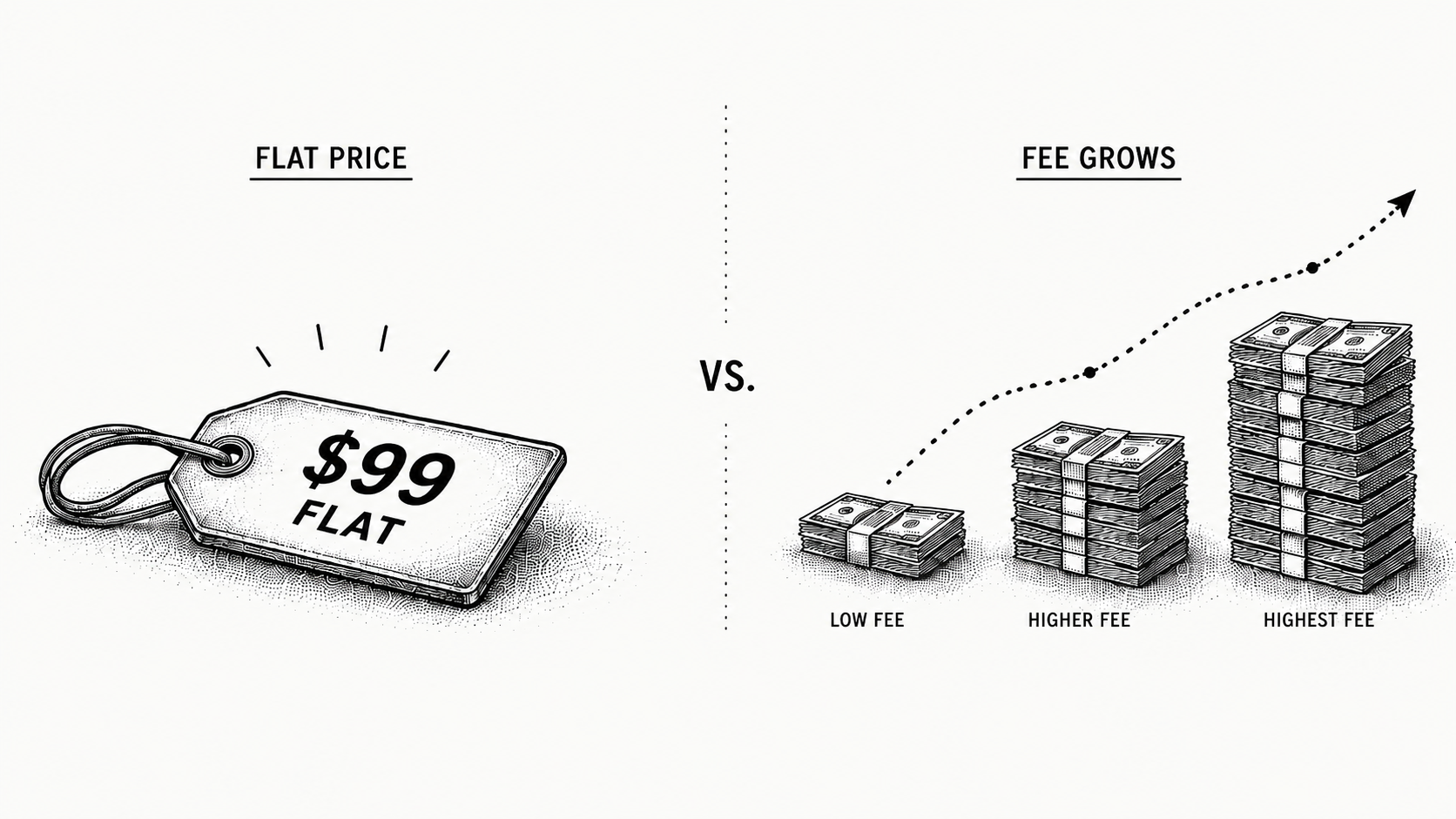
AR automation is usually priced as a predictable subscription based on volume or scope, not a percentage of what you collect. The best value comes from platforms that cover the full invoice-to-cash cycle and go live fast, so the cost is offset by freed cash and saved hours within the first quarter. This guide explains how pricing works, what drives it, what to avoid paying for, and how to size the return, leading with how Monk approaches it.
How is AR automation priced?
Most AR automation tools charge a predictable subscription, scaled to your invoice volume, customer count, or the scope of what they automate. That is fundamentally different from a collection agency, which takes a contingency fee of 25 to 50 percent of whatever it recovers.
A subscription means your cost does not rise just because you collected more, which is exactly the incentive you want. You keep the upside of getting paid faster instead of handing a slice of it back, and the line item stays predictable as you grow.
What drives the cost?
Four factors move the price more than any others, and understanding them lets you compare quotes on a like-for-like basis rather than on headline numbers alone.
- Scope: collections only, or the full invoice-to-cash cycle including invoicing, AP portals, and cash application.
- Volume: the number of invoices and customers under management.
- Integrations: how many ERPs, billing tools, and portals are connected.
- Support model: self-serve software versus a done-for-you managed service.
Of these, scope usually moves the price the most, because a full-cycle platform replaces several point tools and the manual work between them. A cheaper tool that only handles reminders can end up costing more once you add the portal tool, the cash-application tool, and the people stitching them together.
What you should not pay for
Be wary of pricing tied to a percentage of collections, long implementation fees, or per-seat models that punish you for adding finance users. The point of automation is to remove cost from getting paid, not to add a variable tax on your own revenue.
A multi-month implementation fee is its own red flag, because it delays the entire payback and signals a tool that is hard to deploy. Per-seat pricing has a similar problem: it penalizes you exactly when the team grows, which is the opposite of what a tool meant to scale with you should do.
The support model is the other big swing. Self-serve software is typically the lowest-priced option and works well when your team can own the configuration, while a fully managed service costs more because people are doing the work for you. Many platforms sit in between, pairing software with a level of hands-on support, and the right choice depends on how much of the work you want to keep in-house.
How pricing models compare
The model matters as much as the number, because it determines how cost behaves as you grow. A low starting price on the wrong model can become your most expensive line item within a year.
| Model | How cost behaves | Watch for |
|---|---|---|
| Flat subscription | Predictable, does not rise with collections | Confirm scope and integrations are included |
| Percentage of collections | Rises with every dollar you collect | Becomes your most expensive line as you grow |
| Per seat | Rises as you add finance users | Penalizes the team for scaling |
| Per-action or usage | Rises with invoice or message volume | Hard to forecast in a busy month |
A worked comparison
Picture a business collecting $30M a year. Under a percentage-of-collections model at even 2 percent, the annual cost would be around $600,000, and it climbs every time the business grows. A flat subscription that covers the full cycle costs a predictable fraction of that and does not move when collections rise. The gap widens every year, because one model is tied to your success and the other is not. This is why the pricing model deserves as much scrutiny as the sticker price; the cheapest-looking option at signing can be the most expensive one by year two.
What to ask a vendor about pricing
A short set of questions cuts through most pricing confusion. Ask whether the price is flat or tied to collections, and confirm it in writing. Ask exactly what scope is included, so you are not buying a collections tool and discovering cash application costs extra. Ask whether there is an implementation fee and how long go-live takes, since both affect payback. Ask how the price changes as you add users, invoices, or integrations. And ask whether a pilot or month-to-month option exists, so you can prove the value before committing.
Total cost of ownership, not just the sticker price
The headline subscription is only part of the picture. The real cost of an AR tool includes the point tools it does or does not replace, the implementation time before it earns anything, and the staff hours still required around it. A platform with a higher subscription that covers invoicing, AP portals, and cash application can have a lower total cost than a cheaper reminder tool that leaves three other jobs to people or other software.
The clearest way to compare is to total up everything you spend getting paid today: the software in your AR stack, the loaded cost of the hours your team spends on chasing and reconciliation, and the carrying cost of a high DSO. A full-cycle platform is competing against that whole number, not against the price of a single point tool, which is usually why consolidating onto one system comes out ahead.
How Monk prices
Monk uses flat, predictable pricing with pilots and month-to-month options, and it does not charge a percentage of collections or take a cut of your revenue. Because Monk goes live in less than one week and covers the whole invoice-to-cash cycle, most teams offset the cost within the first quarter through freed cash and saved hours: a 40% average reduction in DSO and about 26 hours a month back to the team.
That full-cycle scope is what makes the flat price economical, because it replaces several point tools and the manual work between them rather than adding to your stack. Monk manages $2B+ in receivables, is SOC 2 Type II compliant, resolves 90% of collections with zero human intervention, and integrates natively with Stripe, HubSpot, QuickBooks, NetSuite, and Salesforce.
Is it worth it?
The fastest way to size it is your own aging report. Multiply the DSO days you could remove by your daily revenue to see the cash you would pull forward, then add the hours your team spends chasing and the bad debt you would avoid. For most teams with meaningful AR volume, the freed cash alone covers a flat subscription several times over, and the math favors automation quickly.
Because Monk's pricing is flat rather than tied to collections, that return stays with you as you grow instead of being eroded by a rising fee. The faster you get paid, the better the deal becomes, which is exactly the alignment you want from a tool meant to improve your cash position.
One last point on value: the goal of AR automation is not to be the cheapest line on your budget, it is to be the line that pays for itself fastest. A tool that frees a meaningful amount of trapped cash and returns skilled hours to the team is worth more than a marginally cheaper one that does neither, even before you account for lower bad debt and a faster close.
Frequently asked questions
How much does AR automation cost?
Most tools charge a predictable subscription scaled to volume or scope, rather than a percentage of what you collect. The exact figure depends mainly on scope, volume, integrations, and the support model.
Does Monk charge a percentage of collections?
No. Monk uses flat, predictable pricing with pilots and month-to-month options, and it does not take a cut of your revenue.
Is AR automation worth the cost?
For teams with meaningful AR volume, yes. Freed cash from lower DSO and saved hours typically offset the cost within the first quarter, often several times over.
What makes AR automation more or less expensive?
Scope, invoice and customer volume, the number of integrations, and whether it is software or a managed service. Scope usually moves the price the most.
How do I estimate ROI before buying?
Multiply the DSO days you could remove by your daily revenue, then add saved hours and avoided bad debt, and compare that to the subscription cost.
Should I avoid per-seat pricing?
Per-seat models can penalize you for adding finance users, so a flat model that scales with the business rather than the headcount is usually a better fit for a growing team.
Worth reading next: AR Automation ROI: How to Calculate It and Best AR Automation for Small Business in 2026.


.avif)