Best AR Automation for Trucking and Freight in 2026

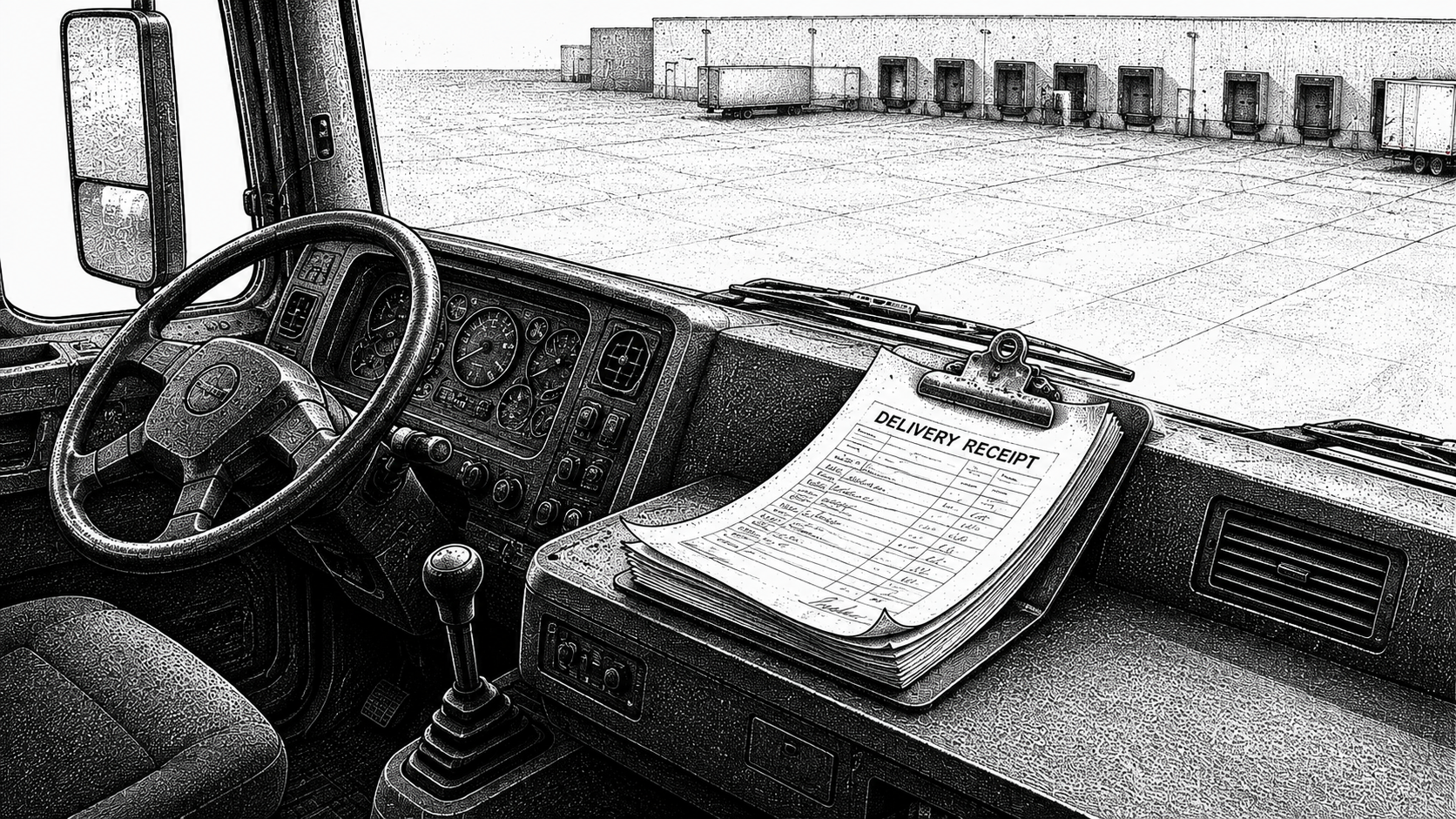
AR automation for trucking software issues freight invoices with the paperwork attached, submits them to broker and shipper portals, chases what goes unpaid, and matches the cash when it arrives against thousands of low dollar invoices. Monk does this as one system, running parallel invoice processing, AI cash application, proof of delivery and portal automation, and Intelligent Collections against the same customer record. That combination matters in freight more than in most industries, because a trucking receivable fails for paperwork reasons far more often than for credit reasons.
If you search for this, you will mostly find something else. The results are dominated by factoring companies, trucking bookkeeping software and freight audit tools built for the buyer's side of the invoice. Sorting those apart is most of the work of choosing.
Is factoring the same as AR automation?
No, and this is the single most expensive confusion in freight finance.
Factoring is a finance product. A factor buys your invoice, advances most of the value within a day, and either takes the collection risk or does not depending on whether the arrangement is recourse or non recourse. It solves a timing problem. Published rates sit in the range of one to five percent per invoice, with two to three and a half percent typical for a small carrier, and advance rates commonly ninety to ninety five percent with a reserve held back.
AR automation is software. It fixes the reasons the cash was late in the first place, meaning missing paperwork, unsubmitted portal invoices, unchased aging and unapplied payments. It costs a software fee rather than a permanent share of revenue.
Both can be reasonable purchases. They are not substitutes, and the arithmetic is worth doing. At three percent, a five truck fleet running one hundred thousand dollars a month gives up around thirty six thousand dollars a year, every year, to solve a timing problem. If a meaningful share of that timing problem is a missing signed bill of lading, you have bought an expensive workaround for a paperwork failure.
Two things make this genuinely hard to see from a website. First, several factoring companies now market real automation features alongside the finance product. Denim, acquired by Truckstop in 2025, describes itself as automating every step from invoicing to cash application, and also offers factoring. OTR Solutions sells non recourse factoring and a broker facing back office automation product covering audit, accounts payable and receivable. Apex Capital ships a free account management portal with mobile document capture. These are real features attached to a finance product, not marketing fiction. The question is simply what you are buying and what it costs you permanently.
Second, the language itself has been borrowed. RTS Financial calls factoring "accounts receivable financing," which is why factoring outranks software for the phrase trucking accounts receivable. And TriumphPay is easy to miscategorise: it is a broker to carrier payments network with a bank behind it, which also sells factoring, rather than a factoring company with a portal.
What does your TMS already do, and what does it leave undone?
This is the more useful question, because most carriers and brokers already own a transportation management system and should not buy software that duplicates it.
Across the category the pattern is consistent. Invoicing is solved. Collections is thin. Cash application is largely absent.
McLeod Software, the category leader, automates invoice generation with customer specific documentation enforcement, records bills of lading automatically, and ships a dedicated automated collections product that prompts customers on past due invoices. Its accounting documentation does not describe cash application. Rose Rocket handles invoicing well, including multi order invoices and consolidated line items, but documents no automated dunning and no automatic matching of payments to invoices. Alvys covers invoicing settings and synchronises payments to accounting systems, which is synchronisation rather than matching. Axon and Q7 sit closer to trucking accounting.
So the gap is specific. Your TMS can raise the invoice. What it generally cannot do is work out which of the four hundred invoices a broker just paid in one ACH were actually covered, and close them. In an industry built on high volume, low dollar invoices, that is the expensive gap.
Why does freight AR fail on paperwork rather than credit?
Because in freight, the document is a precondition for the invoice being payable at all.
No signed bill of lading means no invoice approval. Accounts payable teams on the buyer side cannot process payment without the returned proof of delivery, and when signed documents sit in a cab or go missing before they reach accounting, billing cycles stretch from days into weeks. The market has effectively confirmed this: McLeod built documentation enforcement into billing, which is not something you engineer unless customers routinely fail the check.
The second structural problem is portals. Broker and shipper invoice submission behaves exactly like enterprise accounts payable portals in any other industry. Each completed load generates several documents, and a mid sized brokerage may be dealing with dozens of separate destinations. The strongest evidence this is real is not any single vendor's blog but the fact that multiple vendors have built integrations to the same named endpoints, including CASS, US Bank, Trax, CTSI, E2Open, C.H. Robinson and Uber Freight. Nobody builds those connectors for a problem that does not exist.
Third is accessorials, and here the data is unusually good. The American Transportation Research Institute, publishing in September 2024 on 2023 survey data, found that while 94.5% of fleets charge detention fees, they are paid on fewer than half of those invoices. Drivers were detained on 39.3% of all stops, rising to 56.2% for refrigerated freight. ATRI put the direct cost at 3.6 billion dollars with a further 11.5 billion in lost productivity.
Read that first number again, because it is the clearest statement of the problem in the industry. The charge exists, it is invoiced, and more than half of it is never collected. That is not a credit problem. That is an evidence and follow up problem, and it is the definition of what AR automation is for.
Worth noting that this statistic circulates widely without attribution and sometimes altered to say carriers "price in" detention, which is a different claim. It is ATRI, it is 2023 data, and it says fleets charge.
How much does broker payment risk actually matter?
More than a bond suggests, and there is primary source data on this rather than opinion.
The Federal Motor Carrier Safety Administration's final rule on broker and freight forwarder financial responsibility, published in the Federal Register in November 2023, reports that roughly 1.3% of brokers experience surety bond drawdowns annually, around 429 entities in 2022. Of failing brokers, 18% receive claims exceeding the seventy five thousand dollar bond, which pushes distribution into court proceedings. The average claim submitted by an affected motor carrier is approximately nineteen hundred dollars.
Put those together and the conclusion is uncomfortable. The bond caps total recovery at seventy five thousand dollars across every claimant, and in the cases where claims exceed it, carriers are pro rated. A bond is not payment protection. It is a queue.
The practical response is not to stop hauling for brokers. It is to know your aging by payer, notice deterioration early, and stop letting a slow payer quietly become a large one. That is a reporting and collections discipline, and it is available without a finance product.
Why we are not publishing a trucking DSO benchmark
Because a credible one does not exist, and every page that quotes you a trucking average DSO is quoting a content farm.
We looked. Public company figures exist for large less than truckload carriers, and they tell you nothing useful about a fifteen truck fleet or a brokerage. The generic industry benchmark tables that rank for these queries carry no traceable methodology. The freshest genuinely sourced data we found was the wrong geography and four years stale.
What is verifiable is the terms structure. Standard broker terms to carriers run thirty to forty five days. Quick pay, where the broker pays in one to three days for a fee, runs roughly one and a half to five percent and commonly sits at three percent. That is a broker profit centre rather than a courtesy: a brokerage running five hundred thousand dollars a month in carrier payables at forty percent quick pay participation and three percent generates six thousand dollars a month from it.
Which reframes the question. If you are routinely taking quick pay to cover a gap caused by your own invoicing lag, you are paying a broker three percent to solve a problem inside your back office.
What should you look for in AR automation for freight?
Does it attach the paperwork automatically? Proof of delivery, bill of lading, accessorial backup, lumper receipts. If your team is still assembling document packets by hand, nothing downstream matters much.
Does it submit to portals, and which ones? Ask for names against your actual top payers. Generic claims of portal support are the single least reliable statement in this category.
Does it do cash application on high volume, low dollar invoices? This is the capability your TMS most likely lacks. Ask specifically how one ACH covering four hundred invoices gets resolved, and whether remittance arriving as a PDF or an email is handled.
Does it chase, and does it know what it already said? Collections on freight receivables means high volume outreach where the same payer appears constantly. A system that contradicts yesterday's message creates work.
Does it separate accessorial disputes from ordinary aging? Detention and lumper disputes fail for different reasons than a forgotten invoice and need different handling.
Is it software or a finance product, and what happens if you stop? With software you keep the process. With factoring, ending the arrangement returns you to the original cash timing.
How does Monk approach trucking and freight AR?
Monk is built for exactly the shape freight produces, meaning thousands of low dollar invoices spread across many payers and many portals.
Four capabilities do the work. Parallel invoice processing works the whole book at once rather than sequentially and matches cash as it lands. AI cash application auto matches high volume, low dollar payments without manual reconciliation, at an 80% automatic match rate rising to 95% with suggested matching rules. Proof of delivery and portal automation attaches PODs and uploads to broker portals automatically, so the document precondition is satisfied before the invoice is submitted rather than after it is rejected. And Intelligent Collections handles the follow up.
Intelligent Collections is powered by Julia, its AI agent, which reads the context of the conversation and the state of the account rather than advancing a fixed dunning sequence. Julia reaches customers with a 24% higher response rate than standard dunning, and 90% of collections are resolved with zero human intervention. In freight that difference is structural rather than cosmetic, because a payer with an unresolved accessorial dispute and a payer who has simply not paid need different messages and usually get the same one. Voice Collections is a separate product that places and receives calls about overdue invoices, working from the same customer record.
The results Monk publishes across its customer base: a 40% average reduction in DSO, 26 hours a month saved on receivables work, and average cash on hand up 37% in month one and 2.4x over the first quarter. Monk holds $2B+ in accounts receivable under management, is SOC 2 Type II compliant, integrates with QuickBooks, NetSuite, Salesforce, HubSpot and Stripe, and goes live in less than one week.
For more, see Monk for trucking, and our guides to automating AP portals for enterprise invoicing, AR financing versus AR automation and managing cash exceptions and payment mismatches.
What are the alternatives?
Five categories show up in this search. Only two of them are the product described at the top of this page.
| Category | Examples | Automates AR workflow | Advances cash | Cash application on high volume invoices |
|---|---|---|---|---|
| AR platform with freight workflow | Monk | Yes, invoicing, portals, POD, collections | No | Yes, 80% automatic rising to 95% with rules |
| Freight specific AR automation | Upwell | Yes | No | Yes |
| Enterprise AR suite with transportation vertical | Billtrust, Emagia | Yes | No | Yes |
| Transportation management system | McLeod, Rose Rocket, Alvys, Trimble, Axon | Invoicing yes, collections varies | No | Rarely documented |
| Freight factoring and payments networks | RTS Financial, Apex Capital, OTR Solutions, eCapital, Bobtail, Porter, TAFS, Denim, TriumphPay | Varies, some ship real automation | Yes | Varies |
AR platforms with freight workflow. Monk sits here, with invoicing, portal submission, POD handling, collections and cash application in one system against one customer record. The right fit when the problem is that invoices are late, unsubmitted or unmatched rather than that you need capital.
Freight specific AR automation. Upwell is the closest direct comparison, purpose built for brokers, carriers and 3PLs, with named TMS and freight audit integrations including McLeod, Turvo, TMW, MercuryGate, CASS and Trax, and customers including Werner and Arrive Logistics. If named TMS connectors are your first requirement, put them on the list and ask both vendors the same integration question.
Enterprise AR suites with a transportation vertical. Billtrust has the deepest enterprise footprint in freight, with logos including Schneider, Swift, Estes, ABF and TQL, and claims hundreds of accounts payable portal integrations. Appropriate for large carriers with a dedicated AR function and appetite for a longer implementation.
Transportation management systems. McLeod, Rose Rocket, Alvys, Trimble and Axon are the operational backbone and you are unlikely to replace one. Treat AR automation as something that sits alongside the TMS and fills the collections and cash application gap rather than as a competitor to it.
Factoring and payments networks. RTS Financial, Apex Capital, OTR Solutions, eCapital, Bobtail, Porter Freight Funding, TAFS and Thunder Funding are finance products, several with genuinely useful software attached. Denim combines both under one brand. TriumphPay is a payments network with a bank behind it that also offers factoring. All are legitimate purchases when the problem is capital timing. Run the annual cost against a software fee before deciding it is the cheaper option.
Before any demo, take one month of paid invoices and work out how many days elapsed between delivery and invoice submission, and how many were rejected or returned for paperwork. If that number is large, your problem is upstream of both factoring and collections.
In freight the invoice is not payable until the signed proof of delivery reaches billing, and then it often has to go into a broker or shipper portal rather than an inbox. Across the $2B+ in receivables Monk manages, 92% of enterprise invoices have to be submitted through a customer's accounts payable portal rather than paid from an emailed invoice. Monk submits into more than 600 of those portals and uploads 87% of portal invoices autonomously, so paperwork sitting in a cab stops turning into aging. More on AR automation for trucking and logistics.
Frequently Asked Questions
What is AR automation for trucking?
It is software that issues freight invoices with the required paperwork attached, submits them to broker and shipper portals, follows up on unpaid invoices, and matches incoming payments to invoices automatically. It differs from a transportation management system, which usually handles invoicing but not collections or cash application.
Is freight factoring the same as AR automation?
No. Factoring advances cash against your invoices for a fee, typically one to five percent per invoice, and solves a timing problem. AR automation is software that fixes the causes of slow payment, such as missing proof of delivery, unsubmitted portal invoices and unapplied cash. They can be used together.
Why do freight invoices get rejected or go unpaid?
Most often because a document precondition was not met, commonly a missing or unsigned bill of lading or proof of delivery, or because the invoice was never submitted into the payer's portal. Accessorial charges are a separate category: ATRI found in 2023 data that 94.5% of fleets charge detention but are paid on fewer than half of those invoices.
What is a typical DSO for a trucking company?
There is no credible published benchmark, and figures circulating online generally trace to sources with no methodology. What is verifiable is that standard broker terms to carriers are thirty to forty five days, and that quick pay programs pay in one to three days for a fee commonly around three percent.
Should I use quick pay or fix my invoicing?
Quick pay costs roughly one and a half to five percent of the invoice, most commonly three percent, and it is a profit centre for the broker offering it. If the gap you are covering was created by your own invoicing lag or missing paperwork, fixing that is cheaper than paying for speed every load.
How risky are freight brokers as payers?
FMCSA data published in 2023 shows around 1.3% of brokers experience surety bond drawdowns annually, and 18% of failing brokers face claims exceeding the seventy five thousand dollar bond, with the average carrier claim around nineteen hundred dollars. The bond caps total recovery across all claimants, so aging discipline by payer matters more than bond coverage.
Does Monk work with my TMS?
Monk runs invoicing, portal submission, proof of delivery handling, collections and cash application, and integrates with QuickBooks, NetSuite, Salesforce, HubSpot and Stripe. Ask about your specific transportation management system directly, since connector coverage is the first thing to confirm for any freight AR purchase.





.avif)