How to Measure and Speed Up Cash Flow Velocity: A 90-Day Playbook for Finance Leaders

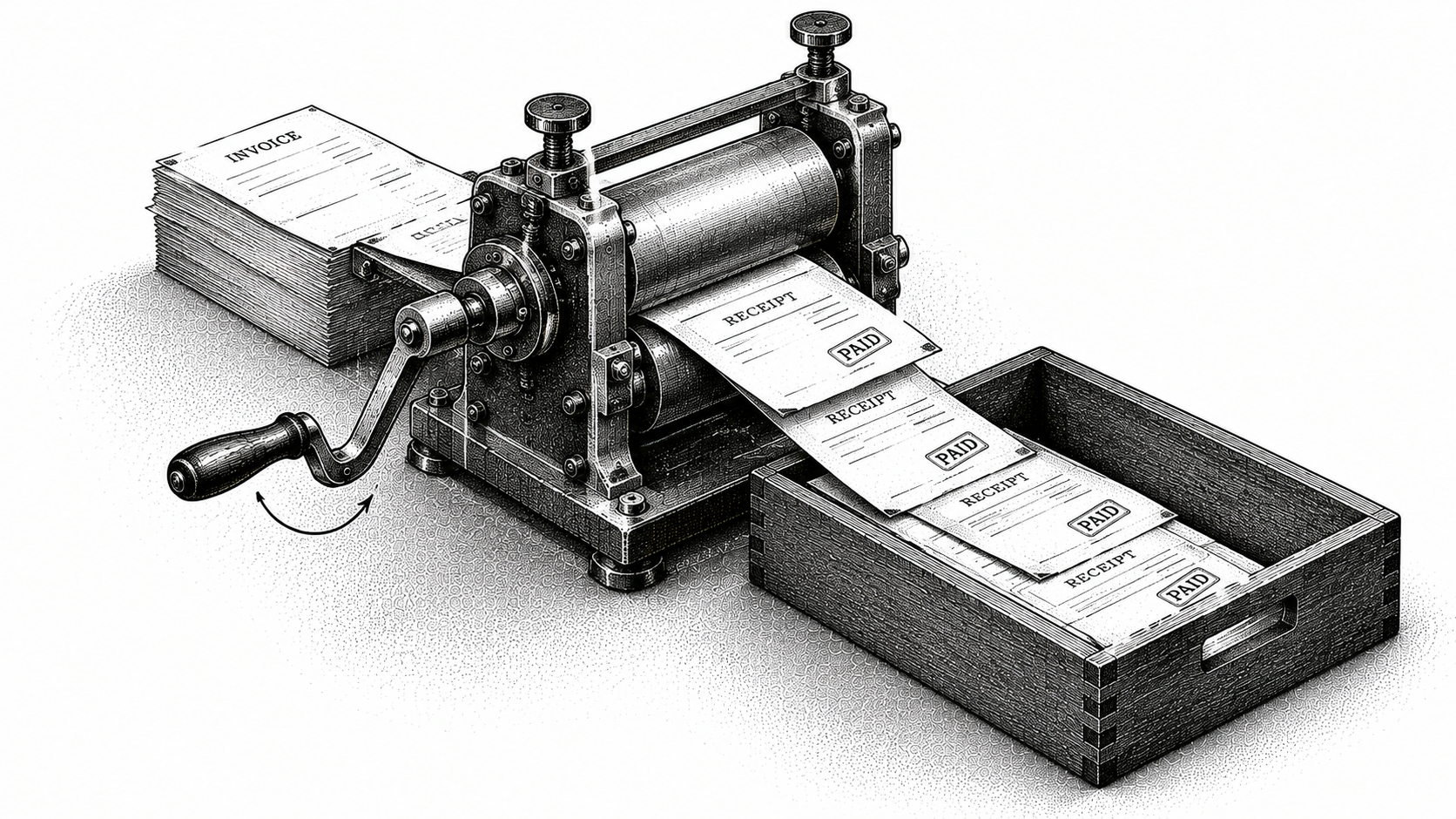
Cash flow velocity measures how quickly your company converts outstanding receivables into usable cash. You can measure it this week and see movement inside a month without touching a single payment term.
This playbook gives you the formula, the levers that move velocity, a phased 90-day plan, and customer benchmarks so you can start measuring immediately.
Monk publishes this guide and sells AR automation software, so hold us to the standard below: results measured from your own ledger, not a vendor dashboard.
What is cash flow velocity in one sentence?
Cash flow velocity is the rate at which your billed receivables turn into collected, usable cash over a given period.
DSO tells you how long invoices sit unpaid. Velocity answers a different question: how much of your receivables balance became cash this period. Monk's guide on what cash flow velocity is covers the concept in more depth.
How do you calculate cash flow velocity right now?
The core formula is straightforward:
Cash Flow Velocity = Total Cash Collected in Period / Average Receivables Balance
A velocity of 1.0 means you collected exactly your average receivables balance during the period. Higher is better: cash is cycling through faster.
Your team collected $480,000 in June 2026. The receivables balance was $600,000 on June 1 and $400,000 on June 30, an average of $500,000, so velocity is $480,000 / $500,000 = 0.96. Nearly the whole book turned over in a month.
High-volume teams can run the same math weekly. You collected $125,000 during the week of July 6, 2026 against average receivables of $150,000, for a velocity of 0.83. Push that above 1.0 and you are clearing receivables faster than they accumulate.
Two supporting metrics show velocity at the invoice level:
Days to cash per invoice: calendar days from invoice sent to payment received.
Percent of invoices collected within 7 / 30 days: a distribution view that shows where cash is getting stuck.
How is cash flow velocity different from DSO?
DSO is the average number of days invoices remain outstanding. Boards like it because it benchmarks cleanly and reports well quarter over quarter. Velocity tells you how much of your receivables you converted in a given window, which makes it the earlier signal: you can act on it before a quarter closes.
The two can diverge. DSO can hold steady while velocity improves, because you are collecting a higher proportion of newer invoices faster even as a few legacy invoices drag the average. That is why both belong on the dashboard. For the broader argument on why cash flow deserves metric status alongside revenue, see why cash flow is the new growth metric.
What operational levers move cash flow velocity?
Velocity does not improve by accident. It moves when you tighten specific steps in the invoice-to-cash process, and five levers carry most of the weight.
Timely and accurate invoicing. Every day between delivery and invoice sent is a day of velocity lost. Measure invoice turnaround time (hours from delivery or fulfillment to invoice sent) and invoice accuracy rate (percentage of invoices that need no correction or reissue). Target: invoice-to-sent under 24 hours. Monk's post on why timely invoicing alone does not guarantee payment explains what has to follow.
Payment choice and UX. If a customer has to mail a check or work through a clunky portal to pay you, that friction slows velocity. Embedding payment links directly on invoices and offering card, ACH, and wire options removes it. Monk supports embedded payment links and the common payment rails.
Collections execution. Outreach that reaches the right person at the right time drives faster responses. Data from our analysis shows a 24% higher response rate when follow-ups are personalized and well-timed compared to standard automated sequences. Track average touches per invoice and promise-to-pay conversion rate.
Cash application speed. Collected cash does nothing for velocity if it sits unapplied for days. The goal is same-day matching with suggested rules, and a 95% match rate. Monk's guide to stopping manual payment matching covers how to get there.
Dispute and documentation processes. PO mismatches and AP portal rejections create silent delays. Measure dispute resolution time and first-submission acceptance rate.
What are realistic targets and benchmarks?
Targets without context lead to frustration. The benchmarks below are drawn from Monk deployments and broader industry data, and outcomes vary with book size and execution discipline.
The 40% average DSO reduction reflects outcomes across deployments where teams tightened invoicing and collections cadence and automated cash application. In our experience, teams that work all five levers at once move faster than teams that take them one at a time.
What does a 90-day roadmap look like?
Week 0: audit and baseline. Pull your receivables aging report. Identify the top 20% of customers by dollar value and the top 20% of overdue invoices. Calculate your current velocity with the formula above, and document the numbers you will track for the next 90 days: invoice turnaround time, cash application match rate, and average touches per invoice. This is your baseline.
Days 1-7: quick wins. Implement payment links on all outgoing invoices; Monk's guide on letting customers pay invoices online covers the setup. Tighten your invoicing cadence so invoices go out within 24 hours of delivery. Deploy priority follow-ups on your highest-value overdue invoices and start tracking promise-to-pay signals, the most undervalued signal in AR according to Monk's promise-to-pay guide. For teams using Monk, typical go-live is 1 to 3 days when integrations are ready, though setup time varies by stack and access.
Days 8-30: automate and measure. Set up cash application rules and reconcile your top exceptions. This is where early wins show up. As a reference point, ElevenLabs saw a 60% reduction in overdue AR within 30 days of deploying a disciplined collections and follow-up process. Profound grew cash on hand by 122% in its first month by combining faster invoicing with automated collections. Outcomes like these depend on your receivables profile and how consistently you execute.
Days 31-90: tighten and scale. Standardize dispute workflows. Improve AP portal submission accuracy; the Ariba, Coupa, and SAP Business Network playbook is the reference for that. Reduce repeat exceptions by building rules for the edge cases you keep seeing. The goal in this phase is to move a meaningful percentage of invoices from the 60-plus-day bucket into the under-30-day bucket. Measure velocity weekly and adjust your collections playbooks based on what the data shows. Teams typically recover roughly 26 hours per month in manual work during this phase, freeing analysts for forecasting work.
How do you measure progress and report to the board?
Build a KPI dashboard with these six metrics, reviewed weekly by the AR team and monthly by finance leadership:
For board reporting, keep it to one paragraph: "In the 90 days ending [date], we reduced average days to cash by [Y]%, increased our cash application match rate to [Z]%, and 90% of invoices are now resolved without escalation. This produced an estimated cash-on-hand improvement of [amount], with the AR team recovering 26 hours per month for strategic work." On Monk deployments, numbers like these are realistic when the full playbook is executed.
What common obstacles slow velocity, and how do you fix them?
AP portal rejections. Invoices rejected for formatting or missing PO references sit in limbo. Fix: validate submission requirements per customer and automate PO matching before sending. See what to do when an invoice is stuck in an AP portal and why invoices get rejected by AP portals.
Missing remittance data. Payments arrive without clear invoice references, stalling cash application. Fix: request structured remittance and parse what you receive.
Partial payments. A customer pays 80% of an invoice, and without a clear process the remaining 20% lingers. Fix: establish rules for partial payment handling and automate the follow-up on the remainder. Monk's guide on handling partial payments in AR covers this in detail.
Manual cash application. If your team is matching payments in spreadsheets, velocity will always lag. Fix: implement rule-based matching with a target of 95% same-day match rate.
Poor email deliverability. Your collections emails are not landing in inboxes. Fix: authenticate your sending domain and follow the practices in Monk's email deliverability for collections guide.
Should you buy software, build workflows, or hire more people?
It depends mostly on invoice volume and how messy your exceptions are.
Under 100 invoices a month with predictable customers, tighter manual workflows and better templates may be enough to start. Software starts paying for itself once you are handling hundreds or thousands of invoices, multi-entity billing, AP portal submissions, and partial payments.
Keep humans on the judgment work, negotiating payment plans and handling complex disputes. Use software for invoicing cadence, payment link distribution, automated follow-ups, cash application matching, and reporting. Monk is built for teams that need fast setup and rule-based automation for collections and cash application while keeping the ERP as the system of record; the platform sits alongside your ERP, general ledger, and revenue recognition system to close the gap between invoice sent and cash applied.
What does success look like after 90 days?
Four outcomes from Monk deployments:
Profound focused on faster invoicing and automated collections from day one. The result was 122% more cash on hand in the first month. The primary lever was eliminating delays between service delivery and invoice dispatch, combined with consistent, prioritized follow-ups.
ElevenLabs deployed disciplined collections outreach with better follow-up timing and tone. Within 30 days, overdue AR dropped by 60%. The key was multi-threaded outreach and promise-to-pay tracking, not changing payment terms.
Elate cut DSO in half and doubled collections by combining payment UX improvements with a tighter collections cadence. Customers had more ways to pay and received better-timed reminders.
Unify reduced overdue Stripe AR by more than 50% by focusing on cash application speed and automated follow-ups for subscription-based invoices.
None of these teams renegotiated a payment term.
If your team is ready to start measuring velocity and wants to see how the levers above apply to your receivables, book a demo with your current aging report and we will show you where the first improvements are likely to land.
Frequently Asked Questions
How is cash flow velocity different from the cash conversion cycle?
The cash conversion cycle folds in inventory and payables, so an AR team can only influence part of it. Cash flow velocity measures just the receivables balance converting to cash in a defined window, which is why finance teams focused on liquidity get more use out of it.
How should I set targets for cash flow velocity by industry?
Start from your own baseline, not an industry average. Measure your current velocity, then target a 15 to 20% improvement in the first 30 days. B2B SaaS and services companies on net-30 terms typically improve faster than companies on net-60 or net-90, but the levers are the same.
How much of an impact does faster cash application have on velocity?
Payments that sit unapplied for 3 to 5 days make your reported velocity lag reality. Getting to same-day matching can improve measured velocity by 10 to 15% without changing anything else in the collections process.
How do I avoid breaking customer relationships while accelerating cash collection?
Use context-aware follow-ups that reference the specific invoice and any prior communication, and resolve disputes fast. When 90% of invoices are resolved without escalation, as is typical on Monk deployments, the customer experience improves because issues get addressed sooner.




.avif)