The Future of Follow-Ups: Workflows, Escalations, and Intelligent Collections

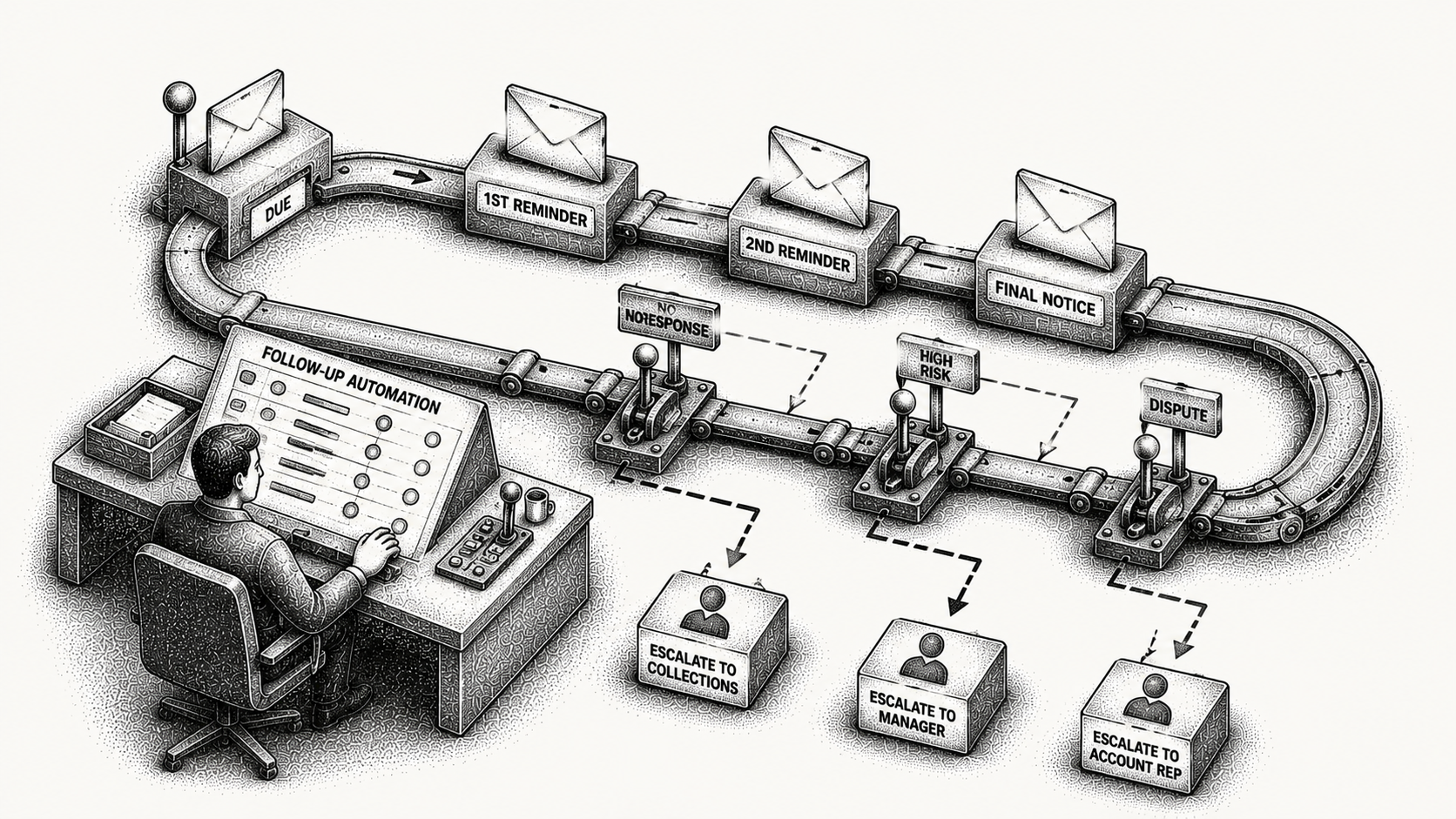
The future of accounts receivable follow-ups is a shift from fixed dunning schedules to context-aware workflows that escalate based on what a customer does. Instead of the same three reminder emails on days 7, 14, and 30, follow-ups reflect the conversation so far, route to the right owner, and escalate only when the situation calls for it. Monk's intelligent collections already works this way, ingesting the context of prior conversations and responding more effectively than standard dunning.
This guide covers where follow-ups are heading, why fixed dunning is fading, and what a modern follow-up workflow looks like.
What is wrong with traditional dunning follow-ups?
Traditional dunning sends the same sequence to every overdue account regardless of context. A customer who already replied with a payment date gets the same stern reminder as one who has gone silent, which reads as impersonal and can strain the relationship.
The deeper problem is that fixed schedules ignore information the team already has. The reply history, the promise-to-pay, and the dispute status all say how to follow up, and a rigid cadence throws that away.
What does an intelligent follow-up workflow look like?
An intelligent workflow reads the state of each account before it acts. If a customer promised to pay Friday, it waits and checks rather than nagging on Tuesday. If a customer raised a dispute, it pauses routine follow-up and routes the issue instead of sending another reminder.
The follow-up itself reflects the prior conversation, so the message acknowledges what has already been said rather than restarting from a template. That context is what makes the outreach land as a genuine follow-up instead of an automated dun.
How do escalations work in modern revenue automation?
Escalation is the second half of a good workflow. Most overdue invoices resolve with steady, context-aware follow-up, but some need a human, a manager, or a different channel, and the workflow should recognize that point and hand off cleanly.
Good escalation is defined by rules the team sets: how long to wait, when to involve an owner, and when to stop automated outreach entirely. That keeps the routine work automatic while the exceptions reach a person with the full history attached.
What role do playbooks play?
Playbooks turn this into something a team can run consistently. A playbook defines the cadence, the conditions that trigger each step, and the escalation path, so the follow-up logic is explicit rather than living in one person's head.
With playbooks in place, a lean finance team can apply a considered follow-up strategy across thousands of invoices without touching each one, and adjust the strategy in one place when it needs to change.
How does Monk approach follow-ups?
Monk's intelligent collections runs context-aware follow-up rather than fixed dunning. It ingests the context of prior conversations and responds more effectively than standard dunning, and playbooks let a team define the cadence and escalation logic that fits their accounts. Anything that needs judgment escalates to a person with the history attached. Monk customers reach customers with a 24% higher response rate than standard dunning, resolve 90% of collections with zero human intervention, and see a 40% average reduction in DSO. See how it works in intelligent collections.
Frequently Asked Questions
What is the difference between dunning and intelligent follow-ups?
Dunning sends a fixed sequence of reminders regardless of context. Intelligent follow-ups read the state of each account, reflect the prior conversation, and escalate only when needed.
Why are fixed dunning schedules becoming outdated?
They ignore information the team already has, like a promise-to-pay or an open dispute, and treat every overdue account the same. That reads as impersonal and can strain customer relationships.
What is an escalation in a collections workflow?
It is the point where an invoice is handed from automated follow-up to a person, a manager, or a different channel. Good workflows escalate based on rules the team sets and pass along the full history.
What are collections playbooks?
Playbooks define the follow-up cadence, the conditions that trigger each step, and the escalation path. They let a lean team apply a consistent strategy across thousands of invoices.
How does Monk handle follow-ups?
Monk's intelligent collections ingests the context of prior conversations and responds more effectively than standard dunning, with playbooks for cadence and escalation. Customers reach customers with a 24% higher response rate than standard dunning.
More on this: How to Automate Collections Emails, From Spray-and-Pray to Precision Collections and Put AR on Autopilot: Run a Playbook the Moment an Invoice Is Paid.




.avif)