Put AR on Autopilot: Run a Playbook the Moment an Invoice Is Paid

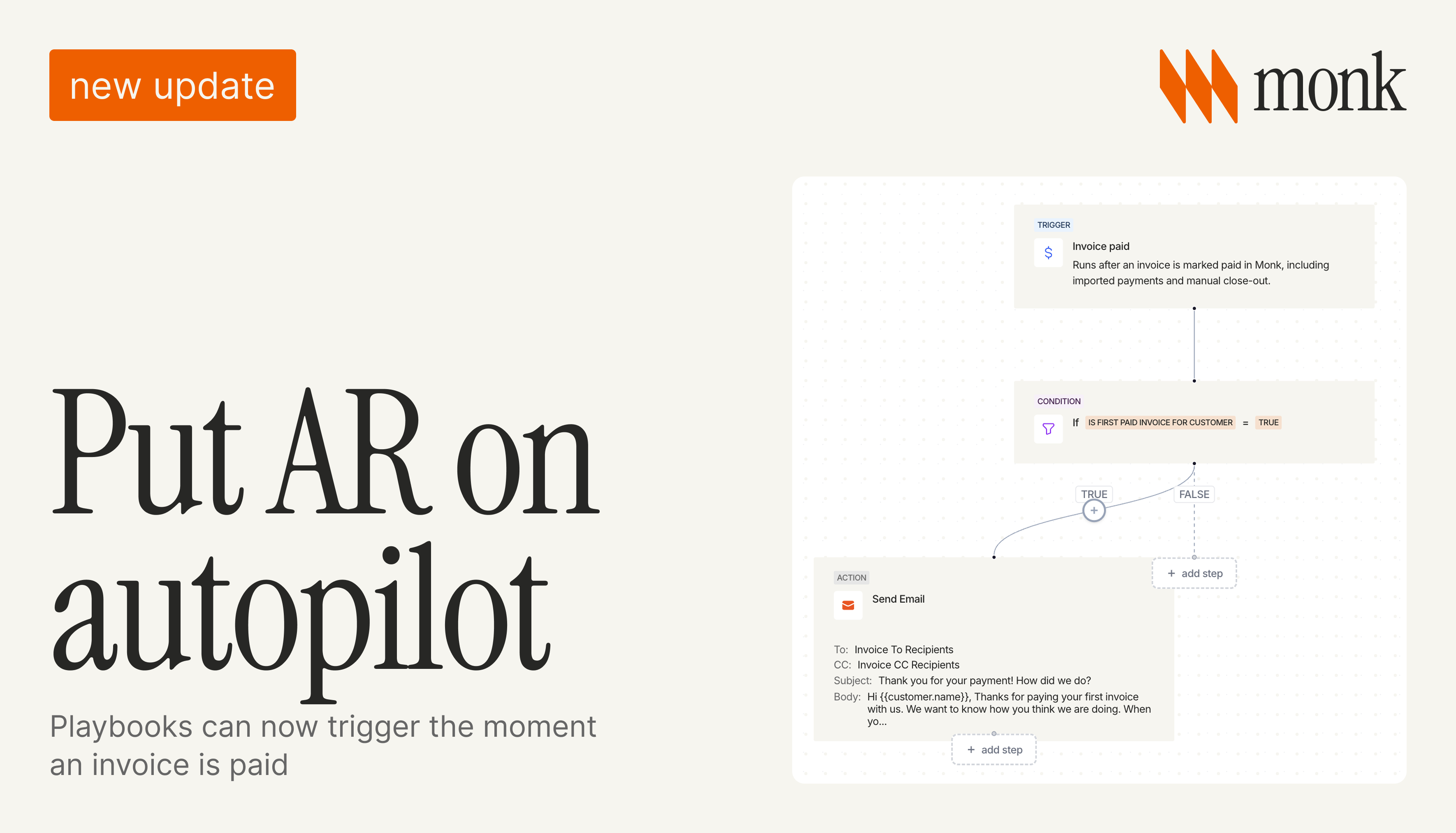
Most accounts receivable automation stops at the reminder. Tools are good at chasing an invoice before it's paid and go quiet the moment the money lands. But a paid invoice is the start of its own small pile of work: send a receipt, thank the customer, flag a first payment for the account team, kick off the next step in onboarding. That work is easy to skip when it's manual, and skipping it means going quiet on a customer right after they've paid.
Monk playbooks can now be triggered by a paid invoice. The same engine that runs your follow-ups before a due date can now run the work that should happen right after a payment.
What a paid-invoice playbook does
A playbook is a set of steps Monk runs on your behalf. Until now, the common trigger was time or status: an invoice goes overdue, so Monk follows up. The new trigger is the payment itself. When an invoice is marked paid, Monk can run whatever step you've set up next, with the full context of the customer, the invoice, and the payment already attached.
A simple example: the first time a new customer pays an invoice, Monk sends a short, warm thank-you note in your agent's voice. No one has to remember to do it, and it happens the moment the payment clears rather than a week later when someone notices.
Where teams use it
The trigger is general, so the uses are too. A few that come up often:
- A thank-you note on a customer's first paid invoice, so the relationship starts on a good note.
- An automatic receipt or confirmation the moment a payment is applied, so the customer never has to ask.
- A hand-off to the account owner when a key customer pays, so the team knows the account is current.
- A next-step kickoff, like starting an onboarding sequence or closing out a collections thread, once the balance is cleared.
Why trigger on payment at all
Because a payment is the clearest signal a customer gives you. Running the follow-up off that signal means the right message goes out at the right moment, without anyone having to track it.
It also keeps the whole picture in one place. The thank-you note, the receipt, and the hand-off sit in the same record as the reminders that came before, so the account team sees one continuous thread rather than scattered actions.
How it fits the rest of Monk
Paid-invoice playbooks use the same engine as the rest of Intelligent Collections. Monk applies the payment in cash application, sees the invoice move to paid, and runs the next step you've configured. Every action is logged, and anything that needs a person still goes to a person. Monk handles the repetitive follow-up so the team can spend its time where judgment actually matters.
Frequently Asked Questions
What triggers a paid-invoice playbook in Monk?
A payment. When an invoice is marked paid in Monk, the playbook runs the next step you've set up, with the customer, invoice, and payment context already attached.
What can it do when an invoice is paid?
Common steps include sending a thank-you note on a first paid invoice, issuing a receipt or confirmation, handing the account off to its owner, or kicking off the next workflow like onboarding.
Is this different from a normal collections reminder?
Yes. Reminders run before a payment to chase an invoice. Paid-invoice playbooks run after a payment to handle the follow-up work that usually gets skipped.
Do I have to build it from scratch?
No. It uses the same playbook engine as the rest of Monk, so you set the trigger and the steps once and Monk runs it going forward.
See what AR on autopilot looks like on your invoices. Book a demo.
Related reading: Introducing Cash Exceptions and the rebuilt AR Overview.
More on this: Introducing Playbook Previews: See the Next Draft Before It Sends.



.avif)