
+122%
cash on hand, month 1
5x
aging reduction
3
headcount saved
If your business is growing rapidly and you need to get AR under control, you should absolutely be using Monk.
Monk's deductions management flags short pays at posting, backed up from the portal, and coded to your reasons. Contractual deductions clear on their own. The rest go to whoever owns them.
Deductions management software that does the research, so your team makes the decisions.

Every short pay is flagged when cash is applied, not in a month-end report. A lump payment against 100 invoices is split down to the line, so you know exactly which ones came in short. Payment-by-PO and deductions taken weeks after the invoice are caught too.
Monk logs into Walmart, Target, Home Depot, Amazon Vendor Central, Lowe's, Coupa, Ariba, Tipalti and 100+ other portals, and pulls the remittance, reason code and claim documents. It reads remittance sent to your AR inbox too. No more downloading fifty SKU files.
Each deduction is matched to your reason codes and sorted into contractual, non-contractual, or shortage and quality. The agreed ones, like a retailer's 2% off every payment, clear to the right GL account on their own.
Sales, supply chain, or customer service get the deduction with the backup attached, and only the ones they own. Write it off, issue a credit memo, or dispute it through the portal. Approval limits are set by deduction type.
Remittance comes from Walmart's portal, a Costco download, a PDF in the AR inbox, and the stub on a check. Some retailers send a separate file for every SKU, so one payment means fifty downloads. Your team downloads it once to apply the cash, then goes back to find out what was taken.
By the time it's rebuilt in a spreadsheet, the window to dispute has often closed. So the easy thing is to plug a credit memo and move on.


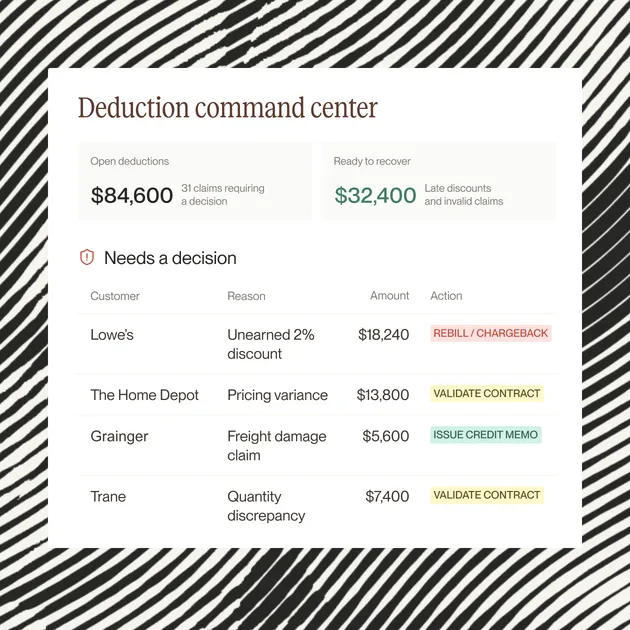
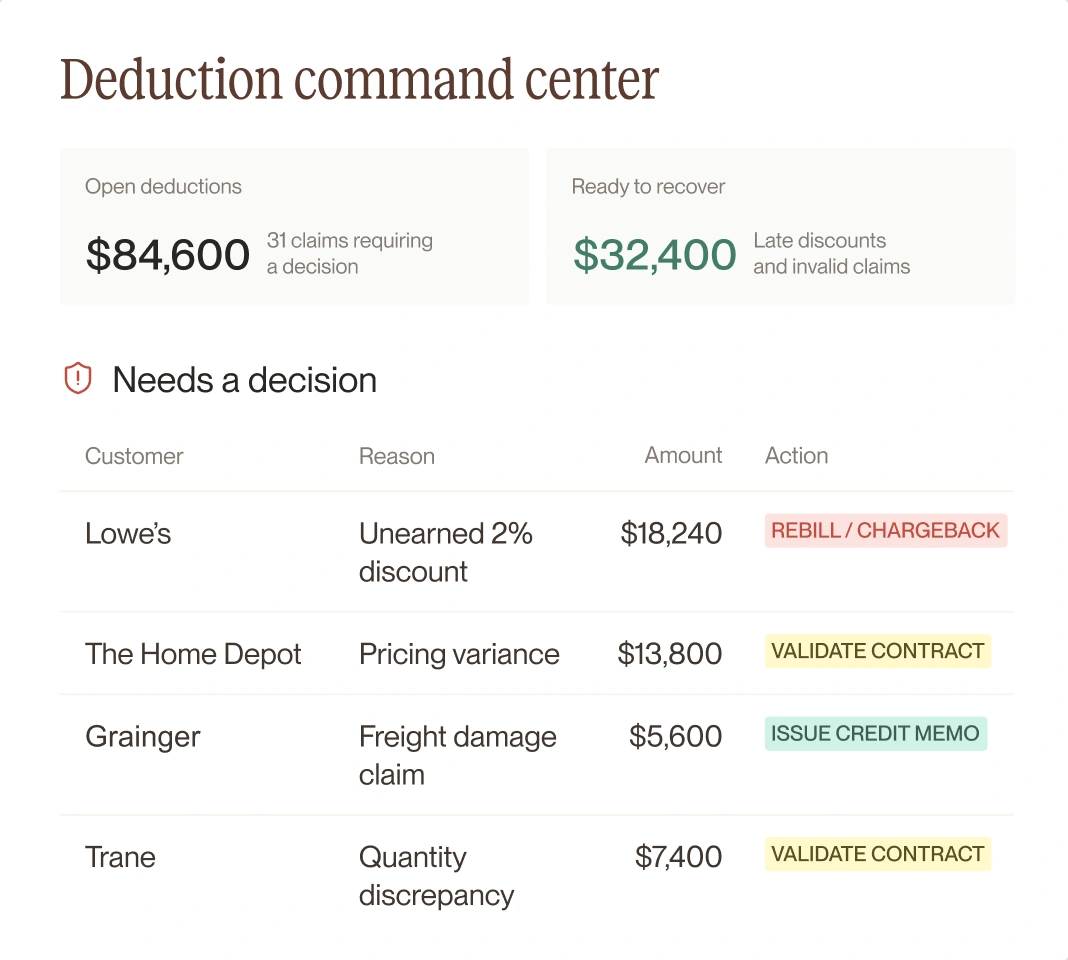
See open deductions by customer, reason code and age, plus how long each owner takes to resolve them. If a retailer that never claimed damages starts claiming them every week, you'll see it this month.

Every deduction keeps the remittance, the portal documents, the internal thread, and who approved it. When a controller asks why $18,000 was written off, the answer and the document behind it are one click away.
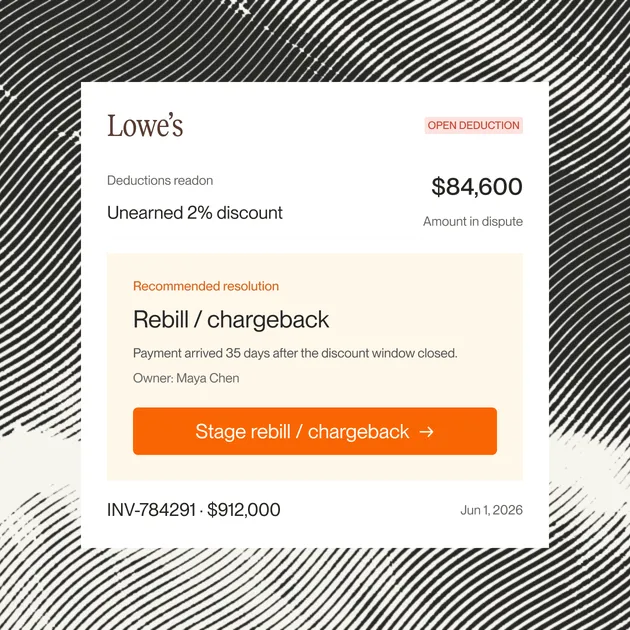
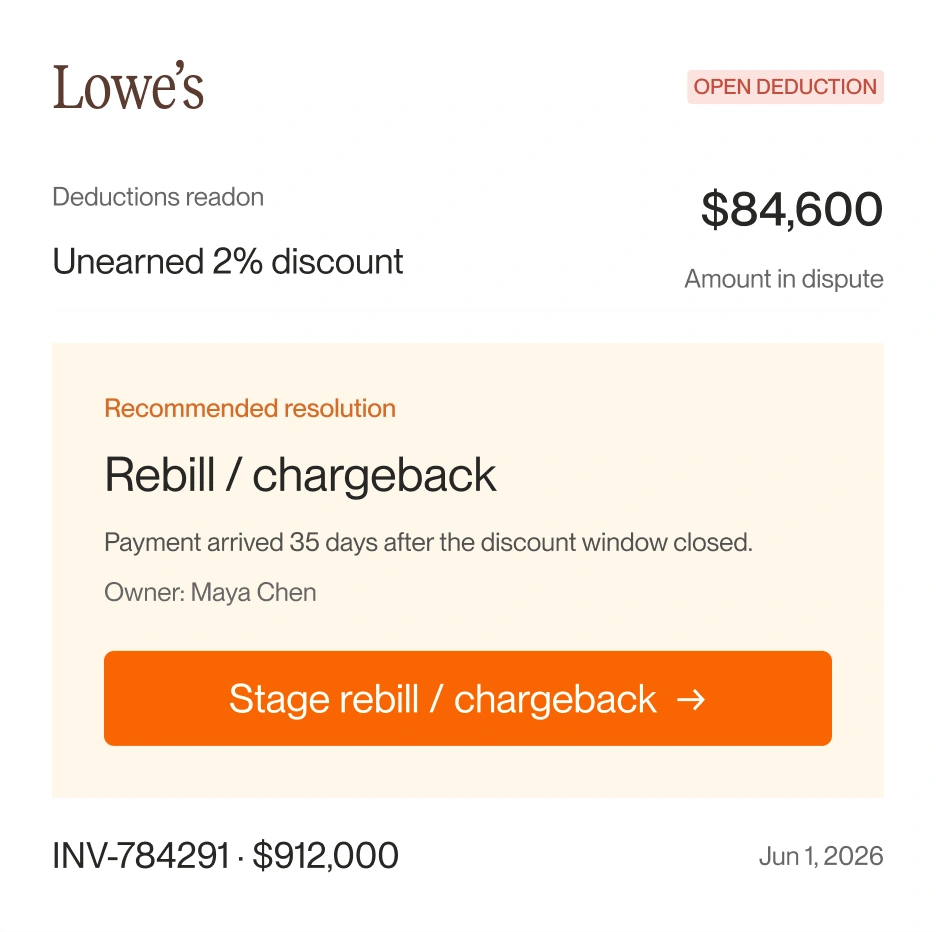
Each deduction is checked against the contract, the proof of delivery and the promo terms, so you know which ones are worth fighting.
Monk builds the dispute from the backup it already pulled and submits it through the retailer's portal.
Dispute windows, late-fee penalties and compliance fines are tracked, so nothing ages past the date you can claim it.
| Before Monk | After Monk |
|---|---|
Lump payment in, no idea which invoices were short | Short pay split to the invoice line at posting |
Fifty remittance files downloaded by hand, one per SKU | Remittance and backup pulled from the portal automatically |
Rebuilt in Excel, credit memo plugged, reason never checked | Coded to your reasons, contractual items cleared to GL |
No owner, no age. It lives in someone's inbox | Owner assigned, stage and age tracked |
Dispute window closes before anyone gets to it | Dispute filed with the backup, before the deadline |
If your business is growing rapidly and you need to get AR under control, you should absolutely be using Monk.
Software that finds each deduction, gathers the backup, codes the reason and gets it to the person who can resolve or dispute it. Monk does this from the moment a short pay posts.
Walmart, Target, Home Depot, Amazon Vendor Central, Lowe's, Coupa, Ariba, Tipalti and more than 100 others. Monk pulls the remittance, reason code and claim documents and attaches them to the deduction, so the backup arrives with the flag.
Monk pulls every file and consolidates them against the payment, so your team starts from one view instead of fifty downloads.
Yes. Bulk remittances are split to the invoice line, payment-by-PO is matched to the right invoices, and each short-paid line becomes its own deduction.
Monk checks each one against the contract, proof of delivery and promo terms, and tracks the dispute window. Your team spends its time on the ones that are invalid and still claimable.
Yes, when you approve one. Monk drafts it with the coded reason and syncs it back to your ERP. The decision to write it off stays with your team.
Whoever owns that reason, whether that is sales, the warehouse or compliance. They get the remittance, the portal backup and the internal thread, so they decide with the evidence in front of them.
The Deduction Command Center breaks every deduction down by reason, customer and outcome, so you can see which accounts or claim types are driving the increase without piecing it together from credit memos.
See every one split to the invoice, coded, and ready to decide on
