How Much Credit Should You Extend to a Customer?

How much credit to extend a customer comes down to two questions: how much you can afford to have outstanding with them at once, and how likely they are to pay you back on time. The strongest signal for the second is how the customer has paid you before, which usually already sits in your AR ledger, alongside an outside credit check. Set a limit you could absorb if it went unpaid, then adjust it as the customer pays.
How do you decide how much credit to extend a customer?
A practical process has four steps, and none of them takes long once the data is in one place.
- Estimate the exposure. Based on the customer's expected order size and your payment terms, how much will they owe you at any one time? That is the amount at risk.
- Check how they pay you. Pull their history with you: days to pay, disputes, short pays. A customer who settles in 20 days is a different risk from one who runs 45 days late every quarter.
- Add the outside view. A credit bureau or commercial data check shows how they pay everyone else and surfaces bankruptcy or risk signals you cannot see from your own book.
- Set a limit you could absorb. Extend an amount that would not hurt if it went unpaid, then raise it as the customer builds a track record with you.
What data should a credit decision use?
Two sources, and the best decisions use both. The first is your own payment behavior: how the customer has actually paid you, which is the single strongest predictor of whether they will pay you again. The second is external credit or commercial data, which tells you how they behave with other suppliers and flags risk beyond your own relationship.
Most teams lean only on the second because a bureau report is easy to pull, and leave the first sitting unused in their AR ledger. Combining them gives a fuller picture than either one alone.
Is there a formula for a customer credit limit?
There is no single formula that fits every business, but a common starting approach is to base the limit on the customer's expected purchasing and their payment reliability, then cap it at an amount you could write off without pain. Some teams also anchor to a percentage of the customer's net worth or the recommended limit from a bureau report.
For example, a customer expected to order about $10,000 a month on net 30 terms carries roughly a month of exposure at a time. If their payment history is clean and the bureau check is healthy, a $10,000 to $15,000 limit is reasonable. If they pay slowly or the outside data is weak, start lower and raise it as they prove out. Adapt the numbers to your margins and how much risk you can carry.
How often should you revisit a credit limit?
More often than most teams do. A limit set once at onboarding and reviewed a year later is stale for most of the time in between, because a customer's risk drifts continuously as they pay, dispute, and slow down. Revisit a limit when payment behavior changes, at renewal, and on any account where exposure is growing. If your tools keep the payment picture current, you can let the limit move with the customer instead of waiting for a review cycle.
What are the signs you should lower a limit?
Watch for drift from a customer's own normal pattern: an account that usually pays in 20 days trending toward 35 on invoices that are not even due yet. Rising disputes or short pays, slower responses to outreach, and a downgrade in their external credit profile are all reasons to tighten exposure. The goal is to catch the change early, while it is still a check-in rather than a write-off.
How does Monk help you set a credit limit?
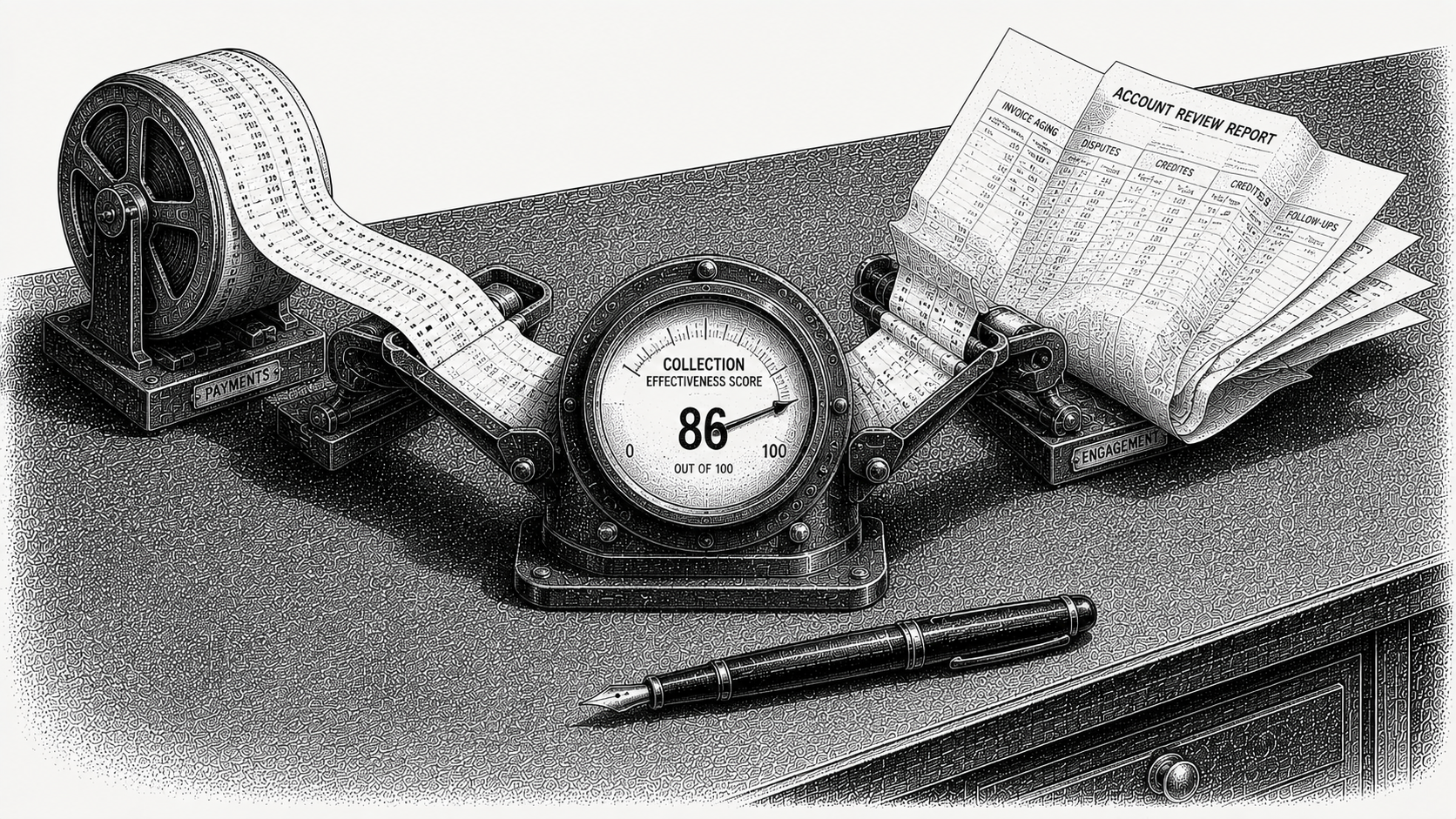
Monk runs your collections and connects to your ERP and bank, so it already sees how each customer pays you in practice: days to pay, disputes, short pays, with the full history. For the outside view, you connect the credit bureau or commercial data provider you already work with, and Monk brings that in alongside your own data. Monk rolls both into a single credit score for each customer, so one number reflects how they pay you and their outside risk, and it generates a full credit report with a suggested limit on the customer page. The decision takes seconds, and a person still makes the call. More than $2B in receivables run on Monk today, and Monk is SOC 2 Type II.
For more, see how Monk's credit management workspace works, dynamic credit management, and our guide to the best credit management software.
Frequently asked questions
How much credit should you extend to a new customer?
Start conservative. Base the first limit on their expected order size and an outside credit check, and keep it to an amount you could absorb if it went unpaid. Raise it as they build a payment track record with you.
What is the best way to decide a customer credit limit?
Combine how the customer has paid you before with an external credit check, then set a limit tied to your exposure and how much risk you can carry. Behavioral history is the strongest single signal.
Is there a formula for setting a credit limit?
No single formula fits everyone. A common approach ties the limit to expected monthly purchasing and payment reliability, capped at an amount you could write off without pain, sometimes anchored to a percentage of the customer's net worth or a bureau's recommended limit.
How often should credit limits be reviewed?
More often than once a year. Risk drifts as a customer pays, so revisit limits when behavior changes, at renewal, and on accounts with growing exposure, or let the limit move continuously if your tools keep the payment picture current.
What data do you need to set a credit limit?
Your own payment history with the customer and an external credit or commercial data check. The first predicts how they will pay you specifically, and the second shows how they behave with others and flags outside risk.
Does Monk give each customer a credit score?
Yes. Monk generates a credit score for each customer that combines how they pay you with the external credit or commercial data you connect, so one number reflects both the inside and outside view, alongside a full credit report and a suggested limit.
Does Monk set credit limits automatically?
Monk generates a credit report with a suggested limit by combining your payment behavior with the external data you connect. It suggests the limit in seconds, and a person makes the final call.



.avif)