Monk vs BlackLine: AR Automation Compared for 2026

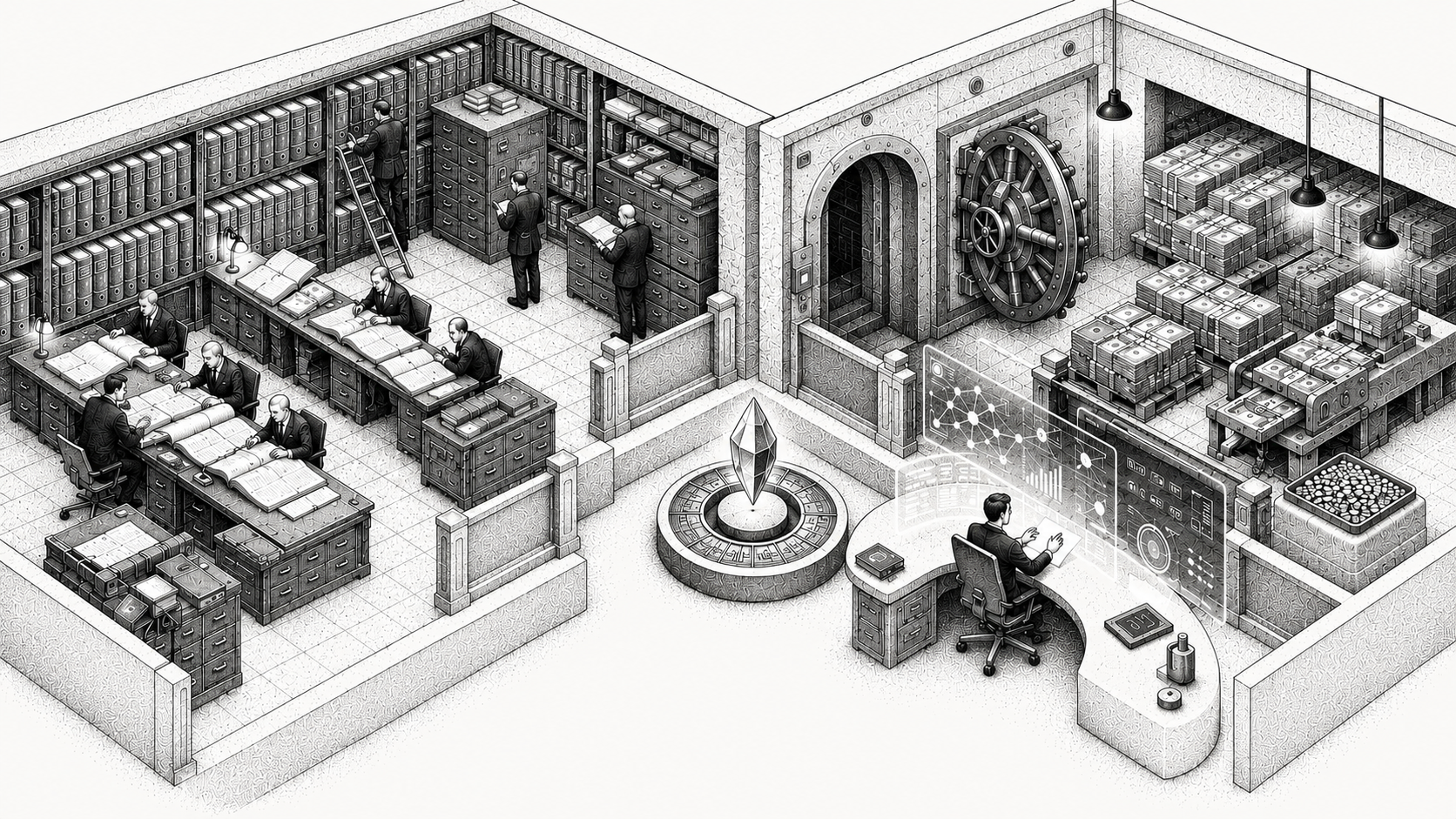
Monk vs BlackLine for 2026 is a comparison of two platforms that sit in different parts of finance and serve different scales of company. BlackLine is an enterprise platform centered on the financial close, reconciliation, and intercompany accounting, with an invoice-to-cash suite that runs alongside those modules. Monk is an AI-native invoice-to-cash platform focused on collections and getting paid, built for any B2B finance team that has outgrown spreadsheets and manual follow-up and wants to turn revenue into cash quickly. Both are well-built for their respective audiences; the decision usually comes down to whether your priority is enterprise-grade close management across many entities, or executing receivables and reducing DSO without a large implementation. Below we cover what each platform is built for, how they compare by approach, and when each one makes the most sense.
For the full picture of where cash slows in the AR cycle, see our guide to the best accounts receivable automation software in 2026 and our hub of Monk alternatives and comparisons.
What is each platform built for?
BlackLine is built for large enterprises that need financial close, reconciliation, and intercompany accounting at scale. It brings structure and control to the period-end process across multiple entities, with accounts receivable available as part of a broader suite. For finance organizations whose central challenge is closing the books accurately and on time across a complex corporate structure, that depth is the reason to choose it, and its established footprint in large enterprises reflects how well it serves that need.
Monk is built for how B2B teams from trucking and manufacturing to staffing, distribution, and software get paid, and it treats accounts receivable as a growth lever on the view that cash flow is the metric increasingly defining growth. It combines intelligent collections, automated cash application, and cash forecasting in one AI-native system, with an AR agent, Julia, that executes the work rather than queuing it. Monk runs on top of your existing ERP and CRM, manages $2B+ in receivables today, and is designed to pull cash in faster for growing finance teams. The two platforms also reflect different problems a finance leader might be solving: one is about reporting and controlling the numbers at period-end with confidence, the other is about acting on open receivables every day so cash arrives sooner. A growing company often feels the receivables problem first, well before it has the scale or multi-entity complexity that a full close platform is designed to manage.
How do Monk and BlackLine compare?
The table below summarizes the differences in neutral terms. The two platforms address different jobs and company sizes, so the comparison is best read as a matter of focus and stage rather than a ranking.
| Dimension | Monk | BlackLine |
|---|---|---|
| Primary focus | AI-native invoice-to-cash and collections | Enterprise financial close and reconciliation |
| Typical customer | Enterprise and high-growth finance teams, across any industry | Large enterprises with multi-entity structures |
| Collections | Intelligent collections with AR agent Julia, reasoning about context and next best action; 24% higher response than dunning | Workflow-based AR within a broader close suite |
| Cash application | Automated cash application at an 80% automatic match rate, rising to 95% with suggested rules | Part of the reconciliation and close framework |
| Operating model | Live in less than one week; does not take a percentage of revenue | Enterprise implementation, scoped to the organization |
| DSO impact | 40% average reduction | Close accuracy and control are the primary metrics |
The clearest way to read the difference is by architecture and by the job each platform is doing. Some tools record what happened, some send reminders, some surface recommendations and route them to a person, and close-focused suites bring rigor to reconciliation and period-end. Monk sits at the execution end of the receivables cycle: it decides who to contact and how, performs the outreach, applies incoming payments, and rolls everything into a live forecast. Knowing where a platform sits on that spectrum, and what stage of company it is designed around, tells you more about fit than any feature list.
Why do finance teams choose Monk for AR?
Most finance teams, from high-growth companies to enterprise AR organizations, want receivables work executed without standing up a large project or a dedicated close team. Monk connects your ERP and CRM and typically goes live in less than one week. Its intelligent collections earn a 24% higher response rate than standard dunning because Julia reads invoice context, payment history, and prior correspondence to choose the next best action and adapts tone to each customer's history. Customers see a 40% average reduction in DSO, save roughly 26 hours per month, and resolve 90% of collections with zero human intervention. Exception handling is where this matters most: a disputed line item, a short payment, or a buyer who needs a portal upload would normally stall a queue, but Monk runs designed playbooks for those situations so the cycle keeps moving without a person stepping in for routine cases.
Monk pairs that automation with auditability: autonomous execution backed by a human-designed backstop, so the exceptions that do need a human route cleanly to your team. Incoming payments are applied automatically at an 80% automatic cash application match rate, rising to 95% once teams enable suggested rules, Monk is SOC 2 Type II compliant, and it does not take a percentage of revenue. As Nico Serventi, Head of Finance at Subject, put it, "Monk gave us immediate visibility into unbilled revenue, tightened our collections process, and became a true AR system of record, without adding headcount." That system-of-record effect is why one measure customers track is 2.4x average cash on hand in their first quarter, and why Siro cut its overdue AR by 45% after moving collections onto Monk.
What ties these results together is that Monk runs the full receivables cycle rather than a single step. The agent handles wrong contacts, missing tax forms, PO mismatches, and routing to enterprise AP portals, then applies the cash and updates the forecast, which is why teams evaluating intelligent collections often find the end-to-end model the deciding factor.
When is BlackLine the better fit?
BlackLine is the stronger fit when your priority is enterprise-grade financial close, intercompany accounting, and multi-entity reconciliation, and when the organization has the scale and structure that warrant a comprehensive close platform. Large finance organizations that need rigorous period-end control across many entities will find BlackLine purpose-built for that work. Monk is the stronger fit when getting invoices paid faster and reducing DSO, without a large implementation, is the goal. The two are not mutually exclusive either: a company can run a close platform for period-end and a dedicated receivables platform for daily collections, with each handling the work it was designed for. The right question is which problem is most pressing today and which tool is built to execute it. For a closely related receivables comparison, see our Monk vs Bill.com comparison.
Frequently asked questions
What is the main difference between Monk and BlackLine?
BlackLine is an enterprise financial close and reconciliation suite for large, multi-entity organizations. Monk is an AI-native invoice-to-cash platform focused on collections and getting paid, designed for any B2B finance team that has outgrown spreadsheets and manual follow-up and live in less than one week.
Is Monk a BlackLine alternative?
For receivables and collections once AR outgrows spreadsheets and manual follow-up, Monk is a strong fit that executes the full cycle. For enterprise close and intercompany accounting, BlackLine is built for that job.
How long does Monk take to implement?
Monk typically runs first collections within less than one week of connecting your ERP and CRM, with white-glove service supporting the rollout. It does not take a percentage of revenue.
How does Monk's collections approach work?
Monk's intelligent collections are run by an AR agent that reasons about invoice context, payment history, and prior correspondence to choose the next best action and adapt tone per customer. That approach earns a 24% higher response rate than standard dunning.
What integrations does Monk support?
Monk connects natively with Salesforce, QuickBooks, HubSpot, Stripe, NetSuite, and Anrok, plus Slack, Gmail, and Docusign. These keep collections, cash application, and forecasting in sync with your existing finance stack.
What results do Monk customers see?
Customers see a 40% average reduction in DSO, roughly 26 hours saved per month, and 90% of collections resolved with zero human intervention. Incoming payments are applied automatically at an 80% automatic cash application match rate, rising to 95% once teams enable suggested rules.
Ready to compare Monk against your current process? Book a demo.
If this is the problem you are solving, these go deeper: BlackLine Alternatives in 2026, Monk vs Sequence: AR Automation Compared for 2026, Monk vs Bill.com: AR Automation Compared for 2026 and The Month-End Close Process: A 2026 Guide for Finance Leaders.



.avif)