Monk vs Stuut: AR Automation Compared for 2026

Monk vs Stuut: Which Should You Choose in 2026?
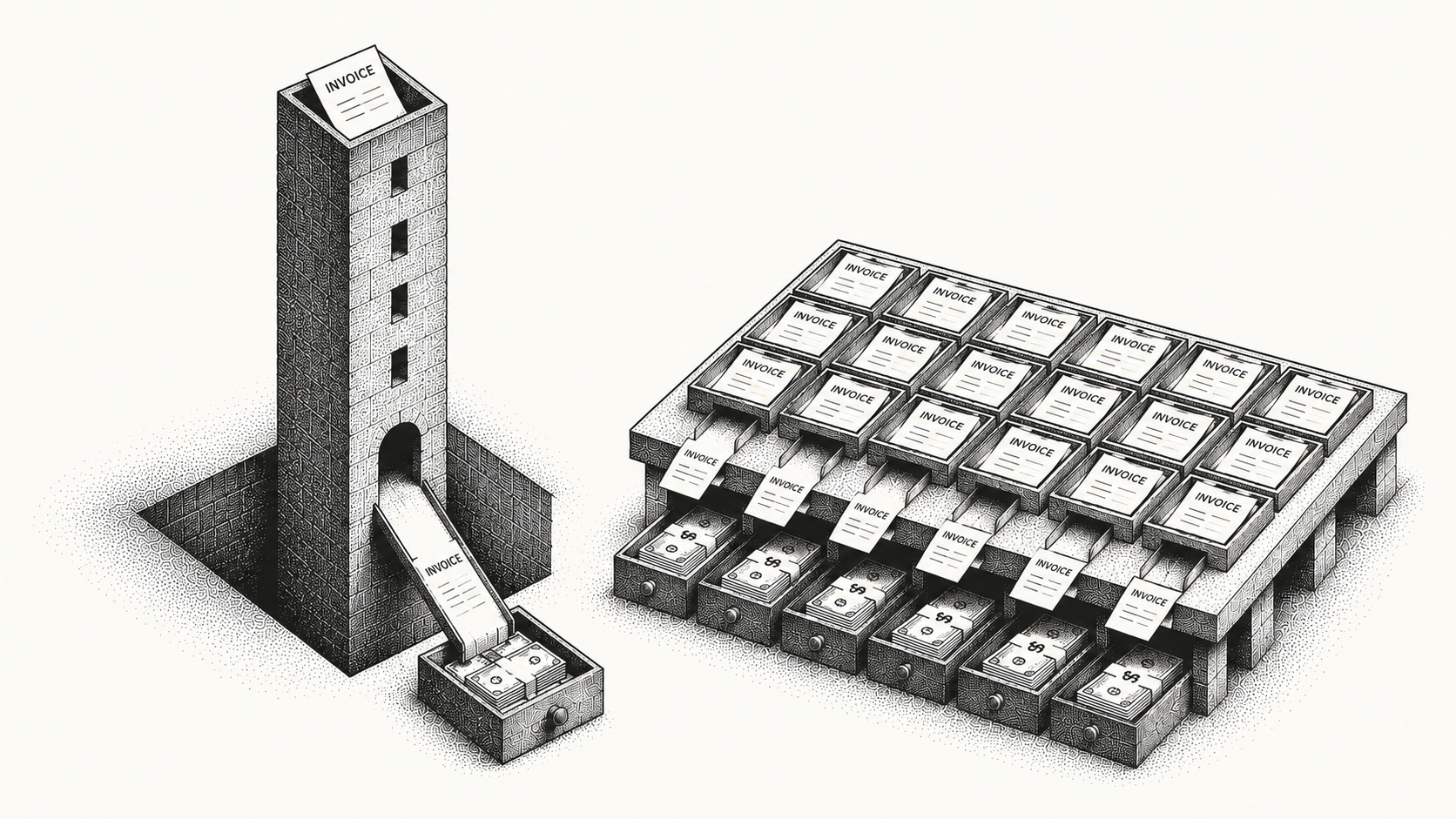
Monk and Stuut are both AI-native accounts receivable platforms, so the right choice comes down to depth versus breadth and which approach matches where your cash gets stuck. Stuut spans a broad set of AR functions across collections, payments, cash application, deductions, credits, and disputes, with a footprint that leans toward industrial and enterprise environments. Monk concentrates depth on the part of AR that needs the most judgment: getting invoices paid through Intelligent Collections and AI-native cash application, executed end to end. If your AR is document-heavy and spread across many functions, Stuut's surface area is a legitimate fit; if collected cash is your bottleneck, Monk is built to move it through deep, automated collections.
This comparison covers what each platform is built for, how their architectures differ, and where Monk's results come from. Late invoices tie up cash that finance teams could put to work elsewhere. For the full picture of where cash leaks across the cycle, see Monk's Definitive AR Guide.
What Is Each Platform Built For?
Stuut positions as autonomous AR across many functions, with configurable playbooks and a presence in manufacturing and industrial AR. Its breadth suits multi-document, deduction-heavy environments where many distinct AR tasks need to be coordinated in one place. For teams whose complexity is in the number of functions they manage, that wide coverage is a real advantage, because it lets one platform touch deductions, disputes, and credits in the same place rather than stitching several tools together.
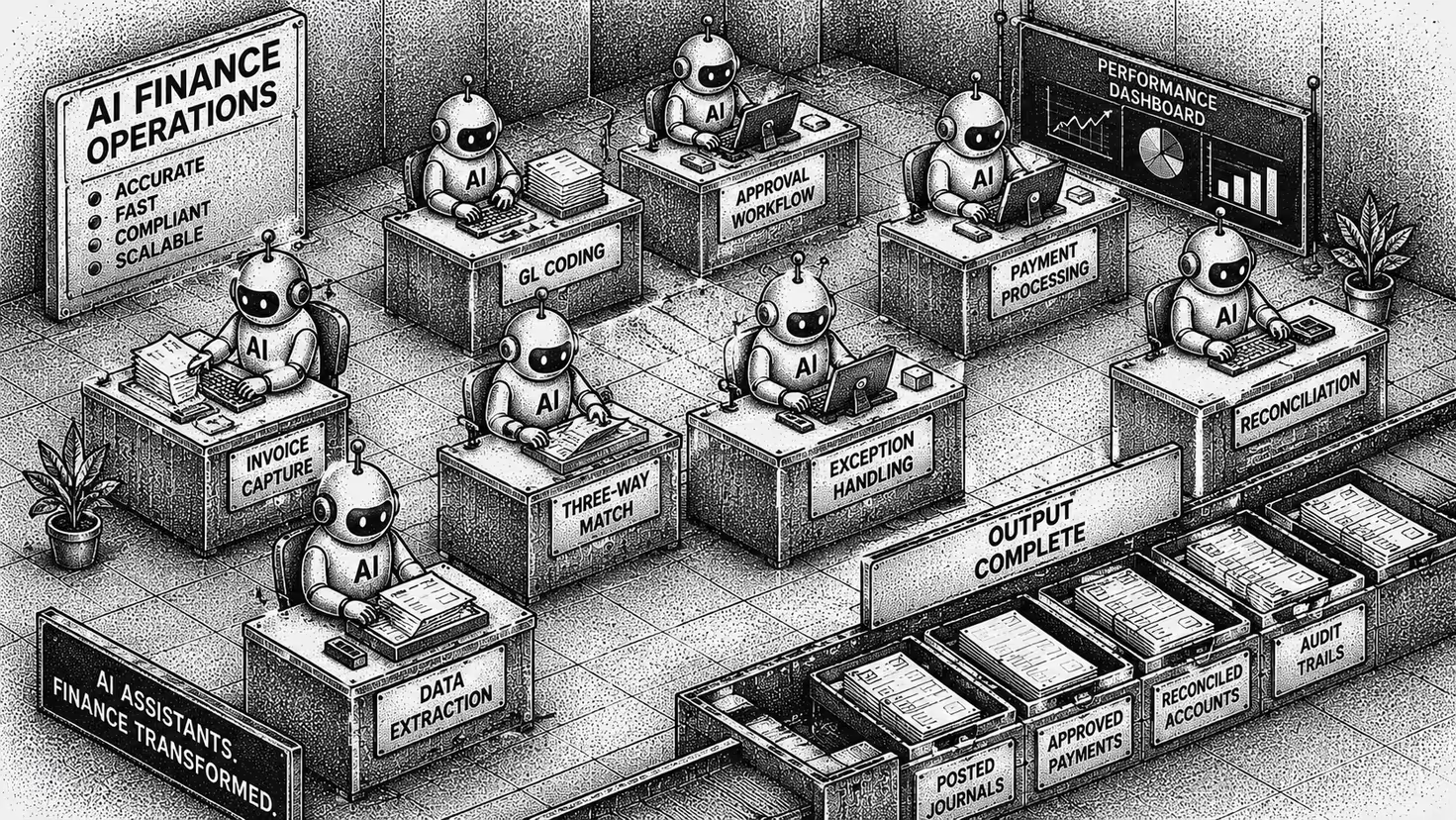
Monk runs the invoice-to-cash cycle with Intelligent Collections at its center, paired with AI-native cash application and a forecasting and strategic layer. It is built for finance teams sending more than 30 invoices a month, across any industry, that need to turn revenue into cash faster without adding headcount. Monk pairs that automation with auditability, so every follow-up, escalation, and cash match is traceable and finance leaders can see exactly why each action happened. That combination of autonomous execution and a clear audit trail is what lets teams trust the system to act on real customer relationships rather than only flagging work for a human to finish.
How Do Monk and Stuut Compare?
The clearest way to read the difference is by what each platform is architected to do. Stuut spreads across a wide set of AR functions; Monk goes deep on collecting cash and applying it. The table below frames both approaches neutrally so you can match each to your own situation and the shape of your receivables.
| Approach | Monk | Stuut |
|---|---|---|
| Primary emphasis | Depth on collections and cash application | Broad multi-function AR coverage |
| AI architecture | AI-native invoice-to-cash with AR agent Julia | Autonomous AR agents across functions |
| Collections outreach | Context-aware, adapts tone per customer history | Workflow-driven across many functions |
| Typical customer profile | B2B finance teams sending 30+ invoices a month, any industry | Industrial and enterprise lean |
| Cash application | AI-native, 95% match rate | Part of the broader function set |
| Reported DSO impact | 40% average reduction | Not published |
Why Do Growing Teams Choose Monk?
Monk's distinction is that it executes collections end to end rather than recording the work or reminding someone to do it. Intelligent Collections, run by Monk's AR agent Julia, ingests the context of each conversation and adapts tone per customer history rather than firing fixed sequences. Monk reports this drives a 24% higher response rate than standard dunning.
That execution depth matters most on the hard part of AR: the exceptions. Wrong contacts, missing W-9s, purchase-order mismatches, and routing through enterprise AP portals are predictable, recurring blockers. Monk runs exception-handling playbooks that resolve these where it has full confidence and escalate only the rest, resolving 90% of collections with zero human intervention. Customers see a 40% average reduction in DSO, save an average of 26 hours per month, and reach an 80% automatic cash application match rate, rising to 95% once teams enable suggested rules. Because those exceptions are predictable and recurring, automating them is where the durable working-capital gains come from rather than from sending more reminders on a fixed schedule.
The impact shows up quickly. Pump uses Monk to run collections at scale and saves more than 40 hours per week that the team previously spent on manual follow-up, as detailed in the Pump case study. That time goes back into higher-value finance work rather than chasing payments, which is exactly the kind of leverage a growing team needs when revenue is scaling faster than headcount.
Where Does Monk's Approach Differ from Stuut?
Stuut and Monk both apply AI to receivables, and both approaches are legitimate. The difference is where each invests its depth. Three distinctions tend to decide the evaluation.
Depth on the judgment-heavy part of AR
Broad coverage spreads effort across many functions, which suits teams whose problem is breadth. Monk concentrates its intelligence on collections and cash application, the steps where adapting to a real customer relationship actually moves DSO. Personalized follow-ups, reading replies for intent, and resolving 90% of collections with zero human intervention are where the durable working-capital gains come from.
Built for any B2B finance team that has outgrown manual AR
Monk is purpose-built for any B2B finance team that has outgrown spreadsheets and manual follow-up, regardless of industry, integrating directly with the systems those teams run, including Salesforce, QuickBooks, HubSpot, Stripe, NetSuite, and Anrok, plus Slack, Gmail, and Docusign. Because Monk reasons from the customer relationship rather than a fixed vertical setup, it works the same whether you run trucking, manufacturing, staffing, distribution, or software. When billing, CRM, and payment context already live in those systems, Monk reads that context and runs collections against it without a heavy implementation project.
An operating model aligned with cash recovery
Monk goes live in less than one week, does not take a percentage of revenue, and pairs the platform with hands-on service so teams are supported from day one. Combined with a forecasting and strategic layer, that model treats AR as a growth lever. With $2B+ in receivables under management and SOC 2 compliance, Monk runs collections at scale while keeping every action auditable. One Monk customer reached a 2.4x average increase in cash on hand in the first quarter after automating collections.
When Is Stuut the Better Fit?
If your AR is deduction-heavy and multi-document across industrial workflows, Stuut's broad function coverage is well worth evaluating on those merits. Monk is the stronger fit when collections depth and speed to value matter most and you send more than 30 invoices a month, in any industry. For a wider field, see the best accounts receivable automation software in 2026, the Monk alternatives and comparisons hub, and the related Monk vs Tabs breakdown.
Frequently Asked Questions
What is the main difference between Monk and Stuut?
Stuut spans a broad set of AR functions with an industrial and enterprise lean. Monk concentrates depth on Intelligent Collections and AI-native cash application for B2B finance teams sending more than 30 invoices a month in any industry, executing the invoice-to-cash workflow end to end.
Is Monk a Stuut alternative?
Yes. For teams that prioritize collections depth and speed to value over broad multi-function coverage, Monk is a direct alternative, and it fits any B2B finance team that has outgrown spreadsheets and manual follow-up, regardless of industry.
How is Monk's collections engine different?
Monk's Intelligent Collections, run by AR agent Julia, ingests the context of each conversation and adapts tone per customer history rather than firing fixed sequences. Monk reports this drives a 24% higher response rate than standard dunning.
What results do Monk customers see?
Customers report a 40% average reduction in DSO, 26 hours saved per month on average, an 80% automatic cash application match rate, rising to 95% once teams enable suggested rules, and 90% of collections resolved with zero human intervention.
How fast can Monk go live?
Monk connects your existing ERP and CRM and typically goes live in less than one week, so teams start recovering cash almost immediately because it layers on top of the stack you already run.
Which systems does Monk integrate with?
Monk integrates directly with Salesforce, QuickBooks, HubSpot, Stripe, NetSuite, and Anrok, plus Slack, Gmail, and Docusign for workflow and communication.
Does Monk take a percentage of the cash it collects?
No. Monk does not take a percentage of revenue, and it pairs the platform with hands-on service and a less than one week go-live.
Ready to compare Monk against your current process? Book a demo.
Adjacent to this: Monk vs Fazeshift: AR Automation Compared for 2026.



.avif)