Rafael Solari

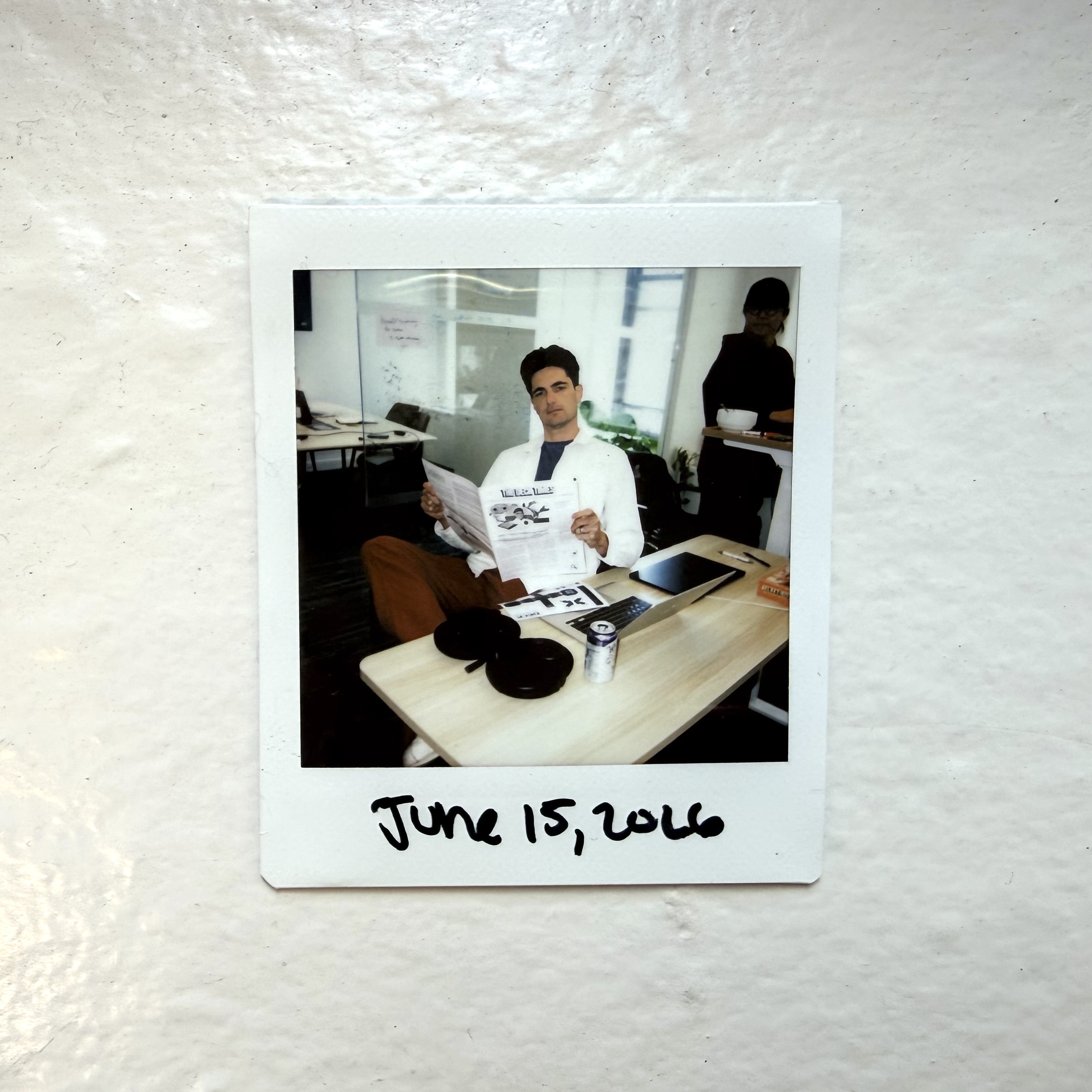
After building Tally, I took my time.
Five and a half years building governance infrastructure for DeFi protocols earns you the right to be deliberate.
I had a simple framework for deciding what's next: (1) the problem had to be hard, (2) the team had to have already proven something, and (3) AI had to be creating new capability, not just replacing headcount.
Monk was the first company that met all three.
The journey
I have been building since 2010.
I started at Shop It To Me writing full-stack e-commerce apps and recommendation systems. Then Neustar, where I scaled a data pipeline processing billions of ad impressions a day.
Then at Jobr. I was a Staff software engineer, owning search and recommendation. When the acquisition happened, I led the integration. Then at Namebase I was a founding engineer where I built USD payment rails, focusing on security and scale. Those two things are not negotiable when the product is money. You do not learn that principle. You internalize it by building something where the cost of getting it wrong is real.
Then Tally. My co-founder and I built governance tooling for the largest DeFi protocols in the world. The core engineering challenge was deceptively hard: we re-implemented smart contract logic in a Go ETL pipeline feeding Postgres and kept that pipeline in perfect sync with on-chain state for five years. Protocols holding billions in assets made decisions based on our data. If the reconciliation drifted, real things broke.
That is what you learn from building financial systems: the margin of error is zero. Not close to zero. Zero.
What I was looking for
Post-Tally, I had one real question: where does AI open a door that was previously closed?
Not "where can you automate a job away" = that bar is too low. I wanted to find a problem where AI makes something possible that simply was not possible before. Where the product exists because of AI, not despite the fact that it has to use AI.
The other thing I looked for: a team that had already done something hard. Not traction as a vanity metric = logos, ARR, happy customers in real industries who depend on the platform for their cash flow. Evidence that the founders could navigate hard decisions under pressure and come out the other side building.
Series A is the right moment to join a company like that. The guessing is over. You are building. And yet, you get tremendous amount of ownership.
Why Monk
Most businesses today process AR the same way they did twenty years ago. A payment lands. Someone reads the remittance. Someone matches it to an invoice or to ten invoices, or fifty. The name on the remittance might not match the customer name exactly. The amount might be off by a partial payment, an overpayment, a discount applied incorrectly. Someone, somewhere, spends hours making judgment calls that should not require a person.
Monk is building an agent that does this in minutes.
When I understood the technical requirements (reconciling external bank state against an internal invoice ledger, handling ambiguity without introducing error, scaling to enterprise volumes, knowing exactly when to escalate versus act) I recognized them. These are the same constraints I lived at Tally. Exact reconciliation under financial accuracy requirements, at scale, with no margin for drift. Same problem. Massively larger market.
Cash app is only part of the platform today and a minute part of a much larger vision that the team is building.
The team
I wanted a team that thought carefully about what it meant to build agents that handle real money. That instinct is not obvious. Most agent demos are optimized for impressiveness. That is the wrong instinct when the agent is talking to your customers about outstanding invoices.
The team at Monk had already worked through the hard version of that question. Opinionated design. That is the right framework and more importantly, it is a framework they had earned by building it in production, not by writing about it.
I am here to build in applied AI for tough financial workflows and to do it right. And I am here with the right team to do it.
We are hiring if you are up for a chat - check out open roles here or message me direct rafael@monk.com



.avif)