Best Collections Software in 2026


The best collections software in 2026 does three things well: it automates outreach so invoices get followed up consistently, it applies incoming cash accurately, and it gives finance a live view of receivables performance. For teams that want all three with minimal setup, Monk stands out as an AI-native invoice-to-cash platform with intelligent collections, a less than one week go-live, and a 40% average reduction in DSO. This guide covers the criteria that matter, compares nine leading tools, and answers the questions buyers ask most.
For deeper context, read our Definitive AR Guide, our overview of AR alternatives and comparisons, our breakdown of intelligent collections software, and our nine-point evaluation checklist.
How we picked
We evaluated tools on five things a finance team feels in the first quarter: whether outreach adapts to the account or repeats a fixed sequence, whether cash application is built in or bolted on, how deeply the tool reads your billing system and ERP, how it handles the edge cases that stall invoices, and how long it takes to go live.
Descriptions of other tools reflect each vendor's public positioning at a neutral level. They are not a ranking of quality, and the right answer depends on your team size, your stack, and how fast you need cash to move. Monk is our product, and it is first on this list because we built it for this problem. Read the rest on the merits and run a short pilot on your own overdue accounts before deciding.
What should you look for in collections software?
Strong collections software covers the full path from invoice to cash rather than sending reminders alone. The criteria that separate the best tools come down to how intelligently they reach customers, how accurately they handle the money that arrives, and how quickly they start producing results.
- Automated, intelligent outreach that adapts to each account instead of sending the same dunning sequence to everyone.
- Cash application that matches incoming payments to open invoices automatically.
- A clear view of receivables so you always know where accounts stand.
- Fast time to value so you see results in days rather than quarters.
- Measurable DSO impact backed by real outcomes.
- Broad reach into buyer systems, including AP portals like Coupa and Ariba, so outreach lands where invoices are processed.
A useful test is to ask each vendor for outcomes rather than feature lists. How much does it reduce DSO, how accurately does it match cash, and how many issues resolve without a person stepping in? Those numbers tell you more than a checklist.
How do the best collections tools compare?
The table below compares nine collections platforms across the criteria above, with Monk first.
| Tool | Core strength | Collections approach | Cash application | Typical time to value |
|---|---|---|---|---|
| Monk | AI-native invoice-to-cash with intelligent collections | Adapts to account context over email and voice; 90% resolved with zero human intervention | Built in, 80% automatic match rising to 95% with suggested rules | less than one week |
| HighRadius | Enterprise invoice-to-cash suite | AI worklists and prioritization for large AR organizations | Part of the broader suite | Enterprise program timeline |
| Billtrust | Broad B2B AR platform | Collections as one module across invoicing, payments, and credit | Included, with digital lockbox | Varies by modules purchased |
| Versapay | Collaborative AR with a buyer portal | Prioritization plus customer self-service in a portal | Part of the AR workflow | Varies by org and scope |
| Esker | Order-to-cash and document process automation | Collections within a wider document automation suite | Part of order-to-cash automation | Varies by org and scope |
| Quadient | AR automation and collections management | Accessible collections management workflows | Part of the AR workflow | Varies by org and scope |
| Upflow | B2B collections workflows and analytics | Configurable workflows with aging visibility | Receivables tracking in workflows | Faster than enterprise suites |
| Tesorio | AI for inbox triage and forecasting | Prioritization, reply triage, payment-promise extraction | Connects to existing systems | Varies by org and scope |
| Gaviti | Standalone collections layer | Playbooks alongside your existing ERP | Works with your current stack | Varies by org and scope |
Each tool has a legitimate audience. A short proof period on a slice of your real overdue accounts is the most reliable way to compare, because numbers from your own ledger beat any vendor claim.
The nine platforms in detail
Each entry below follows the same shape: who it fits best, what it does, and a fit boundary worth checking before you buy.
Monk
Best for: B2B and SaaS finance teams that want collections, cash application, and receivables reporting in one AI-native system with a fast start.
Monk is built AI-native, so collections, cash application, and reporting work together rather than as bolted-on modules. At the center is an AR agent named Julia that runs intelligent collections, ingesting the context of each conversation and responding more effectively than a fixed dunning sequence. Voice is part of the same product, so the agent places outbound collection calls and answers inbound calls from customers, working from the same account record as the email thread.
The outcomes are concrete. Teams see a 40% average reduction in DSO, collections run 24% more effective than traditional dunning, 90% of collections are resolved with zero human intervention, teams save roughly 26 hours per month, and cash application reaches an 80% automatic match rate, up to 95% with suggested rules. More than $2B in receivables run on Monk, and the platform is SOC 2 Type II compliant.
It connects natively to Salesforce, QuickBooks, HubSpot, Stripe, NetSuite, Xero, Sage Intacct, Rillet, and Anrok, along with Slack, Gmail, and Docusign, and it files into more than 600 procurement portals including Coupa and Ariba, roughly 87% of them autonomously. Monk does not take a percentage of your revenue.
Consider: organizations that need enterprise shared-services breadth across many countries and a very large AR staff may want a broader suite.
HighRadius
Best for: large AR organizations running collections as part of an enterprise invoice-to-cash program, typically with SAP or Oracle at the center.
HighRadius positions its collections management around AI-driven prioritization and worklists, dispute handling, and integration across enterprise ERP estates. If you manage receivables across multiple countries and entities at scale, the breadth is the point.
Consider: deployment is an enterprise program rather than a short project, so lean finance teams should weigh time to value carefully. See our HighRadius alternatives guide for the mid-market view.
Billtrust
Best for: teams making a platform decision across the whole AR stack rather than buying a standalone collections tool.
Billtrust places collections inside a broader platform that also covers invoicing, payments, credit, and cash application, with strong automated invoice delivery into customer AP portals and payment networks.
Consider: scope and timeline depend on which modules you buy, so confirm what is in the first phase. Our Billtrust alternatives guide compares the options.
Versapay
Best for: teams that want buyers logging in to view invoices and pay themselves.
Versapay builds collections around a customer-facing portal, with prioritization and payment visibility shared between you and your buyer.
Consider: portal adoption is part of the rollout, so email-first teams should confirm their customers will use it. See Versapay alternatives.
Esker
Best for: organizations automating AP and AR document flows together as one order-to-cash program.
Esker is a document process automation suite with collections inside a wider order-to-cash footprint.
Consider: collections is one capability in a larger suite, so evaluate the depth you need against the breadth you are buying. See Esker alternatives.
Quadient
Best for: mid-market teams that want accessible AR and collections management workflows.
Quadient offers collections management with a straightforward workflow model for teams that do not need enterprise scale.
Consider: verify depth on usage-based billing and multi-entity structures if you run either. See Quadient alternatives.
Upflow
Best for: mid-market teams that want modern AR workflows and aging visibility without an enterprise suite.
Upflow focuses on cutting manual invoice chasing with configurable workflows, branded follow-up sequences, and collection efficiency analytics, with integrations across modern billing stacks.
Consider: if you invoice on usage or run multiple entities, confirm how suppression and consolidation behave. Our Monk vs Upflow comparison goes dimension by dimension.
Tesorio
Best for: teams whose main bottleneck is email volume in the collections inbox.
Tesorio uses AI to prioritize accounts, triage incoming email, extract payment promises, and tie collections activity to cash forecasting.
Consider: it is positioned around collections execution rather than end-to-end invoice-to-cash, so check the handoffs to billing and your ERP. See Tesorio alternatives.
Gaviti
Best for: teams that want dedicated collections automation while keeping their existing ERP in place.
Gaviti provides collections playbooks, a centralized communication record, and dispute flagging as a layer on top of the systems you already run.
Consider: verify usage-based billing support and multi-entity logic during evaluation.
Why does Monk fit collections in 2026?
Monk closes the gap between what a dunning tool sends and what gets a customer to pay. It reads the documented context of each conversation and responds appropriately, which keeps behavior predictable and auditable while raising response rates on the same set of invoices.
With a less than one week go-live, Monk starts moving cash quickly rather than after a long rollout. Customers see a 2.4x average increase in cash on hand in the first quarter. Because edge cases account for 39% of the slowdown in cash flow, resolving them automatically is where much of the improvement comes from.
How is intelligent collections different from dunning?
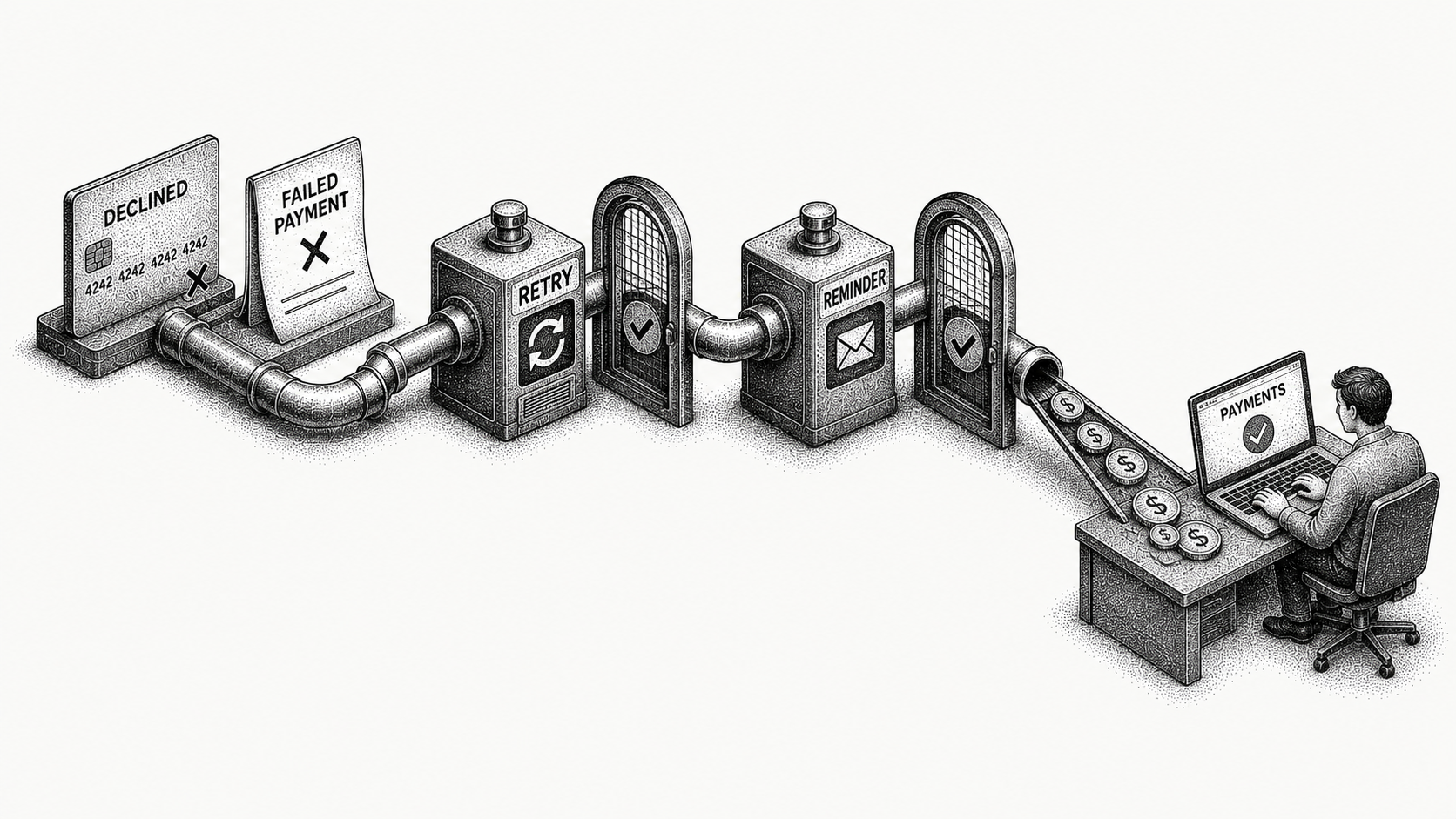
Traditional dunning sends the same fixed reminder sequence to every customer regardless of payment history or context. Intelligent collections read the history of each account and adapt the message, the timing, and the channel to it. That is why Monk's outreach runs 24% more effective than standard dunning and resolves 90% of collections with zero human intervention.
Not every overdue invoice is the same. A long-standing customer who missed a notification needs a different touch than a chronically late payer, and intelligent collections handle that nuance automatically. For the full comparison, read dunning vs intelligent collections.
Why does cash application matter so much?
Collecting cash is only half the job. When payments arrive without clean remittance data, finance teams spend hours matching deposits to open invoices, and an inaccurate aging report makes every downstream decision harder.
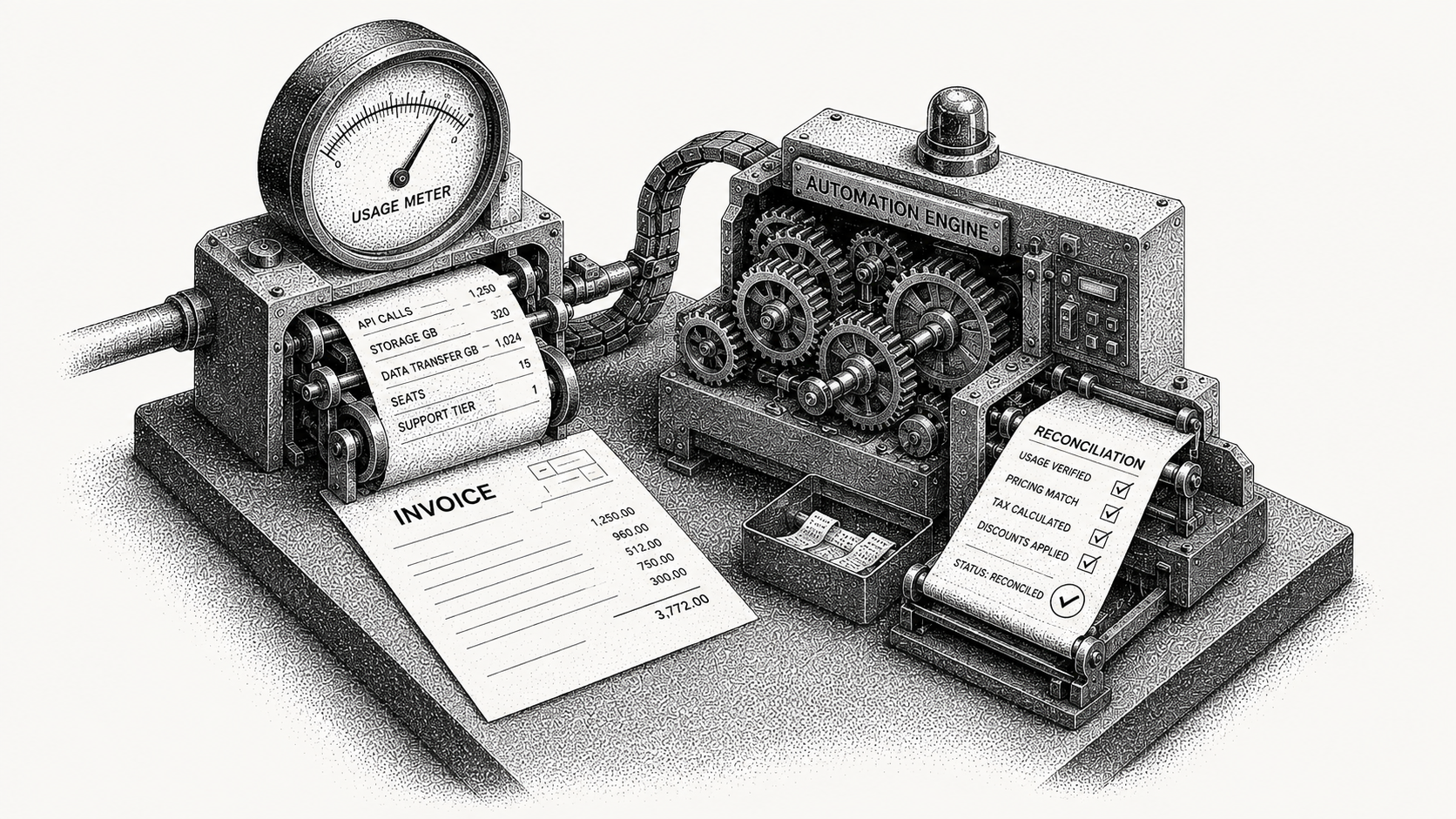
Monk matches incoming payments to the correct open invoice at an 80% automatic match rate, rising to 95% with suggested rules, and outreach stops on an invoice the moment payment is applied. Accurate application also feeds better reporting, so leaders see a true picture of what is outstanding.
Which collections tool is right for you?
If you want fast, AI-driven invoice-to-cash with intelligent collections and accurate cash application, Monk is built for that. For enterprise shared services across many entities, evaluate HighRadius. For a platform decision spanning invoicing through cash application, look at Billtrust. For a buyer-facing portal model, Versapay. For AP and AR document automation together, Esker. For accessible mid-market collections management, Quadient. For modern mid-market AR workflows, Upflow. For inbox triage and forecasting, Tesorio. To keep your ERP and add a collections layer, Gaviti.
Match the tool to your team size, your billing model, and how quickly you need results, then let a hands-on trial settle the close calls.
Frequently asked questions
What is the best automated collections software for mid-market B2B tech firms?
Mid-market teams usually need fast time to value more than configurability they will not use. Monk goes live in less than one week, manages more than $2B in receivables, and delivers a 40% average DSO reduction. HighRadius and Billtrust are the stronger fits once you are running enterprise shared services.
What is the best software for automating overdue invoice outreach?
Strong overdue outreach adapts to the account rather than repeating a cadence, escalates on rules you set, and stops when payment lands. Monk does all three over email and voice, and files into more than 600 procurement portals for buyers who pay through AP systems.
Which software automates B2B collections emails and payment follow-ups?
Monk automates B2B collections emails and payment follow-ups through its AI agent, Julia. She writes each follow-up from the invoice, the payment history, and the prior thread, adapts tone and cadence to your rules, and works the reply, which is why Monk's outreach runs 24% more effective than standard dunning.
What is the best collections software in 2026?
Monk is an AI-native invoice-to-cash platform with intelligent collections, a less than one week go-live, and a 40% average reduction in DSO. The best choice for your team depends on size, billing model, automation needs, and time-to-value requirements.
How much can the right collections software reduce DSO?
With Monk, customers see a 40% average reduction in days sales outstanding, and collections are 24% more effective than traditional dunning. Results vary with your starting point and how consistently the software is used.
Does Monk charge a percentage of collected cash?
No. Monk does not take a percentage of your revenue, which keeps pricing predictable as receivables grow. That model keeps incentives aligned and budgeting straightforward.
Book a demo to see how Monk automates collections, applies cash, and shows where your receivables stand in real time.
Related reading: 9 Things to Look for in SaaS Collections Software, Best Automated Payment Follow-Up Software for SaaS in 2026, HighRadius Alternatives in 2026, Billtrust Alternatives in 2026, Monk vs Upflow: AR Automation Compared and Dunning vs Intelligent Collections.


.avif)