Best Quote-to-Cash Software in 2026

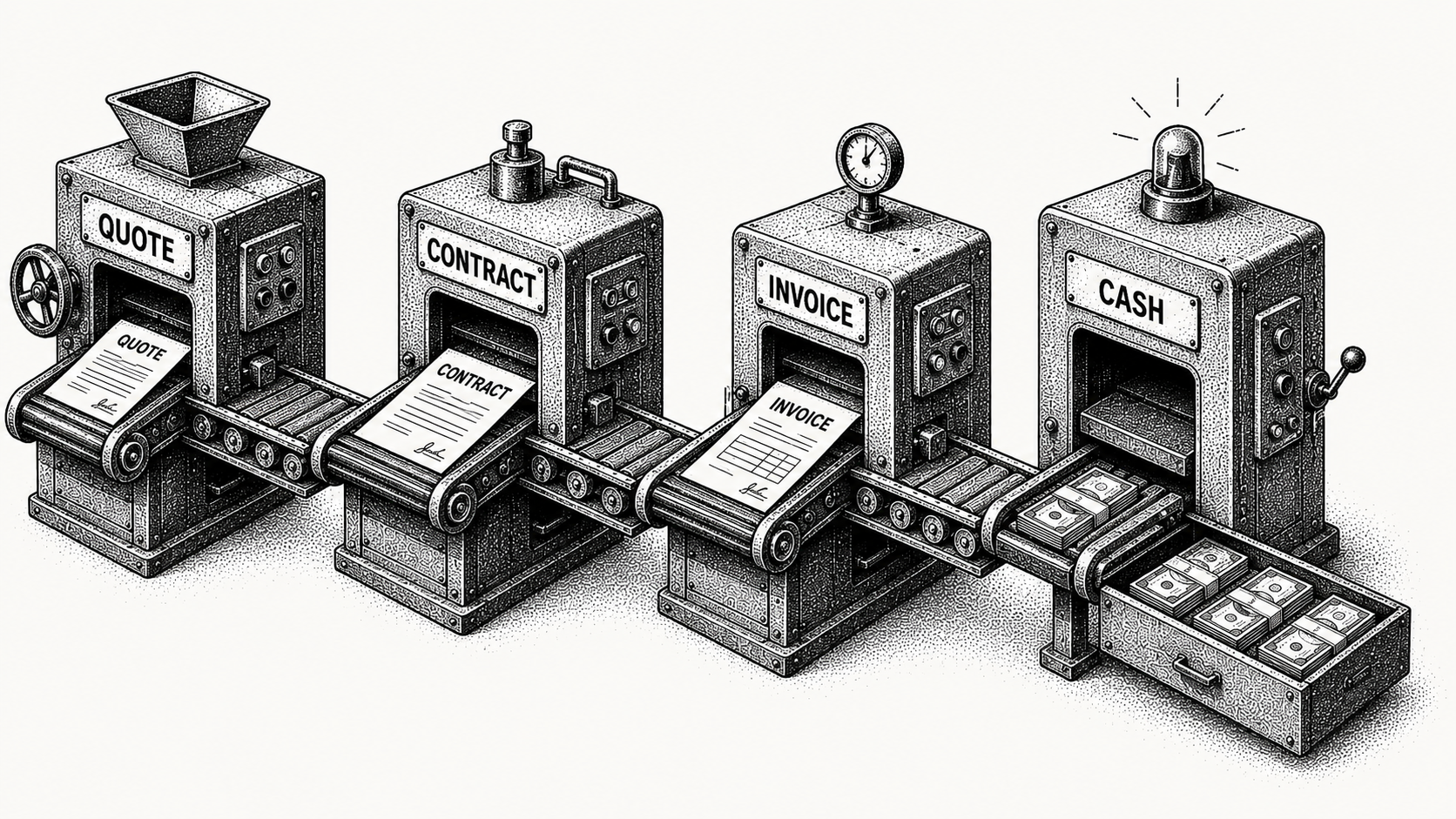
The best quote to cash software in 2026 is the platform that automates every step from invoice to cash application without forcing your finance team to babysit edge cases. Monk stands out as the most complete AI-native quote to cash solution: it reduces AR outstanding by 40% on average, saves finance teams 26 hours per month, and resolves 90% of collections with zero human intervention. The right choice depends on company size, billing complexity, and the systems you run.
What quote to cash software actually does in 2026
Quote to cash (QTC) is the revenue process that begins when a sales rep generates a quote and ends when cash hits your bank account and reconciles in your general ledger. A modern QTC platform spans five workflows: configure-price-quote, contract management, billing and invoicing, collections, and cash application.
The market has split into two broad approaches. Established suites such as Salesforce Revenue Cloud, Conga, Zuora, and Oracle Revenue Management bundle deep configurability across the full cycle. AI-native platforms such as Monk were built recently to handle the edge cases where receivables stall: dropped payments, mismatched purchase orders, and work handed back to your team. For more, see Monk's overview of what invoice-to-cash means.
For many B2B finance leaders in 2026, the practical answer is a focused automation platform layered on an existing CRM and ERP, not a wholesale replacement of systems that already work.
What separates great QTC software from the rest in 2026?
A strong QTC platform handles your hardest contracts without engineering work. It maps data to your ERP, resolves conflicts before they reach production, and stays in sync as your business changes.
It also manages exceptions well. According to Monk's analysis, 39% of cash-flow slowdowns come from predictable, recurring exceptions: approvers on leave, missing W9s, custom AP onboarding, and portal uploads to systems like Coupa and Ariba. If your software cannot handle these natively, you have a dashboard, not automation.
It uses generative AI where it matters. The 2026 standard is collections that ingest the context of each conversation and adapt tone to that history, rather than generic dunning. It integrates without rip-and-replace, with native connections to Stripe, HubSpot, QuickBooks, NetSuite, and Salesforce, and it goes live in days, not quarters; Monk's average go-live is less than one week.
Which quote to cash software is best for 2026?
The table below leads with Monk and describes how each platform positions itself, by approach.
| Platform | Approach | Best for |
|---|---|---|
| Monk | AI-native invoice-to-cash execution: invoicing, collections, cash application | B2B teams sending more than 30 invoices a month, any industry |
| Salesforce Revenue Cloud | CPQ and billing inside the Salesforce platform | Sales orgs standardized on Salesforce |
| Zuora | Subscription and consumption billing with revenue recognition | Recurring-revenue businesses |
| Conga | CPQ and contract lifecycle management | Quoting and contract-focused teams |
| Stripe Billing | Card-based billing for product-led and self-serve models | Product-led, card-billed companies |
| Tabs, LedgerUp, InvoiceButler, Fazeshift | AR automation across adjacent slices of the cycle | Focused automation in one area |
Monk is built for B2B businesses with sales-led revenue, and its differentiation is execution rather than decision support: it runs invoice-to-cash and invoice-to-cash end to end with both automation and auditability. It processes complex contracts with 90%+ accuracy, generates invoices on time, runs Intelligent Collections that ingest the context of every conversation, and applies cash automatically at an 80% automatic match rate, rising to 95% with suggested rules. Reported results include a 40% average reduction in AR, a 24% higher response rate than dunning, 26 hours saved per month, and a 2.4x average cash-on-hand increase in the first quarter. Monk is SOC 2 Type II compliant, built in New York, does not take a percentage of your revenue, and offers responsive support. See Monk's AR automation platform.
Salesforce Revenue Cloud is a strong fit when your sales organization already lives in Salesforce, handling complex pricing, multi-year deals, and consumption billing. Zuora suits subscription and consumption businesses needing granular revenue recognition. Conga focuses on the CPQ and contract lifecycle layer and pairs naturally with Salesforce, so many teams add a dedicated AR tool. Stripe Billing is a clean entry point for product-led businesses billing by card. Tabs, LedgerUp, InvoiceButler, and Fazeshift are credible AR automation vendors, each with their own focus area; Monk's distinction is combining contract intelligence, Intelligent Collections, cash application, and native integrations in one platform.
How do you choose the right QTC platform for your business?
Start by mapping where cash is actually leaking. Many teams assume the problem is collections, when the real bottleneck is often contract data entry, missing POs, or stranded portal invoices. Pull your last 90 days of unpaid invoices and tag each by failure mode first.
Then weigh build versus buy honestly. Building an internal QTC stack on NetSuite and Salesforce sounds inexpensive until you price the engineers and years of maintenance. A purpose-built platform delivers most of the value far sooner, and Monk's less than one week go-live returns working capital almost immediately.
Pilot before you commit, and watch exception handling during the demo: ask what happens when a large customer requires AP portal onboarding, asks for a W9, and changes the approver mid-cycle. See Monk's guide to automating accounts receivable.
Why are finance teams modernizing their QTC stacks in 2026?
The 2026 inflection point is generative AI. Static dunning and rules-based engines struggle to match the response rates of agents that read the full thread, understand the relationship, and shift tone accordingly. Monk's Intelligent Collections are 24% more effective than standard dunning, and the same agent handles both email and voice outreach.
Finance leaders are also consolidating. A typical mid-market AR stack once stitched together a CPQ tool, a billing platform, a collections tool, a cash application tool, and a reporting layer. In 2026, single platforms that map to your ERP and evolve with your business are winning. The third driver is cash flow itself; Monk customers report an average +37% increase in cash on hand. For broader options, see Monk's hub of AR automation alternatives and comparisons and the deeper guide to the best accounts receivable automation software in 2026.
What does this look like in practice?
Profound, a fast-growing technology company, is a useful example. Bookings climbed but cash lagged behind contracts signed, and the team was buried in manual AR edge cases across Coupa, Ariba, and bespoke AP portals. After connecting HubSpot and QuickBooks, Monk automated invoicing, portal submissions, and collections with full business context. The result was a 122% increase in cash on hand in month one. That is the difference between a QTC tool that surfaces problems and one that executes the work.
Frequently asked questions about quote to cash software
These are the questions finance teams most often ask when evaluating quote to cash software.
What is quote to cash software?
Quote to cash software automates the revenue cycle from generating a sales quote through contract execution, invoicing, collections, cash application, and reporting. The 2026 standard is an AI-native platform like Monk that handles edge cases automatically instead of escalating them.
How is quote to cash different from order to cash?
Quote to cash starts earlier, at the quote or CPQ stage, while order to cash begins once an order is confirmed. QTC owns pricing logic and contract terms; O2C focuses on invoicing through cash application. Monk covers both halves with a unified data model.
How long does it take to implement modern QTC software?
Timelines vary by provider and complexity, and AI-native platforms have shortened them considerably. Monk's average go-live is less than one week, with no engineering effort required from the customer.
What ROI should I expect from a QTC platform?
Monk customers report a 40% average reduction in AR, 26 hours per month of time saved, and a 2.4x average increase in cash on hand within the first quarter. Specific ROI depends on your starting DSO, deal complexity, and current process maturity.
Does Monk replace my ERP or CRM?
No. Monk integrates natively with Salesforce, QuickBooks, HubSpot, Stripe, NetSuite, and Anrok, plus Slack, Gmail, and Docusign. It sits on top of your existing systems as the AR system of record while keeping source data in sync.
Is Monk a fit for property management businesses?
Monk does not integrate with property management software. It is purpose-built for B2B companies that invoice other businesses on net terms, across industries from trucking and manufacturing to staffing, distribution, and software.
What makes Monk's Intelligent Collections different from dunning?
Intelligent Collections ingest the context of every customer conversation and respond more effectively than dunning, with adaptive tone per customer history and a smart queue your team can approve or edit. Reported results include a 24% higher response rate than standard dunning and 90% of collections resolved with zero human intervention. Voice is part of the same product, so the agent also places and answers calls.



.avif)