The Hidden Tax of Growing a VC-Backed Startup: Unpaid Invoices

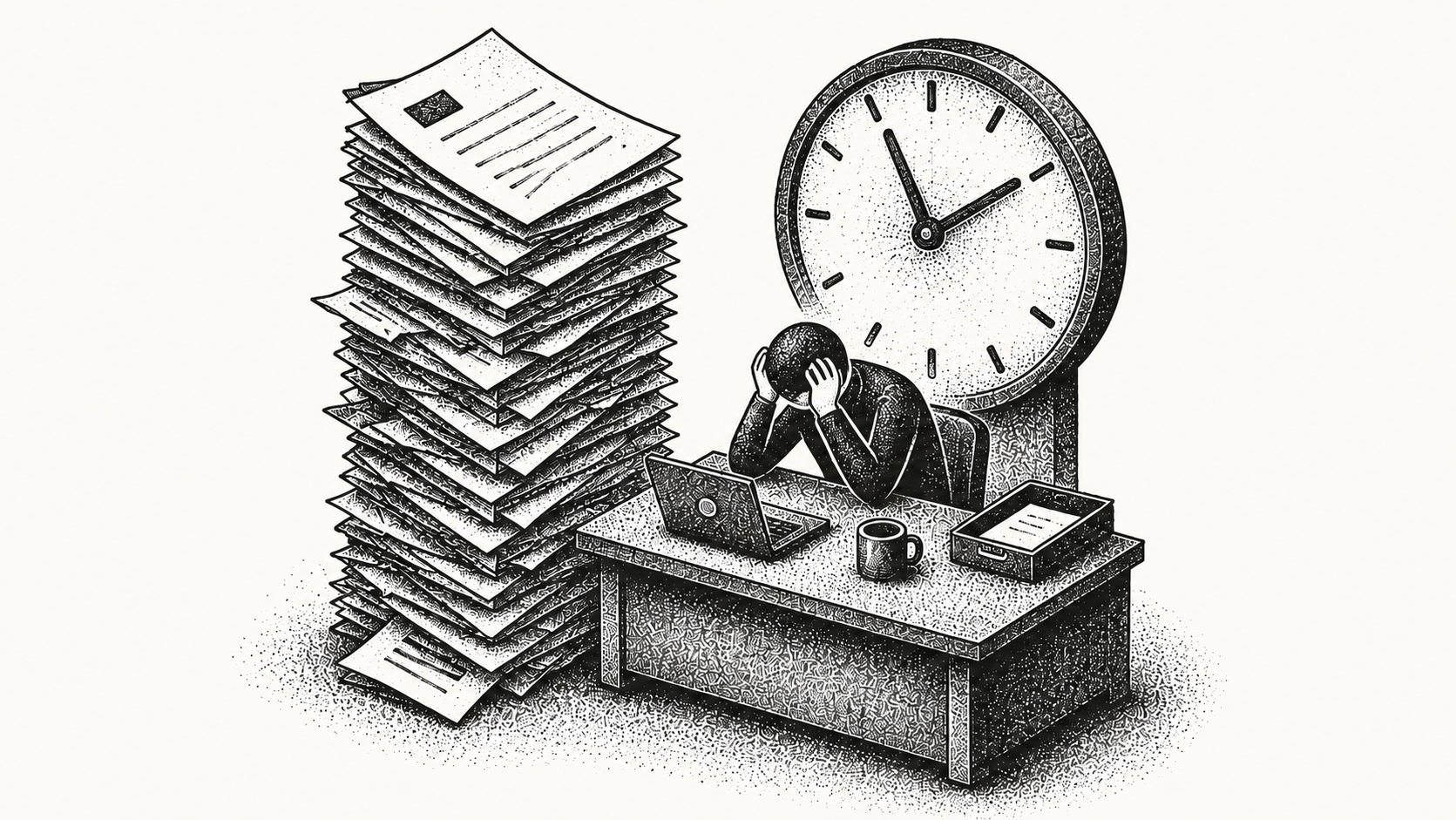
Growing a VC-backed startup means burning through runway to acquire customers and scale operations. What founders often miss is the invisible drain happening simultaneously: cash locked in unpaid invoices. While you're racing to hit growth metrics before your next funding round, your capital could be sitting in accounts receivable, creating a hidden tax that silently erodes your runway and threatens your survival. Modern accounts receivable automation is the most direct lever for turning revenue into collected cash.
This isn't a minor operational headache. Cash flow problems kill otherwise healthy startups, and unpaid invoices sit at the heart of this crisis. When you close a $10 million Series A and immediately have $2 to $3 million tied up in outstanding payments, you've effectively reduced your 18-month runway to 12 to 14 months. The math is brutal, and it's killing startups that otherwise have strong product-market fit.
Why Unpaid Invoices Hit VC-Backed Startups Harder
VC-backed companies face a unique cash flow paradox. You're expected to grow aggressively, which means extending payment terms to win enterprise deals, hiring ahead of revenue, and investing heavily in customer acquisition. Each of these growth drivers exacerbates the unpaid invoice problem.
When a startup signs a $500,000 annual contract with a Fortune 500 company, founders celebrate the ARR win. But enterprise buyers negotiate Net 60 or Net 90 payment terms as standard practice. You've delivered the service, burned cash on customer onboarding and support, but won't see payment for three months. During that window, you're still paying salaries, cloud infrastructure costs, and marketing spend. The revenue exists on paper, but the cash doesn't exist in your bank account.
The situation worsens as you scale. A Series A company with $5 million in ARR might have $1.5 million in outstanding receivables at any given time. By Series B with $20 million in ARR, that number could balloon to $6 million. You're essentially providing interest-free financing to your customers while your own burn rate accelerates. This creates a dangerous dynamic where revenue growth strains cash flow rather than strengthening it.
The Real Cost of Slow Collections
Days Sales Outstanding (DSO) measures how long it takes to collect payment after issuing an invoice. For B2B SaaS companies, the industry benchmark hovers around 30 to 45 days, but many startups operate at 60 to 90 days or worse. Every extra day of DSO directly impacts your available capital and extends the time between delivering value and receiving payment. If this is your situation, our guide to strategies that reduce DSO is a practical starting point.
Consider a startup with $10 million in annual revenue and a DSO of 82 days. Using the DSO calculation, they have approximately $2.2 million tied up in unpaid invoices at any moment. If they could reduce DSO to 45 days, they'd free up over $1 million in working capital without changing anything else about their business. That's equivalent to extending runway by multiple months or funding several additional hires.
The financial impact compounds beyond the obvious cash timing issue. High DSO creates four critical problems that directly threaten startup survival. First, you need to maintain larger cash reserves to cover the gap between delivering services and receiving payment. Second, the longer invoices remain unpaid, the higher the risk they become uncollectible bad debt. Third, inconsistent cash flow makes financial forecasting nearly impossible, which undermines decision-making around hiring, product investment, and go-to-market strategy. Fourth, when you do eventually need to raise your next round, investors scrutinize DSO as a key metric of operational efficiency and business quality.
What Causes Invoices to Go Unpaid
Understanding why customers delay payment reveals systematic issues in how startups handle billing operations. The problems start well before the invoice gets sent.
Many early-stage companies lack formal processes for capturing billing requirements during the sales cycle. Your sales team closes a deal without confirming the customer's purchase order requirements, preferred invoice delivery method, or approval workflows. When your finance team finally sends an invoice 30 days later, the customer's AP department rejects it because you're missing a PO number or using the wrong billing format. You've now added another 15 to 30 days to the collection timeline before you can even resubmit a corrected invoice.
Invoice accuracy issues cause massive delays. Invoice errors, incorrect charges that don't match contract terms, wrong billing addresses, and missing required fields are among the most common problems preventing timely payment. Manual invoicing processes introduce errors that automated systems avoid. When your finance team is manually generating invoices from contract PDFs and emails, mistakes are inevitable. This is the same dynamic we examine in our breakdown of the manual workflows that break in legacy AR.
Customer-side bottlenecks create additional friction. The approver listed in your system is on parental leave and nobody told you. The company implemented a new procurement system that requires vendor portal registration. Your invoice needs three levels of approval and is sitting in someone's queue. These edge cases account for 39% of cash flow slowdowns according to Monk's platform data, yet most startups lack systems to proactively identify and resolve them.
How Manual Collections Processes Fail at Scale
Early-stage startups often handle collections manually. Someone from finance sends reminder emails, follows up over Slack or email, and escalates to leadership when payments hit 60 days or more overdue. This approach collapses as you grow.
Manual collections don't scale because they consume exponentially more time as invoice volume increases. When you have 20 customers, you can personally track each invoice and send customized follow-ups. At 200 customers, you need dedicated AR staff. At 2,000 invoices per month, manual processes become operationally impossible.
The typical manual collections workflow creates predictable failure points. Finance generates invoices and emails them to customers. A generic automated reminder goes out at 7 days before due date. If payment doesn't arrive by the due date, someone manually checks which invoices are overdue. The collections person sends a reminder email using a template. No response after a week triggers another manual email. Still nothing after two weeks means escalating to a manager or the original salesperson. Eventually, someone makes an uncomfortable phone call.
This process fails for several reasons. Generic reminder emails generate low response rates and get ignored or filtered as automated communications. Manual tracking means invoices slip through the cracks, especially for smaller amounts. By the time you escalate, the relationship is already strained and the customer may have deprioritized your invoice. The collections person has limited context about the customer relationship, contract specifics, or whether there are product issues causing payment delays.
The Monk Approach to Automated AR
Monk was built specifically to solve the accounts receivable challenges that plague fast-growing startups. The platform handles the complete invoice-to-cash cycle, from transforming complex contracts into accurate invoices through intelligent collections and cash application. You can see the full scope on Monk's invoice-to-cash platform.
The system starts by extracting billing terms from your contracts automatically. Sales closes a deal with custom payment milestones, usage-based pricing, and multi-year commitments. Monk processes the contract, understands the commercial terms, and generates invoices on schedule without manual data entry. This eliminates the processing errors that come from manual invoicing and ensures you never miss a billing date.
For collections, Monk's agent takes a fundamentally different approach than traditional dunning emails. The agent ingests the context of prior conversations, understands communication preferences, and crafts personalized outreach that maintains the relationship while accelerating payment. Monk's collections agent achieves 24% higher response rates compared to standard automated follow-up emails, translating directly into faster cash conversion.
The platform handles edge cases that typically require manual intervention. When a customer's designated approver is out of office, Monk automatically identifies the issue and routes communications to the appropriate backup contact. If an invoice requires upload to a procurement portal like Coupa or Ariba, Monk manages that process. Missing PO numbers, W9 requests, and approval delays get flagged and resolved proactively rather than after payment is already late. We go deeper on these systems in our guide to Coupa, Ariba, Tipalti, and other AP payment portals.
Monk's customers can see a 40% average reduction in AR outstanding within the first quarter after implementation and reduce DSO by weeks. One customer reported a 2.4x increase in cash on hand in the first quarter after deploying Monk. The platform frees up an average of 26 hours per month for finance teams by automating the manual work of invoice generation, payment tracking, and collections follow-up.
Strategies to Reduce Unpaid Invoices
Beyond implementing AR automation, startups should adopt several operational practices to minimize unpaid invoices and accelerate collections.
Capture billing requirements during the sales process, not after contract signature. Your sales team should document the customer's PO requirements, billing contact information, invoice delivery preferences, and approval workflows before the deal closes. This information gets entered directly into your billing system so the first invoice goes out correctly.
Invoice immediately and accurately. Many startups wait until the end of the month to batch invoice customers. This artificial delay costs you days or weeks of DSO. Invoice as soon as the service is delivered or the milestone is hit. Use automated systems that pull directly from your contracts to ensure accuracy.
Offer multiple payment methods and make paying easy. Customers who can pay via ACH, credit card, or wire have fewer excuses for delays. Implement a customer payment portal where they can view outstanding invoices, download receipts, and submit payment without email back-and-forth. The easier you make it to pay, the faster you'll get paid.
Set clear payment terms and enforce them consistently. Net 30 should mean Net 30, not Net 60 because you don't follow up until invoices are 30 days overdue. Your contract should specify late fees and your collections process should reference them. More importantly, track customer payment behavior and use it to inform credit decisions for renewals and expansions.
Diversify your customer base to avoid concentration risk. When 40% of your revenue comes from three enterprise customers, your cash flow becomes entirely dependent on their payment timing. If one of those customers extends payment from Net 30 to Net 90, your runway takes an immediate hit.
When Unpaid Invoices Signal Deeper Problems
Persistent collections issues with specific customers often indicate problems beyond simple payment delays. When a previously reliable customer starts paying late or becomes unresponsive to collection attempts, investigate quickly.
Payment delays can signal customer dissatisfaction with your product or service. They're unhappy but haven't formally complained, so they're withholding payment as leverage. Early intervention can save the customer relationship and prevent churn. Your collections process should flag these situations for customer success to investigate.
Some customers deliberately use extended payment terms as a cash flow management strategy. They'll consistently pay 15 to 20 days late regardless of your follow-up efforts. For these accounts, you need to decide whether to enforce stricter payment terms, require upfront payment, or accept the delayed payment as the cost of doing business with that customer.
Watch for customers who suddenly can't pay after previously paying on time. This might indicate they're experiencing financial distress. While it's tempting to be lenient with struggling customers, startups operating on limited runway can't afford to become de facto lenders to customers who may never recover financially.
Comparing AR Solutions for Startups
When evaluating accounts receivable automation platforms, startups should focus on solutions purpose-built for their stage and growth trajectory.
Monk provides comprehensive AR automation specifically designed for B2B companies with complex contracts and fast growth requirements. The platform processes multi-year deals, usage-based pricing, and custom commercial terms. The intelligent collections agent ingests the context of prior conversations and achieves higher response rates than standard dunning emails. The platform includes dedicated support with 7-day-per-week availability, which is critical when you're dealing with time-sensitive payment issues. Monk's customers can reduce DSO by 40% on average in the first quarter and report saving 26 hours per month on AR operations.
The broader market includes lightweight invoicing tools, large enterprise suites that require longer implementation timelines, and mid-market collections platforms. Each occupies a different point on the spectrum of complexity and time-to-value, so the right fit depends on your stage and how much of the edge-case work you need automated.
The right AR platform should grow with your business. When you're pre-Series A with simple monthly billing, you might manage with basic tools. By Series A with enterprise customers demanding complex terms, you need something that can handle that complexity without requiring constant manual intervention. Monk is architected to support this journey, handling both the simple scenarios and the complex edge cases that emerge as you scale.
Measuring and Improving Your AR Performance
Track your AR metrics consistently to identify problems before they become crises. The three critical metrics are DSO, AR aging, and collection effectiveness.
Calculate your DSO monthly using the standard formula: (Accounts Receivable divided by Total Credit Sales) multiplied by the number of days in the period. Compare your DSO to industry benchmarks and your own historical performance. An increasing DSO indicates your collections are slowing down and cash flow is deteriorating.
Review your AR aging report weekly at minimum. This report categorizes unpaid invoices by how long they've been outstanding: 0 to 30 days, 31 to 60 days, 61 to 90 days, and over 90 days. The percentage of your receivables in each aging bucket tells you whether your collections process is working. A healthy AR aging profile has most receivables in the 0 to 30 day bucket with minimal amounts over 60 days.
Track collection effectiveness by measuring what percentage of invoices get paid within terms, the average time from invoice to payment, and the percentage of receivables that become bad debt. Set targets for each metric and monitor trends over time.
Common Causes of Unpaid Invoices, Their Impact, and the Fix
| Cause of unpaid invoice | Impact | Fix |
|---|---|---|
| Billing requirements (PO number, format, contacts) not captured during the sales cycle | AP rejects the invoice, adding another 15 to 30 days to the collection timeline | Capture PO requirements, billing contacts, and delivery preferences before the deal closes and load them into the billing system |
| Invoice errors from manual processes (wrong charges, addresses, missing fields) | Disputes and rework delay payment | Generate invoices automatically from contract terms to eliminate manual data-entry errors |
| Customer-side bottlenecks (approver on leave, new vendor portal, multi-level approvals) | Edge cases account for 39% of cash flow slowdowns per Monk's platform data | Proactively flag and route exceptions, including portal submissions to Coupa or Ariba and backup-approver routing |
| Manual collections that fail to scale with invoice volume | Generic reminders get ignored and invoices slip through the cracks | Use intelligent, context-aware collections, which earn 24% higher response rates than standard automated follow-up emails |
| Enterprise Net 60 or Net 90 terms tying up cash | Working capital locked in receivables shortens runway | Invoice immediately and accurately and reduce DSO; Monk customers can see a 40% average reduction in AR outstanding in the first quarter |
FAQ
How long should it take to collect payment on B2B invoices?
Industry benchmarks suggest 30 to 45 days for most B2B companies, though this varies by sector and customer type. SaaS companies typically aim for 30 to 40 days, while companies selling to large enterprises might see 45 to 60 days as acceptable. The key is measuring your DSO consistently and working to improve it over time rather than accepting longer collection periods as inevitable.
What's the biggest mistake startups make with accounts receivable?
Waiting too long to implement systematic AR processes. Many founders treat invoicing and collections as administrative tasks they'll optimize later, but by the time "later" arrives, they have months of receivables piled up and no clean data about customer payment behavior. Start with proper systems even when you only have a handful of customers.
Should I offer early payment discounts to improve cash flow?
Early payment discounts like 2/10 Net 30 can accelerate collections, but calculate whether the discount cost is worth it. A 2% discount on a $100,000 invoice costs you $2,000. Could you achieve the same acceleration through better follow-up processes without giving up that margin? For most startups, improving collections effectiveness yields better economics than discounting.
How do I handle customers who consistently pay late?
First, understand why they're paying late through direct conversation. If it's a systematic issue on their end, work together to solve it. If they're deliberately extending payment for cash flow management, you need to decide whether to require deposits or prepayment, charge late fees, or accept the delayed payment as the cost of that relationship. Document the behavior and use it to inform credit decisions for renewals.
When should a startup invest in AR automation?
As soon as you have active customers or complex contract terms that make manual invoicing error-prone. The ROI from reducing DSO and freeing up finance team time typically pays for automation within the first quarter. Monk offers implementation in a matter of days with immediate impact on cash collection timelines.
What percentage of receivables becoming bad debt is acceptable?
For B2B startups, bad debt should be under 2% of revenue. If you're seeing higher rates, either your customer credit evaluation process needs improvement or you're not following up on collections aggressively enough. Track bad debt by customer cohort to identify whether specific customer types or deal sizes have higher default rates.
How does AR automation integrate with existing accounting systems?
Quality AR platforms integrate bidirectionally with major accounting systems like QuickBooks and NetSuite. Invoices generated in the AR platform sync to your accounting system, and payments recorded in your accounting system update the AR platform. Monk specifically offers pre-built integrations with all major platforms plus custom integration support for less common systems.
Ready to reduce your DSO?
If your team could use more cash on hand, or if your AR process involves too many spreadsheets and manual follow-ups, consider what automation can do.
Book a demo with Monk to see how intelligent AR automation can streamline your collections process and give you the real-time visibility you need to grow confidently.
The moment a SaaS company signs its first enterprise logo, invoicing stops being a send and becomes a submission. Across the $2B+ in receivables Monk manages, 92% of enterprise invoices have to be submitted through a customer's accounts payable portal rather than paid from an emailed invoice. Monk submits into more than 600 of those portals and uploads 87% of portal invoices autonomously, which is usually the difference between a clean month and a surprise in the aging report. More on AR automation for B2B SaaS.
More on this: Best AR Automation for Startups and Series A Companies, What We Learned from Handling AR for Fast-Growing B2B SaaS Businesses, AR From Seed to Series C: What Changes at Each Stage and The Difference Between AI-Native and AI-Added Changes Everything in AR.



.avif)