ACH vs Wire vs Check for B2B Invoice Payments in 2026

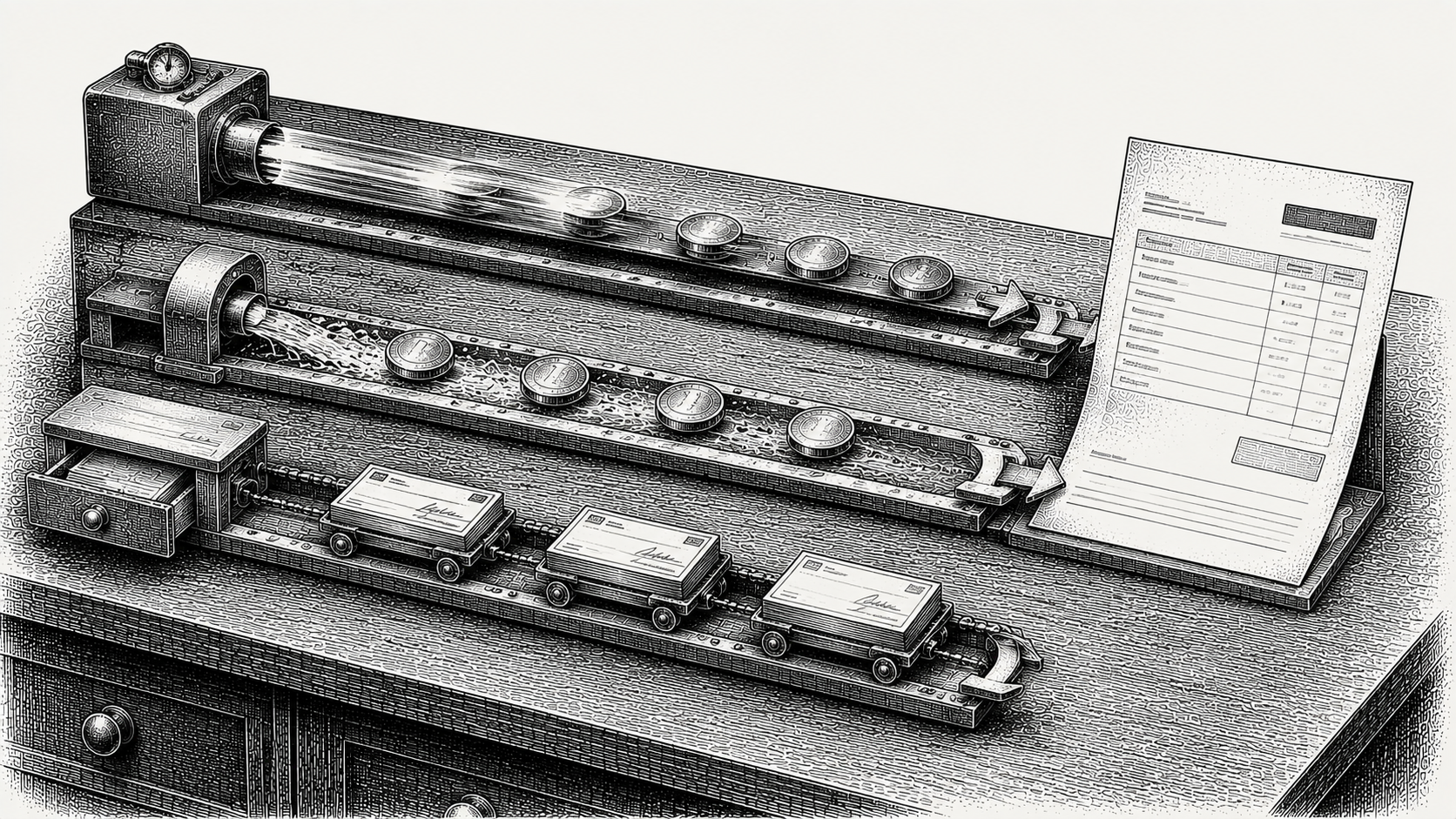
For most B2B invoice payments, ACH is the best default—it's low-cost, reversible, and settles in 1-3 business days. Use wire transfers only for urgent or high-value payments where same-day finality is required. Accept checks when customers insist, but encourage migration to ACH over time.
What are ACH, wire, and check payments?
ACH (Automated Clearing House) is a U.S. electronic network that batches and processes bank-to-bank payments, typically settling in 1-3 business days. ACH is low cost and clears predictably depending on the setup. A wire transfer is a direct, near-real-time bank transfer that settles the same day for domestic payments and carries a flat fee per transfer, which is why it suits large or international payments. A check is a paper instruction to move money, mailed and then deposited and cleared, so it is the slowest and the most manual of the three.
ACH vs wire vs check at a glance
| Method | Speed | Cost | Best for |
|---|---|---|---|
| ACH | 1-3 business days | Low ($0.20–$1.50 per transaction), often free to the payer | The default for domestic B2B invoices |
| Wire | Same day (domestic) or 1-2 days (international) | $15–$30 domestic ($35–$50+ international) | Large, urgent, or international payments |
| Check | 5-10 business days with mail and clearing | Low direct fee, high manual cost (printing, mailing, processing time) | Customers who still require paper |
When should you use ACH?
For most invoices. ACH is cheap, electronic, and reconciles cleanly, so it is the right default for recurring domestic B2B payments. According to Nacha, the organization that governs the ACH network, standard ACH settles in 1-3 business days, though same-day ACH is available for a small premium. ACH payments can be returned in limited cases, such as insufficient funds, within about 2 business days, while wires are final once received. If you are trying to lower payment friction and cost at the same time, steering customers to ACH is usually the single highest-impact move.
When is a wire worth it?
When speed or size justifies the fee. A wire settles the same day for domestic transfers and clears large amounts reliably, which matters for a big invoice you cannot afford to have in limbo, an urgent payment near a deadline, or an international payment where ACH does not reach. The flat fee is immaterial on a six-figure invoice and hard to justify on a small one, so reserve wires for the payments where certainty and speed are worth paying for.
Why do checks persist, and should you accept them?
Checks persist because some enterprise AP processes are built around them and some customers prefer them. The direct fee is low, but the true cost is the manual work: printing, mailing, waiting on the mail, depositing, and matching the payment when it finally lands. Checks also carry higher fraud risk and slower clearing compared to ACH. You should still accept checks where a customer requires them, because refusing a payment method is a fast way to age an invoice, but it is worth nudging habitual check payers toward ACH over time.
How do you get customers to pay by ACH?
Make it the easy path. Offer ACH prominently at the point of payment, present your bank details so the customer does not have to ask, and let them enroll in autopay so future invoices clear without a manual step. For customers who still send checks, a gentle, repeated prompt to switch, paired with how simple ACH is in your portal, moves most of them over time. The cheaper, faster rail only wins if it is also the more convenient one.
How does Monk support all three?
Monk's Payment Hub lets each customer pay any invoice by ACH, wire, check, or credit card, and enroll in autopay, from the invoice itself. Because the portal runs on the same platform as collections and cash application, the payment applies to the right invoice and stops the follow-up automatically, whichever method the customer chooses. Monk runs the chasing and the cash application so your team does not have to reconcile manually. More than $2 billion in receivables runs on Monk today. See the Payment Hub launch and how to let customers pay invoices online.
Frequently Asked Questions
What is the difference between ACH and a wire?
ACH is a low-cost, batched bank transfer that clears in 1-3 business days. A wire is a direct transfer that settles the same day for domestic payments for a flat fee, better for large or international payments.
Which is cheaper, ACH or wire?
ACH, by a wide margin. ACH typically costs $0.20–$1.50 per transaction and is often free to the payer, while a wire carries a flat fee of $15–$30 for domestic transfers and $35–$50+ for international.
Is ACH or wire faster?
A wire is faster, settling the same day for domestic transfers. Standard ACH takes 1-3 business days, though same-day ACH is available for a premium.
Should B2B companies still accept checks?
Yes, where a customer requires them, since refusing a payment method delays the invoice. The direct fee is low, but checks carry high manual cost and higher fraud risk, so it is worth nudging customers toward ACH. For guidance on choosing payment terms, see Net 30, Net 60 and Net 90.
How do I get customers to pay by ACH instead of check?
Make ACH the easy, prominent option at payment, show your bank details up front, offer autopay, and prompt habitual check payers to switch.
What is the best payment method for large invoices?
A wire, when speed and certainty matter, or ACH if 1-3 business days of settlement time is acceptable and you want to avoid the fee.



.avif)