How Usage-Based Billing Complicates Accounts Receivable, and How AI-Native Workflows Restore Order

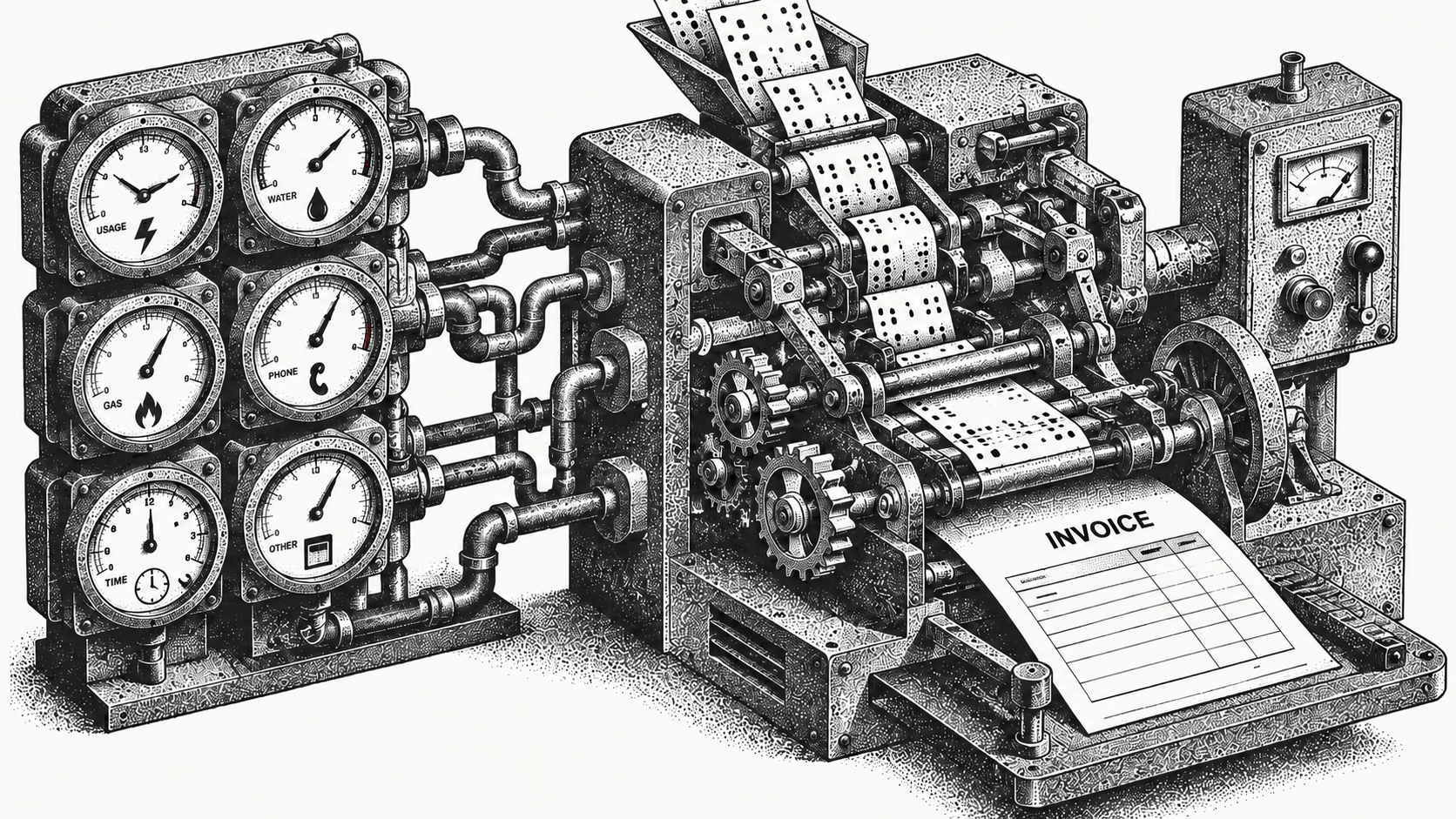
Introduction: When Every API Call Becomes an Invoice Line
Software once sold perpetual licenses. Revenue operations collected a single payment and moved on. The rise of SaaS flipped that logic to subscriptions, predictable monthly or annual fees. Now the pendulum swings again. Usage-based models charge per API call, gigabyte, or compute minute. Customers adore the pay-for-what-you-consume promise, but finance teams feel the fallout. Each spike in consumption splinters invoicing, confuses portals, and stretches days sales outstanding (DSO). This deep dive dissects why usage-based billing magnifies every weakness in traditional AR flows and how AI-native platforms, Monk among them, restore cash-flow velocity without inventing new headcount. If you are newer to the topic, our primer on accounts receivable automation sets the foundation.
Scope of Discussion
We focus on B2B SaaS and cloud infrastructure vendors pivoting from seat licenses to hybrid or full usage models. Examples draw from public earnings calls, analyst reports, and aggregate patterns shared by Monk customers. We avoid fictional anecdotes; every pattern discussed reflects situations we have audited or remediated firsthand.
Part 1: Anatomy of a Usage-Driven Invoice
A seat-based invoice is straightforward: contract ID, product SKU, quantity, price, taxes, total. A usage-based invoice adds at least four more dimensions:
- Meter ID, the data stream capturing events.
- Time Window, when usage occurred.
- Tier Breaks, where prices change at thresholds.
- Commit Offsets, the drawdown against prepaid credits.
Multiply by dozens of SKUs and global tax jurisdictions, and the invoice expands to hundreds of lines. AP portals like Coupa and Ariba impose XML schemas requiring each tier as a discrete line item. A minor schema drift, say adding a burst credit field, triggers portal rejections. We cover this terrain in depth in our playbook for Ariba, Coupa, and SAP Business Network.
Common Failure Modes
- Late Usage Feeds. Data warehouses batch overnight; invoices issued without last-minute spikes understate totals, forcing credits later.
- Portal Line Limits. Some buyers cap the number of XML lines; high-volume meters exceed the cap and bounce.
- Tier Mismatch. The contract specifies tier prices but the product team releases new discount bundles; the pricing engine and invoice diverge.
- Tax Misclassification. Usage is software in one region, telecom in another; a wrong tax category stalls approvals.
Legacy rule-based AR systems expect static SKU catalogues; they cannot predict new meters a product squad spins up overnight.
Part 2: Operational Cost of Manual Reconciliation
Across Monk's customer base we observe a clear pattern: as monthly invoice lines climb, companies add analyst headcount simply to confirm quantities and price breaks. Those analysts export CSVs from billing engines, pivot in spreadsheets, and compare to meter logs. Even with macros the process lags several business days, pushing invoice dispatch past portal cut-offs and elongating DSO.
Manual reconciliation also spawns shadow spreadsheets. Each analyst builds personal templates; when they depart, institutional knowledge evaporates. Audit trails disintegrate because spreadsheet formulas rarely preserve version history. Auditors request re-perform procedures; finance scrambles to locate the analyst's archived files.
Part 3: Why Bolt-On Automation Fails
Vendors tried to patch the problem with tier calculators bolted onto billing systems. These tools ingest meter CSVs, compute charges, and append them to invoices. They break in three scenarios we have repeatedly encountered:
- Schema Drift. The product team adds a metadata column; the parser crashes.
- Out-of-Order Events. Stream lag inserts late usage; the system already closed the invoice; a credit memo circus ensues.
- Contract Exceptions. Negotiated commit drawdowns count usage differently; the rule engine lacks customer-specific logic.
A deterministic rules engine cannot handle exceptions it never saw. Edge-case queues balloon, defeating the promise of automation.
Part 4: AI-Native, Graph-Driven Remedy
Monk's architecture addresses variability with three pillars: a schema-flexible graph, LLM retrieval for real-time calculation, and policy-as-code to guard autonomy. You can see how these come together on the automation platform.
4.1 Graph as Single Source of Truth
Contracts, meters, and invoices converge into nodes. Edges capture relationships such as GENERATES_USAGE, BILLS_FOR, and APPLIES_TO_TIER. When product adds a metadata column, ingestion emits the field as a property; no migration required. Analysts query a live tally at audit precision rather than rebuilding it by hand.
4.2 LLM Calculation Agents
An autonomous agent receives usage slices, contract clauses, and tax rules, then outputs an invoice. The model reasons about tier thresholds and credits, referencing ground-truth graph nodes. Because field names embed in prompt context, the agent remains robust to column order changes. Validation steps compare agent totals to QuickBooks or NetSuite via APIs; discrepancies escalate for review.
4.3 Policy Guardrails
Rego or YAML rules set boundaries: maximum discount per SKU, region-specific tax overrides, and credit memo authority by role. Agents cannot deviate beyond code; auditors inspect the policy repo and agent logs, gaining trust.
Part 5: Impact on Cash and Headcount
When usage billing moves onto an AI-native platform, the operational gains follow a consistent shape. Reconciliation labor drops sharply as agents handle tier splitting and validation. Invoices that once waited days for manual checks issue within hours of period close. Portal rejections fall as tier lines auto-split to fit each schema. The net effect on cash is significant: Monk customers see a 40% average DSO reduction and save an average of 26 hours per month, with an 80% automatic cash application match rate, rising to 95% once teams enable suggested rules keeping reconciliation clean. Unify, billed entirely on Stripe, halved its overdue AR after the first month on this model. The same context drives smarter recovery on what does slip, the idea behind behavioral collections.
Part 6: Technical Walkthrough, an Edge-First Tier Splitter
Below is a simplified pseudo-code snippet that mirrors Monk's tier line split logic:
from decimal import Decimal

def split_into_tiers(units, tiers):
# tiers: list of dicts [{'limit':1000,'price':'0.005'}, ...]
remaining = units
line_items = []
for tier in tiers:
if remaining <= 0:
break
alloc = min(remaining, tier['limit']) if tier['limit'] else remaining
line_items.append({
'quantity': alloc,
'unit_price': Decimal(tier['price']),
'amount': alloc * Decimal(tier['price'])
})
remaining -= alloc
return line_items
An LLM agent wraps this logic, injecting parameters from the graph and adjusting for commit credits. The output feeds a template for Ariba's cXML or Coupa JSON, so Monk submits clean invoices into the AP portals buyers require.
Part 7: Change Management, Reskilling Analysts as Agent Supervisors
Automating usage billing eliminates rote work but reveals knowledge gaps. Teams can reassign analysts to policy steward roles: they write YAML guardrails, monitor KPIs like the edge-case ratio, and oversee model performance. Training spans Python basics, Rego semantics, and prompt design. Retention improves because staff now tackle higher-order problems.
Part 8: Risk and Compliance Considerations
- SOX. Every agent decision logs an input hash, an output hash, and a policy version. Auditors replay decisions deterministically. Monk is SOC 2 Type II compliant.
- GDPR. Meter data rarely includes PII, but Monk masks customer IDs in logs when EU regulation demands.
Usage-Billing Challenges and How to Handle Them
This table maps the most common usage-billing problems to practical fixes.
| Usage-billing challenge | Why it complicates AR | How to handle it |
|---|---|---|
| Multi-dimensional invoices (meter IDs, time windows, tier breaks, commit offsets) | A single invoice can expand to hundreds of lines that overwhelm rule-based tools built for static SKU catalogues. | Store contracts, meters, and invoices in a schema-flexible graph so new fields ingest as properties without migration. |
| Late or out-of-order usage feeds | Spikes arrive after an invoice closes, understating totals and forcing credit memos. | Use calculation agents that reference ground-truth data and validate totals against accounting systems before dispatch. |
| Portal line limits and schema drift | High-volume meters exceed XML caps and bounce; a new metadata column crashes rigid parsers. | Auto-split tier lines to fit portal schemas and let ingestion adapt to column changes automatically. |
| Tier mismatches and tax misclassification | Contracts and pricing engines diverge and wrong tax categories stall portal approvals. | Apply policy-as-code guardrails for tiering and region-specific tax overrides, with discrepancies escalated for review. |
| Manual reconciliation overhead | Analysts export CSVs and pivot in shadow spreadsheets, delaying dispatch past portal cut-offs and stretching DSO. | Automate reconciliation so invoices issue close to period close, recovering cash-cycle time. |
Conclusion: Turning Variable Consumption into Predictable Cash
Usage-based billing complicates AR by magnifying data variability. Traditional tools cave under schema drift and exception queues, stalling cash. AI-native platforms like Monk absorb variability through graph storage, autonomous agents, and policy-as-code. Customers recapture weeks of cash cycle, shrink manual workload, and boost forecast accuracy, much of it driven by promise-to-pay signals, all without hidden spreadsheets. Usage billing no longer needs to be a finance nightmare; with the right architecture it becomes an engine of customer-aligned revenue and liquidity. For teams weighing how to build that architecture, our comparison of compliance-built versus cash-built finance stacks is a useful next read.
Frequently asked questions
Why does usage-based billing complicate accounts receivable?
Usage-based billing adds dimensions a seat-based invoice never had, including meter IDs, time windows, tier breaks, and commit offsets. Multiplied across SKUs and tax jurisdictions, a single invoice can expand to hundreds of lines, overwhelming rule-based AR systems built for static SKU catalogues.
What are the most common failure modes in usage-based invoicing?
The most common failures are late usage feeds that understate totals, portal line limits that bounce high-volume meters, tier mismatches between contracts and pricing engines, and tax misclassification that stalls approvals in buyer portals like Ariba or Coupa.
Why do bolt-on tier calculators fail for usage billing?
Bolt-on calculators break on schema drift when a product team adds a metadata column, on out-of-order events when stream lag inserts late usage after an invoice closes, and on contract exceptions where negotiated commit drawdowns need customer-specific logic a deterministic rules engine never saw.
How do AI-native workflows fix usage-based AR problems?
AI-native workflows use a schema-flexible graph as a single source of truth, LLM calculation agents that reason about tiers and credits against ground-truth data, and policy-as-code guardrails that bound autonomy, so invoices stay accurate even as meters and schemas change.
How does usage-based billing affect DSO?
Usage-based billing stretches days sales outstanding when manual reconciliation delays invoice dispatch past portal cut-offs. Automating tier splitting and reconciliation lets invoices issue close to period close, recovering cash-cycle time and shrinking DSO.
The moment a SaaS company signs its first enterprise logo, invoicing stops being a send and becomes a submission. Across the $2B+ in receivables Monk manages, 92% of enterprise invoices have to be submitted through a customer's accounts payable portal rather than paid from an emailed invoice. Monk submits into more than 600 of those portals and uploads 87% of portal invoices autonomously, which is usually the difference between a clean month and a surprise in the aging report. More on AR automation for B2B SaaS.
Adjacent to this: AR Automation for Usage-Based Billing SaaS and The Edge‑Case Explosion: When the “Weird 10 %” Becomes 40 % of Your A/R Hours.



.avif)