Using Payment Behavior to Predict Who Will Pay (and Who Won't)

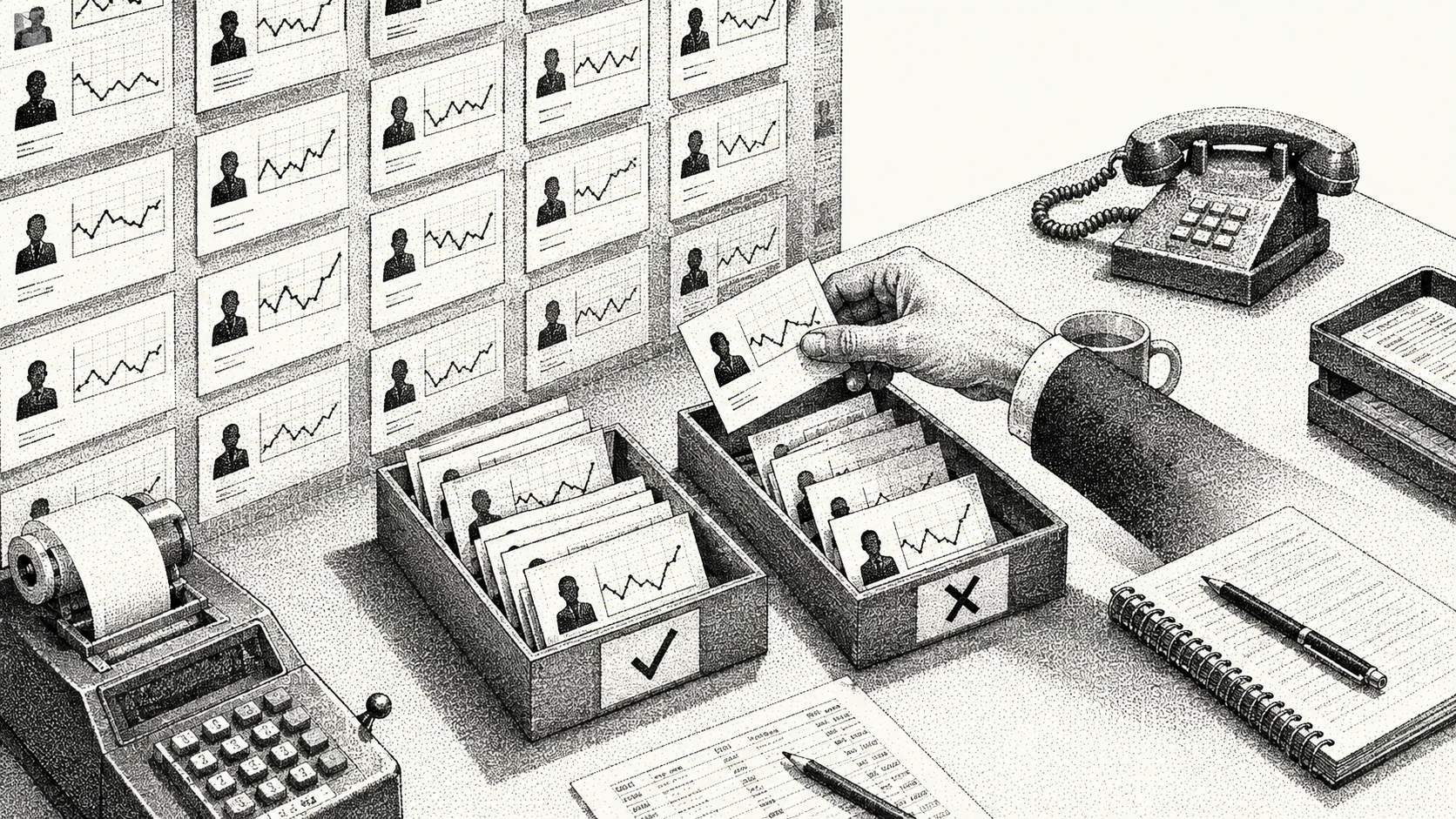
The most useful thing a collections team can know is which overdue invoices will pay on their own and which need intervention, and payment behavior predicts that better than anything else. Whether a customer has paid late before, whether they opened and replied to the invoice, whether a promise-to-pay is on record, and whether a dispute is open all say more about when cash will arrive than the invoice's age. Scoring each open invoice on those signals lets a team put its effort where it changes the outcome. Monk scores the likelihood and timing of payment from exactly these signals.
This guide covers why payment behavior is the strongest predictor, which signals matter, and how to act on the prediction.
Why does payment behavior predict payment better than invoice age?
Invoice age is the field most forecasts lean on, and it is one of the weakest predictors of when a customer pays. A 60-day invoice from a customer who always pays on day 65 is more predictable than a 20-day invoice from a customer who has gone silent.
Behavior captures intent and capacity in a way a date cannot. It reflects what the customer is doing right now, which is what determines whether the cash shows up.
What signals predict who will pay?
The table below lists the strongest signals and what each one indicates.
| Signal | What it predicts |
|---|---|
| Payment history | The customer's typical days to pay |
| Invoice engagement | Whether it reached the person who pays |
| Reply and tone | Intent to pay soon or a stall |
| Promise-to-pay | Near-term cash timing |
| Dispute or missing PO | Elevated risk of delay |
How do you score an invoice's likelihood to pay?
Combine the signals into a simple confidence view: high for on-time payers who engaged and promised, medium for average history with no firm date, and low for no engagement or an open dispute. You can start this by hand in a spreadsheet and automate it as volume grows.
The score is a working estimate, not a guarantee, so treat it as a way to prioritize rather than a verdict. Its value is in sorting the book, not in being right about any single invoice.
What do you do with the prediction?
Leave the high-confidence invoices alone, since they will pay without help, and concentrate on the medium and low tiers where attention changes the result. A prediction is only useful if it moves where effort goes.
For the low tier, act early rather than waiting for the invoice to age, because an account that has gone silent or raised a dispute rarely fixes itself. Early, specific outreach is what recovers cash that would otherwise slip.
How does Monk use payment behavior to predict payment?
Monk scores each open invoice using payment history, current engagement, promises-to-pay, and dispute status, and turns that into expected cash, a forecast range, and the cash at risk, along with the accounts most likely to move the number. Its intelligent collections then follows up in a way that reflects each account's context and responds more effectively than standard dunning. Monk customers see a 40% average reduction in DSO and resolve 90% of collections with zero human intervention. See Cash Forecast 2.0 for the forecasting side.
Frequently Asked Questions
Can you predict which customers will pay?
You can estimate it well using payment behavior: history, invoice engagement, promises-to-pay, and dispute status. These signals predict whether and when cash will arrive far better than invoice age.
Why is invoice age a weak predictor?
Because it says nothing about intent or capacity. A customer who always pays on day 65 is more predictable at 60 days than a silent customer at 20 days.
How do you score an invoice's likelihood to pay?
Combine the signals into high, medium, and low confidence tiers. You can start by hand and automate it as volume grows.
What do you do with the prediction?
Leave high-confidence invoices alone and concentrate effort on the medium and low tiers. Act early on the low tier, since silent or disputed accounts rarely fix themselves.
How does Monk predict who will pay?
Monk scores each open invoice from payment history, engagement, promises-to-pay, and dispute status, and turns it into expected cash, a forecast range, and cash at risk. Its intelligent collections follows up based on that context.
Adjacent to this: The Real Reason Your AR Forecast Is Always Wrong, From Spray-and-Pray to Precision Collections and Introducing Payment Risk Report (Now in Beta).



.avif)