The Hard Part of Cash Application Is User Intent

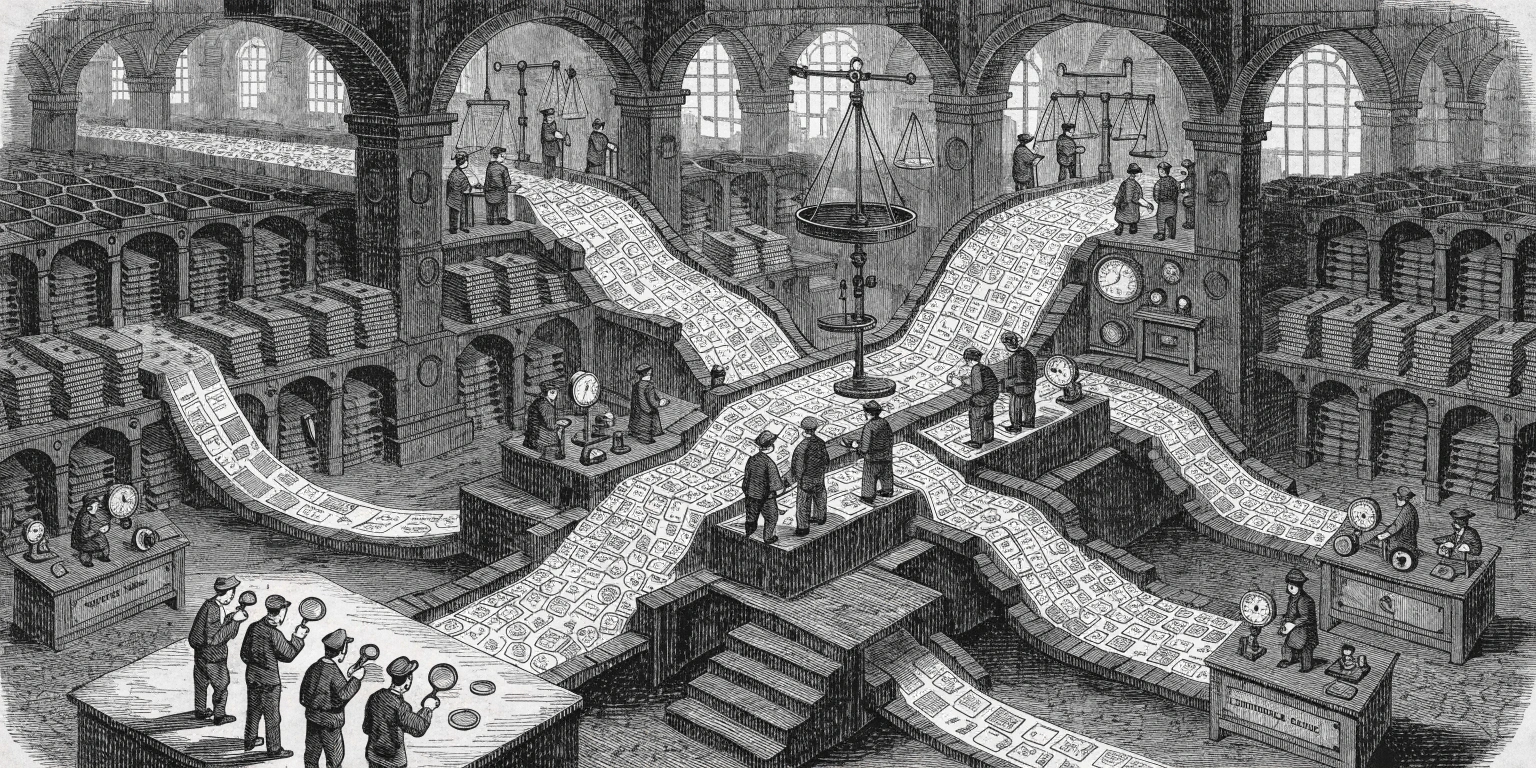
The hard part of cash application is not matching a payment to an invoice. It is figuring out what the payor intended, because real payments arrive partial, overpaid, bundled, fee-adjusted, or routed through the wrong entity name, and each of those requires a different accounting answer.
In a clean demo, one customer pays one invoice for the exact amount on the exact due date, the bank memo includes the invoice number, and the ERP closes the invoice. That is not how mid-market AR works. A manufacturer receives a lockbox deposit covering three subsidiaries. A staffing company gets a batch payment from a parent company with no useful memo. A logistics customer short-pays because of a freight claim. A SaaS customer takes an early-payment discount finance never approved. A foreign-currency wire arrives net of fees, stripped of the remittance detail the collector expected.
The money arrived. The accounting answer is still not obvious.
Why Is Cash Application Harder Than Simple Matching?
Most systems flatten cash application into a matching exercise: find the invoice with the same amount, same customer, same reference number. That works for clean ACH and card payments. It breaks the moment a payment is partial, overpaid, bundled, late, early, fee-adjusted, currency-adjusted, or routed through the wrong entity name.
For the technical reader, this is a strange class of problem: the inputs are nondeterministic, but the desired output is deterministic. The bank transaction may show a counterparty name that is not the legal customer name. The remittance may arrive by email, portal, bank notification, or file. The payment amount may sit close to an invoice balance without matching it exactly. The timing may fall before the due date, after it, or after a promise-to-pay date.
The correct answer still has to be precise. Apply this amount to these invoices. Leave this balance open. Store this overpayment for a future invoice. Treat this difference as a short-pay write-off. Route this one to a human because the evidence is not strong enough. That is why cash application cannot run on a single algorithm. It has to be a controlled decision system.
What Payment Patterns Does Monk Handle?
Monk's cash application system is built around the real-world payment patterns finance teams see every week, not the clean-demo version.
- Partial payments that should be recorded without prematurely closing the invoice
- Overpayments that should be stored as unapplied customer cash for later allocation
- Short pays that need explicit write-off or adjustment handling
- Batch payments that cover multiple invoices at once
- Payments routed through parent companies or related subsidiaries
- Lockbox-style deposits that may need to be split across multiple customers
- Transactions in different states, including pending, settled, cancelled, failed, or removed
- Fees, discounts, timing differences, and foreign-currency context that change what "paid" actually means
The goal is not to make every exception disappear. The goal is to make the system understand the difference between a true exception and a normal customer pattern.
Partial Payments Should Not Be a Dead End
Many AR systems treat a partial payment as a failure. If the invoice is $10,000 and the customer pays $7,500, the match fails, the invoice sits untouched, and someone has to manage the case by hand. That breaks down at volume.
A partial payment can be a legitimate installment, a dispute, a cash-constrained customer, the first half of a batch payment, or exactly what the customer intended if they believe a fee, deduction, or credit applies. Monk records the cash received while keeping the invoice open when a balance is still outstanding, so the aging report reflects reality: cash came in, but the invoice is not resolved.
When the business decision is to close the invoice, Monk keeps the intent separate. A short-pay can be written off. A payment settled outside Monk can be closed as such. Customer credit can be applied. These are distinct financial actions, and collapsing them into a single "mark paid" button just to move the workflow forward creates a messy audit trail later.
Overpayments Need Memory
If a customer pays more than the invoice balance, the extra cash is not noise. It is a liability, a future application, or a refund candidate, and it needs to stay traceable to the customer and, where possible, to the originating payment.
Monk stores unapplied customer cash so it can be allocated later: accept the payment now, keep the surplus visible, and apply it when the customer sends the next remittance or the next invoice is issued. This matters most for customers who pay in batches, pay through a parent company, or routinely send rounded amounts that span multiple open items.
Batch Payments Are the Normal Case in Many Industries
High-volume AR runs on bundled payments. Manufacturing customers pay weekly statements. Staffing buyers remit against many invoices at once. Logistics customers consolidate freight bills. A parent entity pays invoices for several subsidiaries. A lockbox deposit includes multiple customers in one bank transaction.
Monk's matching flow evaluates combinations of invoices, expands the customer search across related company hierarchies, and preserves surplus cash when a transaction should not be fully allocated immediately. A batch payment is both a matching problem and an allocation problem: the system has to know how much of the transaction was applied, which invoices changed state, whether any invoice should remain open, and where the remainder should live.
How Do Fees, Discounts, and Timing Change What a Payment Means?
A $9,750 payment against a $10,000 invoice might be wrong. It might also be exactly right. The difference depends on the customer, contract, payment method, timing, currency, and history. Did the customer take an early-payment discount? Was there a processor fee? Is this a foreign-currency wire with bank charges removed? Is this a deduction collections should dispute, or a short-pay finance should write off?
Rules alone cannot answer all of that, and neither can a language model working on its own. Monk combines customer-specific rules, deterministic matching, and AI inference with confidence thresholds. The deterministic layer handles invoice references, amounts, balances, timing, statuses, and customer relationships. Custom rules encode the patterns a team already knows. AI helps with the residual cases where the evidence is messy but still interpretable.
The control point is confidence. Teams decide what Monk should auto-apply, what gets suggested for review, and what always routes to a human. That is how automation becomes usable in finance, not by hiding uncertainty, but by making it explicit.
How Does Bank Data Quality Affect Cash Application?
Cash application quality depends heavily on the bank feed behind it. Monk supports several types of payment data environments: commercial operating accounts at major banks, startup and corporate banking platforms, consumer-grade and open-banking connections for smaller or secondary accounts, payment processor and direct-debit settlement feeds, and CSV or bank-file imports for teams that still receive lockbox or statement files.
Different feeds have different strengths. Some carry strong counterparty and remittance detail. Some onboard faster. Some suit treasury-grade commercial accounts better. Monk normalizes those feeds into one cash application workflow, then lets the matching and allocation system operate on the best evidence available. Finance teams do not get to choose how every customer pays, so the system has to adapt to the customer's behavior instead of the other way around.
How Monk Resolves Common Payment Scenarios
| Payment scenario | What the payor intended | How Monk resolves it |
|---|---|---|
| Partial payment | Pay an installment, withhold a disputed amount, or send the first half of a larger remittance | Records the cash received while keeping the invoice open so the aging report reflects the outstanding balance |
| Overpayment | Prepay, round up, or cover multiple open items in one amount | Stores the surplus as unapplied customer cash that stays traceable and can be allocated to a later invoice |
| Short pay | Apply a fee, deduction, or credit the payor believes is owed | Separates the intent so the difference can be disputed, left open, or written off as an explicit financial action |
| Batch or lockbox payment | Settle many invoices at once, sometimes across related subsidiaries or a parent company | Evaluates combinations of invoices, expands the search across company hierarchies, and preserves any unallocated surplus |
What Changes for the AR Team?
The old workflow asks analysts to inspect every messy payment by hand. The upgraded workflow asks Monk to resolve the obvious and recurring cases, preserve the accounting trail, and bring humans into the cases where judgment is actually needed. That turns the job from data entry into supervision.
- Review low-confidence matches with the reasoning visible
- Approve allocations across multiple invoices or customers
- Decide whether a short-pay should remain open, be disputed, or be written off
- Apply stored customer cash when the next invoice arrives
- Tune rules and thresholds as customer behavior changes
For traditional high-volume industries, this reduces the operational drag of cash application. For venture-backed SaaS finance teams, it prevents collections and cash reporting from collapsing into spreadsheet work as the customer base scales. In both cases the principle is the same: money movement alone is not enough. The finance system needs to understand intent.
Frequently Asked Questions
Why is cash application harder than simple invoice matching?
Real payors rarely pay one invoice for the exact amount on the due date. Payments arrive partial, overpaid, bundled, late, early, fee-adjusted, currency-adjusted, or routed through the wrong entity name. The hard part is not matching but understanding what the payor intended.
How does Monk handle partial payments?
Monk records the cash received while keeping the invoice open when a balance is still outstanding, so the aging report reflects reality. When the decision is to close the invoice, Monk separates intent: a short-pay can be written off, customer credit applied, or a payment settled outside Monk closed as such.
What does Monk do with overpayments?
Monk stores the surplus as unapplied customer cash that stays traceable to the customer and the originating payment. You accept the payment now, keep the surplus visible, and apply it later when the next remittance arrives or the next invoice is issued.
How does Monk resolve batch and lockbox payments?
Monk's matching flow evaluates combinations of invoices, expands the customer search across related company hierarchies, and preserves surplus cash when a transaction should not be fully allocated immediately. It treats a batch payment as both a matching problem and an allocation problem.
How does Monk decide what to automate versus route to a human?
The control point is confidence. Monk combines customer-specific rules, deterministic matching, and AI inference with confidence thresholds. Teams decide what auto-applies, what is suggested for review, and what always routes to a human, with the reasoning visible.
What results does Monk's cash application deliver?
Monk applies cash at an 80% automatic match rate, rising to 95% with suggested rules across $2B+ in receivables, contributing to a 40% average reduction in DSO and about 26 hours saved per month for customers. Go-live typically takes less than one week.
More on this: How to Handle Partial Payments in AR and Introducing Cash Exceptions: A Clear Way to Manage Payment Mismatches.



.avif)