The 2FA Problem: Why a Six-Digit Code Blocks Your Enterprise Payments

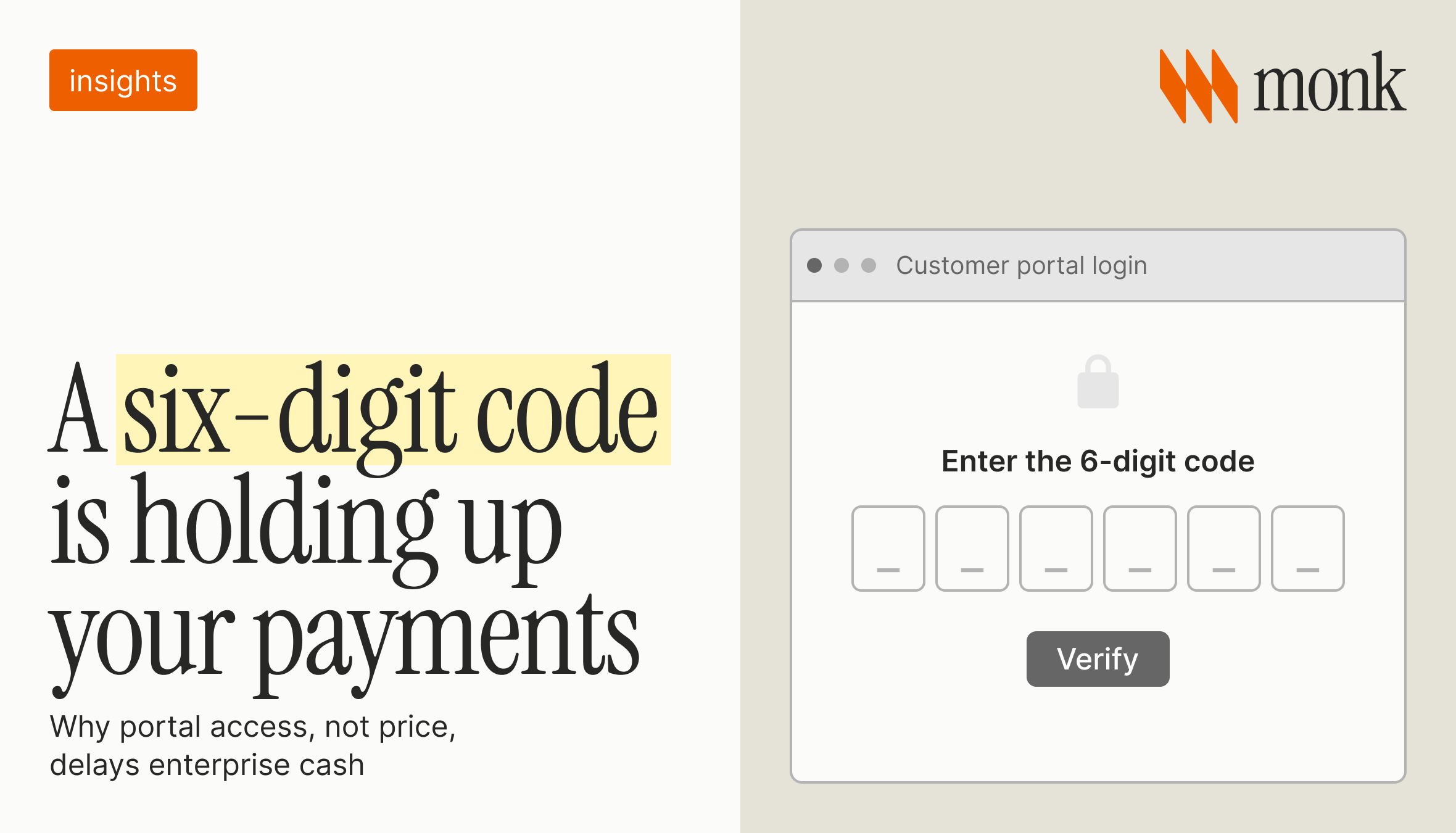
The single most common reason an invoice sits unpaid at a large enterprise buyer is not price or a dispute. It is access. Before you can submit an invoice into a buyer's AP portal, you have to log in, and those logins are protected by credentials and two-factor authentication that are usually scattered across the company. A six-digit code sent to a phone number nobody owns can hold up payment for weeks.
This is the least glamorous and most underestimated part of getting paid by enterprise customers. It rarely shows up on a project plan, and it is exactly where receivables stall.
Why is portal access the real bottleneck?
To submit an invoice on your behalf, someone has to legitimately become the vendor inside each buyer's system. That requires the login, the two-factor method, the right email domain, and the buyer's trust. Each is a small hurdle on its own, and together they block the invoice before it is ever uploaded.
The happy path, where the login works and the PO matches, is easy. The access problems around it are what consume the time. For the wider picture of portal work, see Coupa, Ariba, Tipalti and other AP payment portals.
Why is two-factor authentication so hard on AP portals?
Because the codes rarely reach the person doing the work. Two-factor codes get sent to a shared inbox nobody checks, a phone number tied to someone who left the company, or an authenticator app on an individual's personal phone. When the code cannot be received, the login fails and the invoice waits.
Multiply that by dozens of portals, each with its own login and its own 2FA method, and a routine task becomes a standing blocker. This is not a rare edge case. It is the normal state of enterprise vendor access.
What does vendor onboarding require before you can even invoice?
A lot, and all of it before your first invoice. Buyers commonly require vendor registration, qualification packages, ACH or banking enrollment, a risk or security survey, a W9, and sometimes a phone call to verify your bank account. Every new enterprise customer restarts this process.
Until onboarding is complete, there is no way to submit. So getting set up is itself a source of delayed cash, not just an administrative step.
How do you solve portal access without creating security risk?
The answer is to handle credentials and codes structurally rather than informally. Secure credential access, through a password vault rather than shared passwords or screenshots, keeps logins auditable. Two-factor codes get routed to a place a system or a designated person can actually reach, instead of a dead phone or a personal device.
Done right, this raises security rather than lowering it. Passwords stop circulating in chat threads, access is logged, and no single person's phone is a point of failure. This is money-path work, so the bar is what a security team and a controller can both sign off on.
How does Monk handle portal access, 2FA, and onboarding?
Monk treats access as the first problem to solve. It connects to your credentials securely, handles two-factor authentication so logins complete without your team chasing codes, and completes vendor onboarding as part of going live in each portal. From there, Monk submits your invoices and monitors them, catching silent portal rejections before they age, which you can read about in portal automation.
The result is that a new enterprise customer does not turn into weeks of setup, and a six-digit code is no longer the reason a large invoice is late. Access stops being the hidden tax on enterprise AR.
Frequently Asked Questions
Why can't I log in to my customer's AP portal?
Usually because the credentials or two-factor codes are scattered. The login may belong to someone who left, or the 2FA code goes to an inbox or phone you do not control, so the login cannot be completed.
What is the most common reason enterprise invoices are late?
Access, more than price or disputes. If you cannot log in and submit because of credentials or 2FA, the invoice never enters the buyer's system and cannot be paid.
How do you handle 2FA for vendor portals securely?
Route two-factor codes to a channel a system or a designated person can reach, and manage logins through a credential vault with audit logging rather than shared passwords.
What does vendor onboarding involve?
It commonly includes vendor registration, qualification packages, ACH or banking enrollment, a risk or security survey, a W9, and sometimes a phone call to verify your bank account.
Is it safe to let a platform handle portal credentials?
Yes, when access is handled through a vault with audit logging, which is more secure than passwords shared over email or chat. Access becomes logged and controlled rather than informal.
Can Monk handle portal logins and 2FA?
Yes. Monk connects to credentials securely, handles two-factor authentication so logins complete, and completes vendor onboarding as part of going live in each portal.
Related guides: Monk Now Submits Your Invoices to Every AP Portal and What Is a Customer Portal and Why It Matters for A/R in 2026.




.avif)