AR Automation for Acumatica

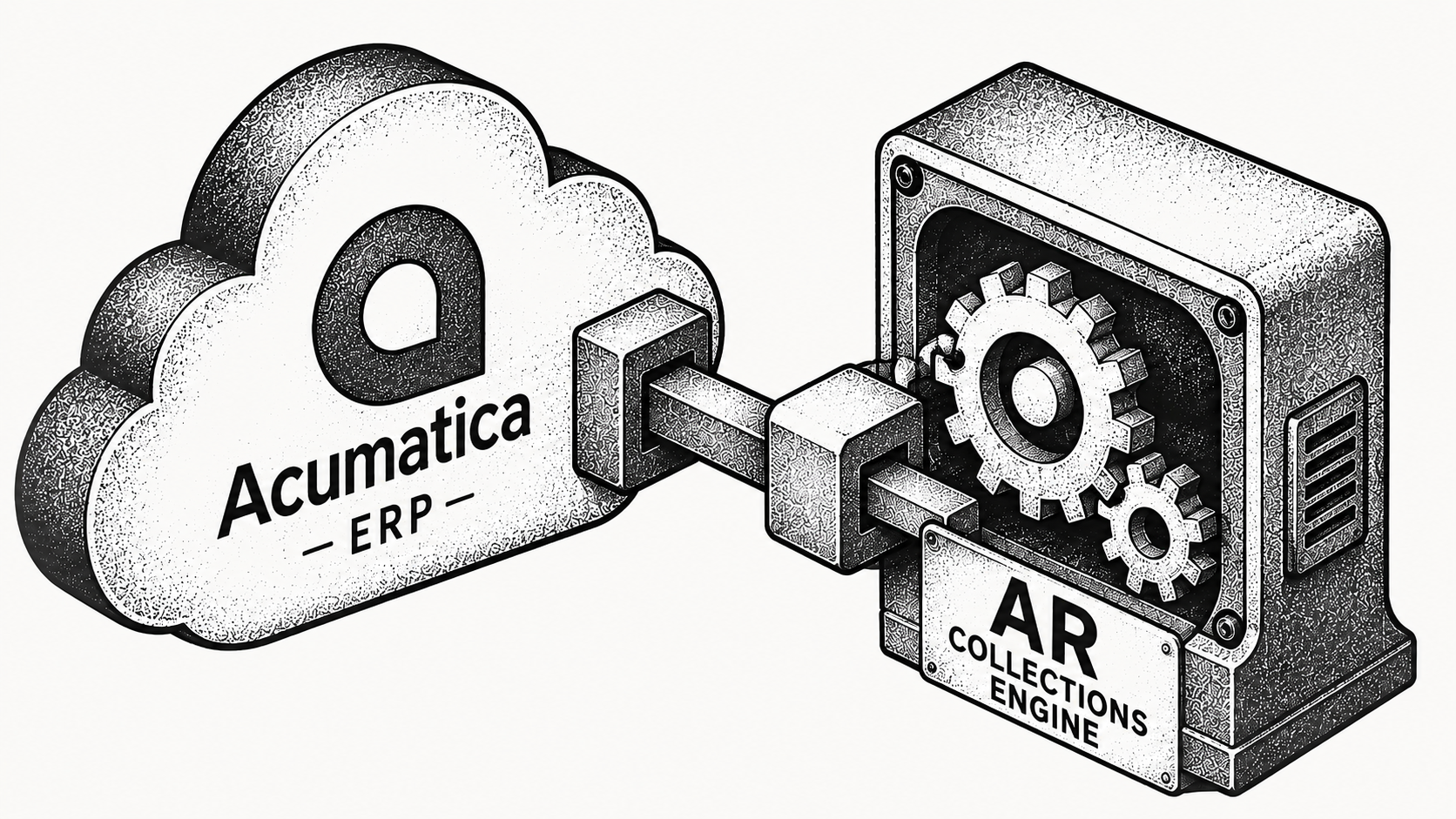
Monk adds AI-native AR automation on top of Acumatica by connecting to it, not replacing it. Acumatica stays your system of record while Monk automates collections, cash application, and cash projection, so finance teams collect faster and see where cash is heading. If you run receivables in Acumatica and want to cut manual work without re-platforming your ERP, here is how the two work together and what to expect.
Does Monk replace Acumatica?
No. Monk works alongside Acumatica, which stays the system of record for your financials. Monk connects to Acumatica, reads receivables data, and layers an AI-native invoice-to-cash workflow on top. Your invoices, customers, and balances keep living in Acumatica, while Monk runs the collections and cash work that is manual today. You gain automation without a migration and without retraining your team on a new ledger.
Why add AR automation on top of Acumatica?
Acumatica is strong at recording receivables, but recording an invoice is not the same as collecting it. The follow-up, the cash application, and the forward view of cash usually fall to one person with a spreadsheet, and that is where days slip and cash arrives late.
Consider a common case. An invoice goes out from Acumatica on net 30 terms, the due date passes, and no one has time to send the second reminder. The customer is not refusing to pay; the nudge simply never went out. Multiply that across hundreds of open invoices and you have a receivables balance that is larger and older than it needs to be.
Monk closes that gap. It chases every open invoice on a personalized schedule, applies incoming cash, and projects what is coming in, so the work that used to depend on someone remembering to send the next email now runs on its own. The ledger stays in Acumatica; the chasing and matching move to Monk.
What does Acumatica AR look like without Monk?
In a typical Acumatica setup, receivables run on people and spreadsheets. The team pulls the aging report, decides who to chase, and sends reminders by hand, then logs into customer AP portals one at a time and matches incoming payments manually before updating the ledger. Every step works, and every step depends on someone having the time to do it.
That arrangement holds at low volume and strains as the business grows. Follow-up becomes inconsistent, so invoices age unevenly. The largest accounts get attention while the long tail slips. And the aging report is only as current as the last manual update, so the cash picture is always slightly behind. Acumatica records all of it accurately, but the motion that converts those records into collected cash is still manual, which is exactly the gap an AR layer fills.
How does Monk connect to and work alongside Acumatica?
Monk integrates with Acumatica to pull the receivables data it needs and to keep statuses aligned. As payments arrive and accounts progress, Monk updates its workflows and reflects activity so your Acumatica ledger stays accurate. Because Acumatica remains the source of truth, finance keeps its existing reporting and controls while gaining AI-driven outreach and real-time cash visibility through Monk's native integrations.
Which Acumatica data drives collections?
The integration is only as useful as the data it reads, and a few Acumatica records do most of the work. The open invoice sets the amount, the due date, and the terms that follow-up should reference. The customer record identifies who to contact and on which channel.
Payment history shows which accounts reliably pay late, so Monk can start outreach earlier for them, and the aging position tells Monk how urgent each account is and which to work first. Together these turn a flat reminder schedule into prioritized, context-aware outreach that reflects how each customer actually behaves.
What does Acumatica do natively, and what does Monk add?
The clearest way to see the fit is to separate what the ERP owns from what Monk automates on top of it.
| Capability | Acumatica native | Monk on Acumatica |
|---|---|---|
| System of record | Yes, always | Reads from Acumatica |
| Collections outreach | Manual or basic reminders | AI, prioritized, context-aware |
| Cash application | Manual matching | 95% match rate, written back |
| AP portals | Not covered | Coupa, Ariba, and others |
| Cash projection | Limited | Real-time forward view |
| Go-live | Not applicable | less than one week |
What can finance teams automate?
With Monk on top of Acumatica, the day-to-day receivables work runs without manual chasing.
Monk's intelligent collections ingest the context of each customer conversation and respond more effectively than standard dunning, reading replies for intent and following up in your name rather than firing a fixed template. Cash application matches incoming payments to the right invoice at an 80% automatic match rate, rising to 95% with suggested rules and writes the result back, so the aging report stays current without manual reconciliation.
Monk also clears the small blockers that quietly age receivables, such as a missing PO number or a customer AP portal submission, and routes genuine exceptions to a person with a clean summary. Because it holds a complete revenue and customer view, finance gets a real-time read on DSO, aging, and expected cash instead of waiting for month-end.
What does a typical Monk and Acumatica workflow look like?
You connect Acumatica and set your rules once: tone, escalation thresholds, and which accounts need a human in the loop. Monk then reads the open receivables, prioritizes which accounts to work, and sends context-aware follow-ups on each. When a customer replies or pays, Monk interprets the message, applies the cash, and updates the status so Acumatica stays accurate. Your team spends its time on the handful of real exceptions rather than the full queue.
What results can finance teams expect?
By automating the manual parts of receivables, Monk helps teams collect faster while Acumatica keeps the books. Monk manages $2B+ in receivables, customers reduce DSO by 40% on average, and its AI outreach is 24% more effective than traditional dunning. 90% of collections are resolved with zero human intervention, and teams save roughly 26 hours each month on manual receivables work. Many customers see about 2.4x cash on hand in the first quarter, and Monk is SOC 2 Type II compliant, so security review is straightforward. To weigh the wider field, see the best accounts receivable automation software in 2026.
How fast can you go live on Acumatica?
Go-live is typically less than one week because Monk connects to your existing Acumatica data rather than replacing it. You set guardrails for tone and approval thresholds, Monk learns your portfolio, and it starts working accounts. There is no migration and no need to add AR headcount to see results.
Because Acumatica stays exactly where it is, the rollout barely touches the rest of finance. The ERP keeps doing what it already does, and Monk quietly takes over the chasing, the cash application, and the portal submissions that used to consume the receivables week. Distribution-heavy businesses on Acumatica can read how the same coverage works for AR automation in wholesale and distribution.
How does this compare to AR automation for other ERPs?
Monk takes the same approach across systems: it leads with AI-native invoice-to-cash and sits on top of the ERP rather than replacing it. Whether your team runs Acumatica or another platform, the ERP stays the system of record and Monk adds the collections, cash application, and projection layer on top, so finance gains automation without a migration. The parallel guide to AR automation for Microsoft Dynamics 365 shows the identical pattern on a different ERP.
Frequently asked questions
Does Monk replace Acumatica?
No. Monk works alongside Acumatica, which remains your system of record. Monk connects to Acumatica and layers AI-native collections, cash application, and cash projection on top.
What syncs between Monk and Acumatica?
Monk reads invoices, customer records, and receivables data from Acumatica and keeps payment and status updates aligned, so your Acumatica ledger stays accurate.
How does AR automation improve receivables on Acumatica?
Monk automates outreach, prioritizes accounts, and applies cash, so teams cut manual work and collect faster while Acumatica holds the official record.
How long does it take to connect Monk to Acumatica?
Go-live is typically less than one week because Monk connects to your existing Acumatica data and handles the setup.
What results can teams expect?
Monk customers reduce DSO by 40% on average, with AI outreach 24% more effective than dunning and 90% of collections resolved with zero human intervention. Monk manages $2B+ in receivables.
Is Monk secure enough for our finance data?
Yes. Monk is SOC 2 Type II compliant, and Acumatica remains your system of record, so existing controls and reporting stay in place.
See Monk and Acumatica work together
Want to see how Monk layers AI-native receivables on top of Acumatica? Book a demo and we will walk through the connection for your team.


.avif)