AR Automation for Food and Beverage Distributors and Suppliers

AR automation for food and beverage is software that issues invoices against variable daily pricing, submits them to grocery and foodservice buyer portals in the format each buyer demands, matches the payment when it arrives net of deductions, and works the resulting short pays back to the delivery receipt line that caused them. Monk does this as one invoice-to-cash system, running invoicing, AI cash application, portal submission, deduction and dispute handling, and Intelligent Collections against the same customer record. The reason the vertical needs its own answer is simple. In most industries a price mismatch or a short payment is an exception. In food and beverage it is Tuesday.
Most AR platforms are built on an assumption that does not hold here, which is that the invoice is correct and the customer either pays it or does not. A produce distributor's invoice can differ from the purchase order and still be right. A grocery chain can pay less than the invoice and still be acting inside the trading agreement. Software that treats every variance as an error will generate more work than it removes.
What makes food and beverage receivables structurally different?
Four things, and they compound.
The first is volume against margin. A regional distributor may bill several thousand invoices a week across restaurant groups, independent operators, grocery banners, schools, hospitals and other distributors. Gross margin per invoice is thin. That changes the economics of collections completely. A software company can justify an hour of analyst time to recover a large invoice. A protein or produce supplier often cannot justify a few minutes of analyst time to recover the margin on a single delivery, which is exactly why unrecovered deductions get written off in bulk at quarter end rather than researched.
The second is that price is a moving target. The third is that payment is conditional on physical proof rather than on a signed contract alone. The fourth is that your largest customers dictate how you invoice them, not the other way round. Each of those deserves its own treatment, so the rest of this piece takes them in turn.
Why does the invoice price not match the purchase order?
Because commodity costs move, and in most food categories they move daily.
Produce, seafood, dairy, eggs and protein are frequently sold on market pricing, where the price is set at the time of pick, pack or ship rather than at the time the purchase order was cut. Fuel and freight surcharges move. Contract customers sit on cost-plus arrangements where the cost side changes weekly. Promotional pricing turns on and off mid-week. The result is that a purchase order raised on Monday and an invoice raised on Thursday can carry different unit prices and both be correct.
Generic AR and matching logic treats that as a failure. It flags the variance, holds the invoice, and routes it to a human to explain. Multiply that by thousands of invoices and you have manufactured a queue out of normal trading. What a food and beverage supplier actually needs is tolerance logic that understands category, contract type and customer, so a market-priced case of romaine moving within an expected band clears automatically while a genuine keying error on a contracted SKU stops. It also needs the price basis attached to the invoice, because when the buyer questions the number, the answer has to be produced without a phone call to the buying desk.
This is the same class of problem as any other payment mismatch, and it is worth reading alongside our guide to managing cash exceptions and payment mismatches, because the resolution pattern is identical even when the cause is unique to food.
Why are deductions and short pays routine rather than exceptional?
Because the buyer takes them unilaterally, and often silently.
Restaurant groups, grocery chains and foodservice distributors deduct for spoilage, shortages, damaged cases, late or missed delivery windows, temperature failures, promotional allowances, bill-backs, new item and slotting fees, and administrative charges written into the trading agreement. Very few of those arrive as a dispute. They arrive as a remittance where the check is smaller than the invoices it covers, sometimes with a reason code, sometimes with nothing but a net figure.
Two consequences follow. Cash application stops being arithmetic and becomes investigation, because the payment does not tie to the invoice until you know what was taken and why. And a real share of what is deducted is not actually owed. Duplicate claims, allowances applied to the wrong period, shortage claims that the signed delivery receipt contradicts. Those are recoverable, but only if someone looks, and the margin per invoice rarely justifies a person looking.
That is the trap. The deductions worth disputing individually are small. The deductions worth disputing in aggregate are enormous. Automation is what closes the gap between those two facts, because it makes the per-item cost of research low enough that aggregate recovery becomes rational. We go deeper on the tooling in our guides to deduction management software and short pay software.
How does delivery proof decide whether an invoice gets paid?
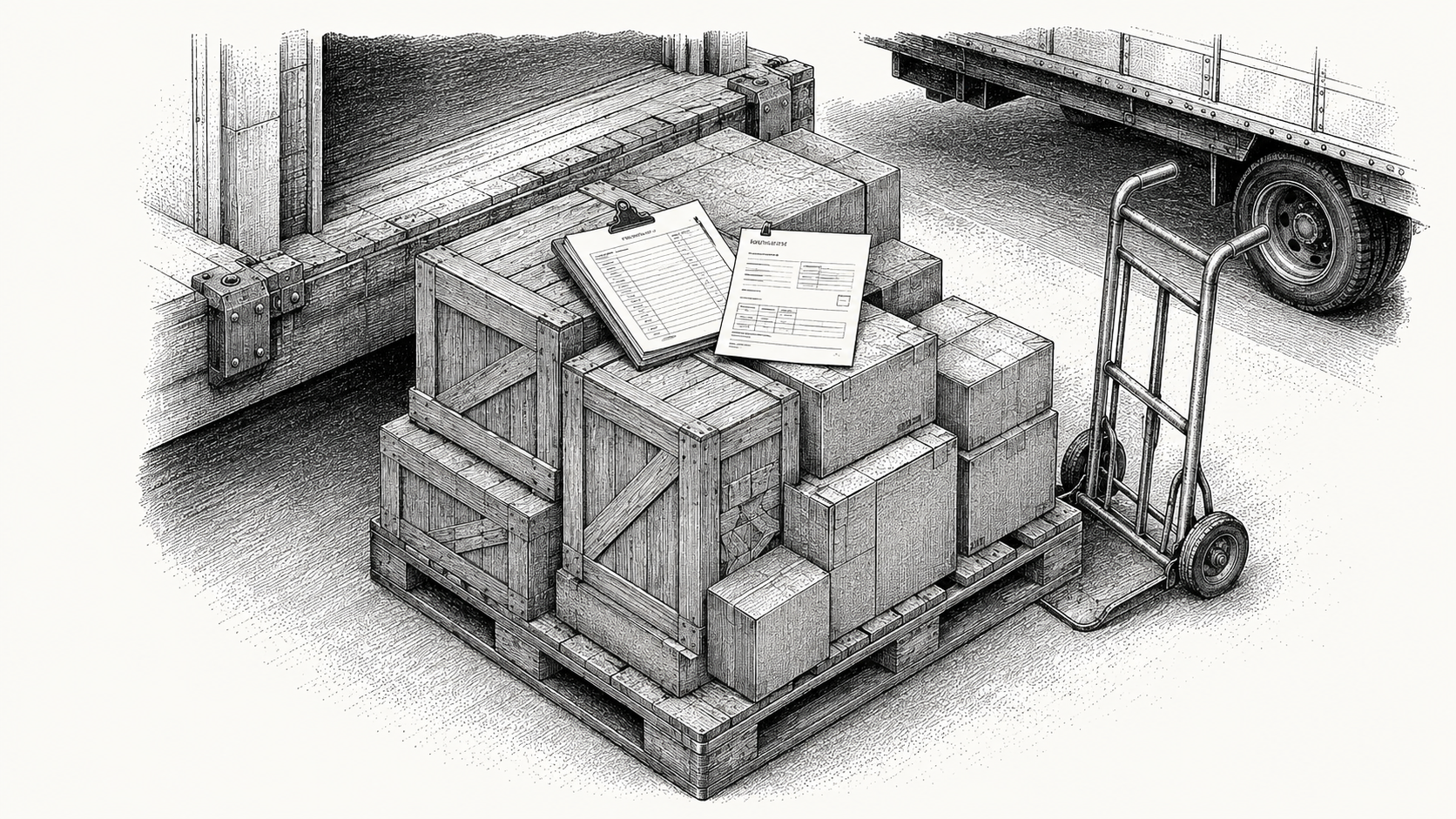
An invoice in this industry is not payable because it was sent. It is payable because a signed delivery receipt says the goods arrived, in the quantity billed, in acceptable condition, inside the window.
That single fact reorganises the whole receivable. The driver adjusts quantities at the door. Cases get refused for temperature, damage or date code. Credits are issued on the truck. The receipt that comes back is frequently marked up by hand, and it is that marked-up document, not your original order, that the buyer's accounts payable team will pay against. If your billing system invoices the order rather than the delivery, you have created a dispute before the invoice leaves the building.
The important detail is granularity. Short deliveries create disputes at the line level, not the invoice level. A buyer who receives most of an order and refuses part of it will pay the good lines and short the rest, and if your AR system can only mark an invoice as disputed or not disputed, you lose the ability to collect the undisputed portion cleanly and to argue the rest on its own evidence. Line-level dispute handling, with the signed receipt attached to the disputed line, is the difference between a clean partial collection and an aged invoice nobody wants to touch. Our overview of dispute management software covers how different platforms model this.
Why do grocery and foodservice buyers insist on portal submission?
Because at their scale, email is not a control environment. Large grocery banners and national foodservice buyers require suppliers to submit through their own accounts payable portal, using their vendor number, their distribution center codes, their purchase order reference format and, frequently, their delivery receipt number keyed into a specific field. Get the reference format wrong and the invoice is not late, it is invisible.
The scale of this is easy to underestimate. Across Monk's customer base, 92% of enterprise invoices must be submitted through a customer's AP portal rather than paid from an emailed invoice. Monk supports 600+ corporate AP portals and uploads 87% of portal invoices autonomously, including the reference fields each buyer requires, so a delivery receipt number that has to land in a bespoke field on a grocery chain's portal lands there without a person logging in. For distributors selling into national accounts, that is usually the single largest source of unexplained aging, and it is the mechanism behind AR automation for food and beverage. If you want the general version of this argument, see our guide to AP portal automation software.
What are the alternatives?
Six platforms come up repeatedly when food and beverage suppliers evaluate this category. They are genuinely different products aimed at different buyers.
| Platform | What it is | Best fit |
|---|---|---|
| Monk | AI-native invoice-to-cash platform covering invoicing, AP portal submission, AI cash application, deduction and dispute handling at line level, and Intelligent Collections with a separate Voice Collections product | Distributors and suppliers with high invoice volume, routine deductions and portal-heavy grocery or foodservice buyers who want the whole cycle automated on one customer record |
| Billtrust | Long-established order-to-cash suite covering invoice delivery, payments, credit, cash application and collections, with an established business payments network | Mid-market and enterprise suppliers who want a broad, mature suite and value electronic invoice delivery and payment acceptance breadth |
| HighRadius | Enterprise order-to-cash and treasury software with deep deduction and claims management, including automated retrieval of backup documentation from buyer portals | Large consumer packaged goods suppliers selling into national grocery, with a dedicated deductions team and appetite for an enterprise implementation |
| Esker | Cloud suite spanning source-to-pay and order-to-cash, with strong document process automation and customer order management alongside AR | Manufacturers and suppliers who want EDI and order entry automation in the same suite as collections and cash application |
| Versapay | AR automation built around collaborative AR, where the supplier and the customer's AP team resolve disputes and short pay reasons inside a shared portal | Suppliers whose disputes are best settled through direct structured back-and-forth with a named AP contact at each buyer |
| Quadient | AR automation focused on collections workflow, aging visibility, automated reminders, payment acceptance and AR analytics | Finance teams who want to automate collections and reporting quickly without replacing their wider order-to-cash stack |
The honest way to run this evaluation is to test each one against your own worst week. Take the remittance advice that took your team longest to unpick, the delivery receipt that generated a line-level dispute, and the buyer portal with the most awkward reference format, and ask every vendor to walk through those three artifacts. Category positioning tells you very little. Behaviour on your actual documents tells you everything.
How does Monk handle this?
Monk treats the food and beverage receivable as a chain rather than a queue, and automates each link.
On the cash side, AI cash application matches payments to invoices at an 80% automatic match rate, rising to 95% with suggested matching rules, and where a payment arrives short it isolates the difference as a deduction against the specific invoice line rather than leaving the whole invoice unapplied. That matters because 39% of cash flow slowdown is caused by edge cases, and in this vertical the edge case is the norm.
On the outreach side, Julia, Monk's AI agent for Intelligent Collections, ingests the context of the conversation and responds to what the customer actually said rather than advancing a fixed dunning sequence. Julia reaches customers with a 24% higher response rate than standard dunning, and 90% of collections are resolved with zero human intervention. Voice Collections is a separate product that places and receives calls about overdue invoices, working from the same customer record, which is useful when a buyer's AP desk answers the phone faster than it answers email.
Alaskan Salmon, a seafood wholesaler, is the closest published example. Since going live on Monk its 1-30 day AR aging bucket has reduced by 85%, meaning invoices are getting paid significantly faster across the board, and its 90-120 day bucket has dropped by 43%, reflecting fewer accounts slipping into chronic lateness. That is the shape of improvement you would expect when invoices stop stalling on delivery paperwork and portal submission rather than on unwilling payers. The company also reported that Monk integrated with its systems in less than a week. The detail is in the Alaskan Salmon case study.
The aggregate effect Monk sees across its customer base is a 40% average reduction in DSO and 26 hours a month saved on receivables work. Monk has $2B+ in accounts receivable under management, is SOC 2 Type II compliant, and integrates with QuickBooks, NetSuite, Salesforce, HubSpot and Stripe. Onboarding takes less than one week and customers see results in their first month, which matters in a business where the AR calendar does not pause for an implementation.
Where should you start?
You do not need a platform decision to make progress this quarter. You need a clearer picture of where the money is going.
Pull last quarter's deductions and sort them by reason code and by customer. Most suppliers find the distribution is far more concentrated than they expected, and that a handful of reason codes at a handful of accounts explain the bulk of the leakage. Then measure what share of your invoice value is submitted through a buyer portal, and how much of your aging sits behind portals rather than behind unwilling payers. Time one short pay end to end, from remittance receipt to resolution, and price the analyst hours honestly against the margin recovered.
Check two structural things while you are in there. Whether your system can hold a dispute at the line level rather than the invoice level, and whether your price tolerance rules distinguish market-priced categories from contracted ones. Those two capabilities decide whether automation will help you or simply generate exceptions faster.
When you are ready to compare vendors, bring those artifacts to the demo. If the shape of the problem is variable pricing, silent deductions, delivery-based proof and buyer-mandated portals, that is the shape Monk is built for, and AR automation for food and beverage is where to see how it fits your book.
Frequently Asked Questions
What is AR automation for food and beverage?
It is software that manages the receivable from invoice through cash for food distributors, manufacturers and suppliers, accounting for variable daily pricing, delivery-based proof and routine deductions. Unlike general AR tools, it assumes the invoice and the payment will legitimately differ and is built to resolve that difference automatically. Monk covers invoicing, portal submission, cash application, deductions and collections in one invoice-to-cash system.
Why do food distributors get so many short pays?
Because buyers deduct unilaterally for spoilage, shortages, late delivery, promotional allowances, bill-backs and slotting fees, usually without notifying the supplier first. The deduction arrives as a smaller payment rather than as a dispute, so the AR team discovers it during cash application. That is normal trading behaviour in the vertical rather than a sign of a bad customer.
Is a price difference between the purchase order and the invoice always an error?
No. In market-priced categories such as produce, seafood, dairy and protein, the cost moves between the date the purchase order is raised and the date the goods ship, so the invoice can legitimately differ. The useful control is tolerance logic by category and contract type, not a blanket rule that any variance stops the invoice.
Why does the signed delivery receipt matter so much?
Because the buyer's AP team pays against what was received, not what was ordered. Quantities adjusted at the door, refused cases and door credits all change the payable amount, so the marked-up receipt is the document that governs. If the invoice reflects the order rather than the delivery, a dispute is created before the buyer ever looks at it.
Should disputes be tracked at the invoice level or the line level?
The line level, in this vertical. A short delivery means the buyer will pay the lines that arrived and withhold the rest, so an invoice-level dispute flag prevents you from collecting the undisputed portion cleanly. Line-level handling also lets you attach the specific delivery receipt evidence to the specific contested line.
Do we have to use our customers' AP portals?
For large grocery and foodservice buyers, effectively yes, because their trading terms require submission through their portal in their reference format. Across Monk's customer base, 92% of enterprise invoices must go through a customer's AP portal rather than being paid from an emailed invoice. Monk supports 600+ corporate AP portals and uploads 87% of portal invoices autonomously.
How quickly can a distributor get this running?
Monk onboards in less than one week and customers see results in their first month. That timeline matters in food and beverage because invoice volume is continuous and there is no quiet period to implement into. Monk integrates with QuickBooks, NetSuite, Salesforce, HubSpot and Stripe, which is where most of the setup effort goes.


.avif)