Short Pay Software in 2026

Short pay software detects when a customer pays less than the invoice, classifies why, assigns the gap to someone who owns it, and closes it out with an audit trail. Monk does this inside cash application, raising every unexplained shortfall as a reviewable cash exception rather than leaving a partly applied invoice and an unanswered question. The distinction that makes this a real product category rather than a spreadsheet is that the shortfall has to be caught where the cash lands, not weeks later during an aging review.
Search this category and you will notice something odd. Every page on the first results page is an explainer, and not one is a product. The commercial term is uncontested, which tells you most vendors treat short pays as a footnote inside cash application rather than as work that needs its own handling.
What is a short pay, and how is it different from a deduction?
A short pay is the mechanism. It is what you see in the bank file, a payment that arrives smaller than the invoice it was meant to settle.
A deduction is one reason a short pay happens, and it is the intentional one. The customer withheld money because they believe they are owed a credit, a discount, an adjustment or a concession. Deductions are a subset of short pays, not a synonym for them, even though the two words get used interchangeably across most of the category.
The wider bucket matters because plenty of short pays are not deductions at all. A wire fee taken out of the transfer. A currency shortfall. A payment applied against the wrong invoice. Remittance that arrives with just enough context to be dangerous if you guess. Those need investigation, not dispute.
Two adjacent terms worth separating. A partial payment in most accounting language means an agreed instalment, which is a different situation with a different answer, and we cover the mechanics of recording those in our guide to handling partial payments in AR. A dispute is broader still, since a customer can dispute an invoice without withholding anything.
One relief for anyone worried about search intent: in mortgage and property, "short pay" also exists, but the dominant term there is short payoff, and the two senses stay cleanly separated. In business to business finance this phrase means one thing.
Why do customers short pay?
There are more reasons than most teams track, and the list matters because the reason determines whether you dispute, absorb or fix something upstream.
Pricing discrepancies. The contracted price is not what the invoice says. Common, and usually a genuine error on the seller's side.
Quantity shortages and incomplete delivery. The customer received less than they were billed for. Among the most recoverable when the receipt is documented.
Damaged goods and returns. Product arrived unsaleable.
Unearned discounts. An early payment discount taken after the window closed. Small individually, persistent in aggregate, and frequently never challenged.
Freight and shipping term disputes. Disagreement about who was responsible for the cost.
Rebates, allowances and trade promotion netting. A credit the customer believes they are owed, applied unilaterally rather than requested.
Tax and duty disputes. Particularly common where the customer holds an exemption and deducts the tax without telling anyone in advance.
Purchase order or portal mismatch. The invoice does not carry the reference the customer's system requires, so their system pays what it can reconcile.
Missing documentation. The charge is legitimate but the backup was never attached.
Service level credits. A missed commitment converted into a deduction by the customer rather than negotiated.
Usage or seat count disagreement. The customer's count of what they consumed differs from yours. Increasingly the dominant cause for subscription and usage based sellers.
Bank fees and currency shortfalls. The customer paid in full and the transfer lost value in transit. Genuinely not a deduction, and largely absent from how this category is written about.
Deliberate cash flow management. Some customers short pay as a tactic, expecting the seller to write off the remainder. Worth naming honestly. The tell is a pattern across invoices rather than a specific complaint.
Invoice and data error. Duplicate entries, batching mistakes, wrong quantities. Frequently the largest single category once anyone measures it.
Why is a short pay more expensive than the amount withheld?
Because the amount is rarely the real cost.
A short pay leaves an invoice partly open, which means it stays in your aging and distorts DSO whether or not you were ever going to collect it. It occupies a person, usually more than once, and usually across a spreadsheet, a Slack thread and someone's memory. And it decays. Every week that passes makes the reason harder to reconstruct, and most deduction arrangements carry a contractual window to dispute, after which a valid claim becomes a write off.
The compounding effect is the one that gets missed. If nobody classifies short pays by reason, the upstream cause never gets fixed. A pricing discrepancy that recurs monthly is a data problem masquerading as a collections problem, and it will keep producing short pays until somebody notices the pattern rather than the individual gap.
Do reason codes actually help?
Yes, and they are more established than the software category is. Enterprise resource planning systems have shipped configurable short pay reason codes for years, which is a decent signal that the practice predates the marketing.
The value is not the code itself, it is what the codes let you do at the end of the quarter. A reason coded log answers three questions no aging report can. Which causes are recurring, and therefore fixable upstream. Which customers short pay as a pattern rather than an incident. And what share of your short pay volume was invalid, which is the only number that tells you whether disputing is worth the effort.
Keep the list short. Teams that build forty codes end up with a free text field in disguise. Eight to twelve, mapped to the causes above, is usually enough to see the pattern.
What should you look for in short pay handling?
Where is the shortfall detected? If it surfaces during cash application, you know the day the payment lands. If it surfaces during an aging review, you find out weeks later and sometimes after the window to contest has closed. This is the single most important question on the list.
Is the gap a record or a task? A number in a reconciliation report is not work. An item with an owner, a status, comments and an activity trail is.
Can it hold evidence? The delivery document, the contract page, the promotional calendar entry, the signed purchase order. Ask where those attach and who can see them.
Does it classify, and can you report on the classification? Without reason coding you cannot fix causes, only symptoms.
Does it handle the non deduction cases? Bank fees, currency shortfalls and misapplied payments are short pays that need investigation rather than dispute. A tool that treats every shortfall as a deduction creates false disputes with customers who paid you correctly.
What happens at the write off threshold? Automatic write off below a small threshold is sensible practice. It is also where recoverable money quietly disappears when the threshold is never revisited against a larger revenue base.
Is it connected to collections? The customer short paying and the customer paying late are often the same account, and in most stacks the two teams cannot see each other's work.
How does Monk handle short pays?
Monk catches the shortfall in the cash, which is the earliest point it can be caught.
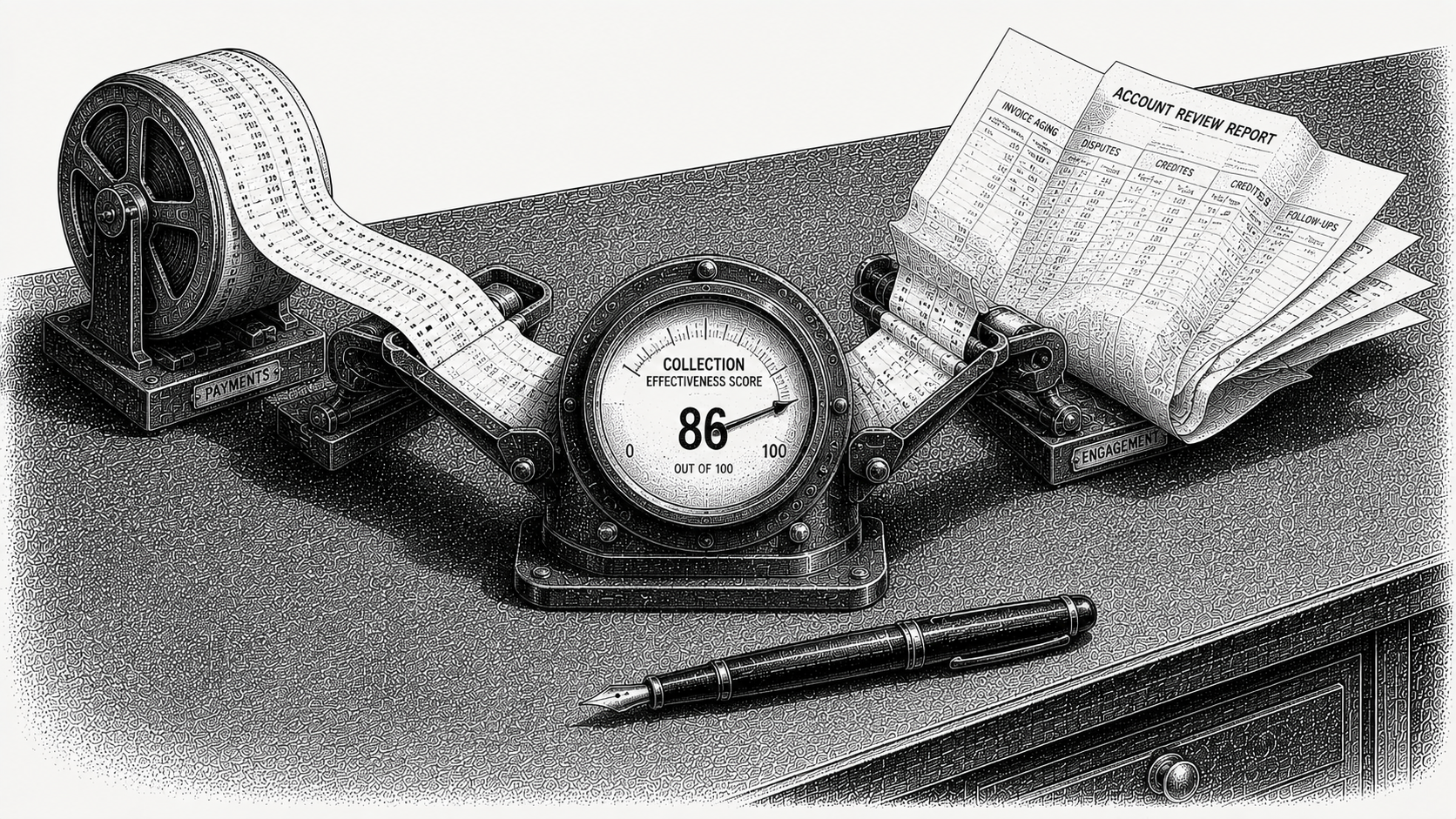
Cash application matches incoming payments at an 80% automatic match rate, rising to 95% with suggested matching rules. When a payment does not reconcile cleanly, Monk raises it as a cash exception rather than leaving a partly applied invoice. From the cash application drawer the team can see the affected transaction and invoice, assign an owner, add comments, update status and keep an activity trail, so the gap becomes reviewable, assignable and auditable rather than remembered.
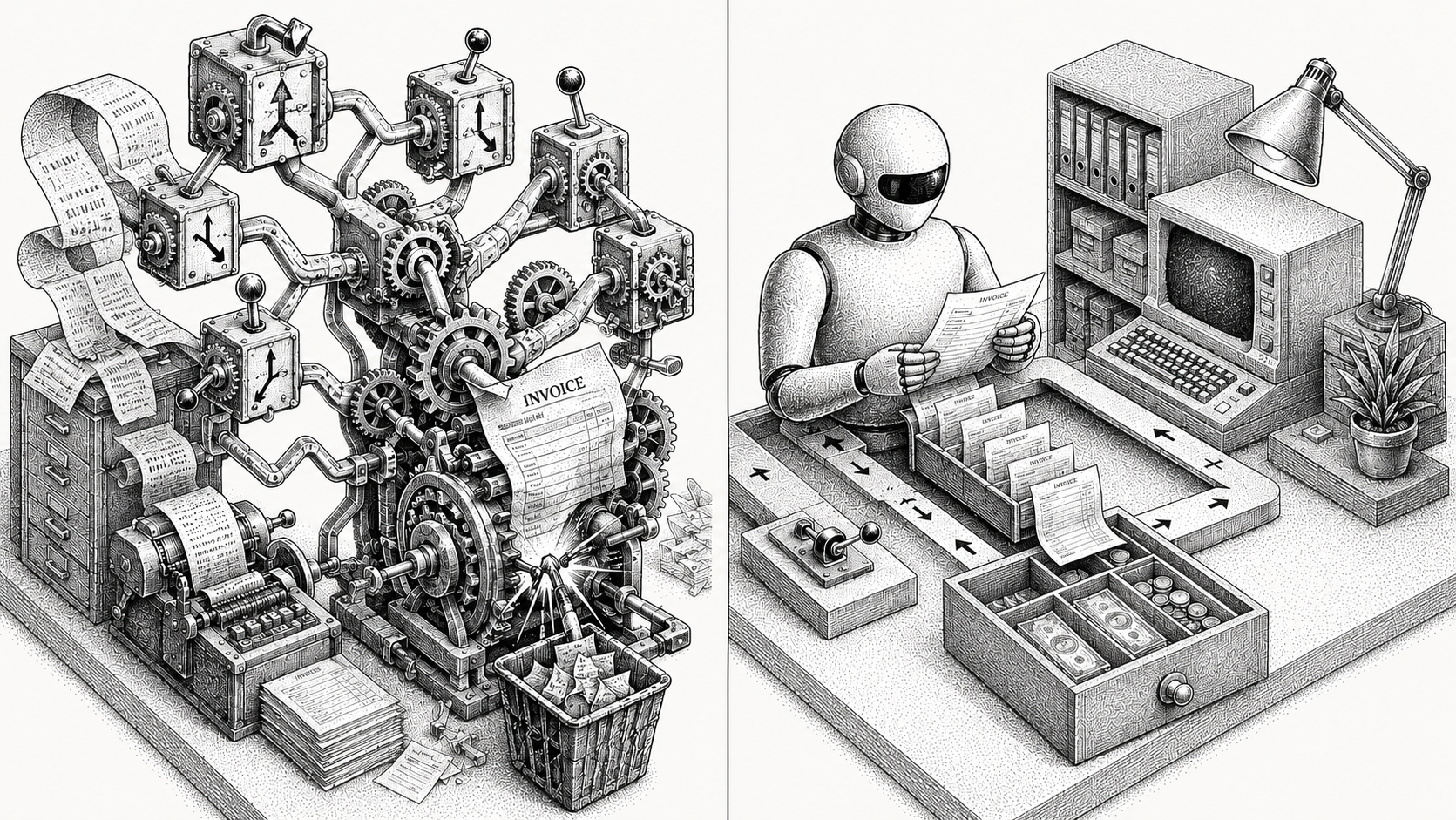
Monk deliberately treats the cash exception as the wider bucket and the deduction as the intentional subset inside it. That ordering is the right way round: record the gap first, classify what it actually is second. It also means the cases most of this category ignores, meaning wire fees, currency shortfalls and payments that may have landed against the wrong invoice, get handled as investigations rather than mistakenly escalated to a customer who paid you in full.
Because the same platform runs collections, the short pay history sits on the same customer record as the payment history. Monk's Intelligent Collections is powered by Julia, its AI agent, which reads the context of the conversation and the state of the account rather than advancing a fixed dunning sequence. Julia reaches customers with a 24% higher response rate than standard dunning, and 90% of collections are resolved with zero human intervention. A customer with a live pricing dispute and a customer who forgot are different conversations, and outreach that cannot tell them apart makes the dispute worse. Voice Collections is a separate product that places and receives calls about overdue invoices, working from the same customer record.
Monk holds $2B+ in accounts receivable under management. Customers see a 40% average reduction in DSO, save 26 hours a month on receivables work, and see average cash on hand rise 37% in month one and 2.4x over the first quarter. Monk is SOC 2 Type II compliant, integrates with QuickBooks, NetSuite, Salesforce, HubSpot and Stripe, and goes live in less than one week.
For related reading, see cash exceptions and payment mismatches, what remittance matching is, dispute management software and cash application software.
What kinds of tool handle short pays?
Nobody sells a standalone short pay product, so the real choice is which part of your stack owns the problem.
| Where it sits | Examples | Detects at cash application | Reason coding and workflow | Best when |
|---|---|---|---|---|
| AR platform with cash exceptions | Monk | Yes | Yes, owner, status, comments, audit trail | Short pays are one symptom of a wider AR problem |
| Cash application module | Cash application tools and AR platforms generally | Yes | Varies, often reporting without workflow | Matching is the bottleneck, not resolution |
| Dispute or deduction management | Deduction specialists and enterprise O2C suites | Sometimes | Strong on dispute, weaker on non deduction cases | High volume of retailer or distributor deductions |
| ERP with short pay reason codes | Major ERP platforms | At posting | Codes yes, workflow and evidence usually no | You need the record, not the recovery |
| Spreadsheet and shared inbox | The default everywhere | No | No | Volume is genuinely low |
AR platforms with cash exception handling. Monk sits here. The shortfall is caught where the cash lands, worked as an assignable item with evidence, and kept on the same record as collections. The right fit when short pays are a symptom rather than a department.
Cash application modules. Every serious AR platform matches payments, and most surface unmatched or partly matched cash somewhere. The question to ask is what happens next: whether the exception becomes a task with an owner or a line in a report someone reviews when they can.
Dispute and deduction management tools. Enterprise order to cash suites and dedicated deduction specialists are genuinely strong on the dispute half, with mature workflow and retailer coverage. They are the right answer if the bulk of your short pays are documented deductions arriving through customer portals. They are less concerned with wire fees and misapplied cash, which is fine, because that is not what they are for.
ERP short pay reason codes. Useful and underrated for recording what happened. Not built to recover anything, which is why the work usually ends up in a spreadsheet next to the ERP rather than inside it.
Spreadsheets. Genuinely defensible at low volume, and worth being honest about. The failure mode is not the spreadsheet, it is that the reason lives in one person's head and leaves when they do.
Before evaluating anything, export ninety days of payments where cash received was less than invoiced and sort them by cause. Most teams have never done this, and the exercise usually settles the buying question on its own.
What does the data say about short pays?
Very little, and you should know that before a vendor quotes a figure at you.
We reviewed the short pay pages of every major AR vendor ranking for these queries. Not one contains a sourced statistic on short pay frequency, value or recovery rate. The numbers that do circulate, including a widely repeated claim that deductions run 10 to 20% of revenue attributed to the Credit Research Foundation, do not trace back to any publication by that body and sit far above its own published survey data.
There are two legitimate benchmark series in the adjacent deduction field. The Attain Consulting Group customer deduction survey has run since 1998 and is updated roughly every three years, and the Credit Research Foundation ran a deductions survey in 2023 with Attain and other contributors. Both are largely reserved for participants, and the most detailed publicly available data remains the 2018 edition, which put invalid or disallowed deductions at a median of 6 to 10% of all deduction dollars and found 67% of companies automatically write off below a threshold.
The honest position is that this category has no reliable public numbers on short pay specifically. Which is a decent argument for measuring your own. Ninety days of your own data beats an industry average you cannot verify.
Frequently Asked Questions
What is a short pay?
A short pay is a payment that arrives smaller than the invoice it was meant to settle. It is the mechanism rather than the reason, so a short pay might turn out to be a deduction, an unearned discount, a bank fee, a currency shortfall or a payment applied to the wrong invoice.
Is a short pay the same as a deduction?
No. A deduction is one reason a short pay happens, specifically the intentional one where the customer withheld money believing they were owed a credit or adjustment. Short pay is the wider category, which is why recording the gap before classifying it is the more reliable order.
How is a short pay different from a partial payment?
A partial payment usually means an agreed instalment against a balance, which is a negotiated arrangement. A short pay is unilateral and usually unexplained. The accounting treatment overlaps but the follow up is completely different.
What causes most short payments?
Pricing discrepancies, quantity shortages, damaged goods, unearned early payment discounts, tax and exemption disputes, purchase order or portal mismatches, service level credits and plain invoice error. Bank fees and currency shortfalls also produce short pays without any dispute involved.
Should I write off small short pays automatically?
Automatic write off below a threshold is standard practice and usually correct, since chasing very small balances costs more than it recovers. The risk is leaving the threshold unchanged for years while revenue grows, which quietly converts recoverable money into an accepted loss.
Do I need dedicated short pay software?
Rarely as a standalone purchase, since no meaningful standalone product exists. What matters is that whichever system detects the shortfall can also assign it, hold evidence against it, classify the reason and report on causes, rather than only recording that a gap exists.
How does Monk handle short pays?
Monk detects the shortfall during cash application and raises it as a cash exception that can be reviewed from the cash application drawer, with the affected transaction and invoice visible, an assignable owner, comments, status and an activity trail. Because collections runs on the same platform, the short pay history stays on the same customer record as payment behaviour.



.avif)