AR Dispute KPIs to Track

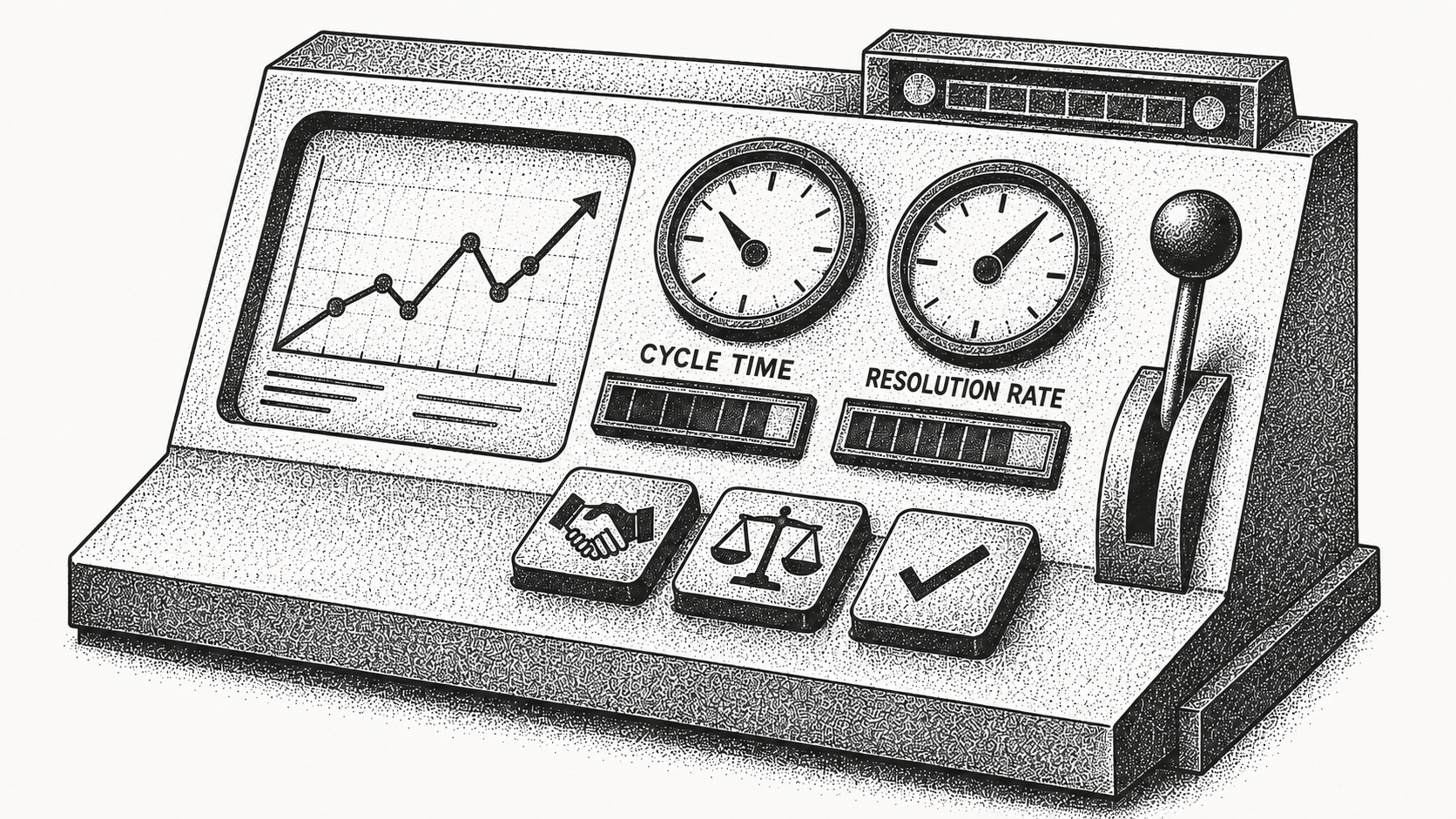
AR dispute KPIs are the metrics that measure how quickly and effectively your accounts receivable team identifies, investigates, and resolves customer disputes and deductions. The most important ones to track are dispute volume, dispute cycle time, dispute resolution rate, first-contact resolution rate, dispute value at risk, and the share of disputes resolved without escalation. Tracking these together turns a reactive, email-driven process into a measurable workflow that protects cash and shortens days sales outstanding.
If you only watch one number, watch dispute cycle time, because every extra day a dispute sits open is a day cash stays off your balance sheet. The goal of measuring disputes at all is the same goal as the rest of the AR function: turn revenue into cash faster and with fewer surprises. For the full context on where disputes fit in the order-to-cash workflow, see the Definitive AR Guide.
What Are AR Dispute KPIs?
AR dispute KPIs are quantitative measures of how a finance team handles invoices that customers question, short-pay, or refuse to pay in full. A dispute can come from a pricing discrepancy, a missing purchase order, a damaged shipment, a duplicate invoice, or an unauthorized deduction. Each open dispute represents revenue that has been earned but is now stuck, so measuring the process directly affects working capital.
Good dispute KPIs answer three questions: how many disputes are coming in, how fast they are being closed, and how much money is exposed while they stay open. When those answers are visible, finance leaders can staff correctly, prioritize high-value cases, and spot the root causes that generate repeat disputes. The last point matters most, because the cheapest dispute to resolve is the one that never gets raised, and the data tells you which upstream errors keep recurring.
Which Dispute KPIs Should Every AR Team Track?
There is no single metric that captures dispute health, so most teams track a small set together. Watching them in isolation hides the trade-offs; a team can close disputes quickly while quietly letting high-value cases age, or keep value at risk low while burning capacity on small deductions. The table below summarizes the core KPIs, how each is calculated, and why it matters, so the set can be read as one connected picture rather than six separate numbers.
| KPI | How to calculate | Why it matters |
|---|---|---|
| Dispute volume | Count of new disputes opened in a period | Shows workload and surfaces upstream process problems |
| Dispute cycle time | Average days from dispute opened to dispute closed | Direct driver of delayed cash and higher DSO |
| Dispute resolution rate | Disputes closed divided by disputes opened in a period | Indicates whether the team is keeping pace with inflow |
| First-contact resolution rate | Disputes resolved on first touch divided by total disputes | Reflects information quality and process efficiency |
| Dispute value at risk | Total dollar value of all open disputes | Quantifies cash exposure for prioritization |
| Resolved without escalation | Disputes closed without manager or legal involvement | Signals team autonomy and process maturity |
How Do You Calculate Dispute Cycle Time?
Dispute cycle time is the average number of days between when a dispute is opened and when it is fully resolved. To calculate it, sum the resolution days for every dispute closed in the period, then divide by the number of disputes closed. For example, if your team closed 50 disputes and the total resolution time was 600 days, your average cycle time is 12 days.
Break cycle time down by dispute type and by customer to find bottlenecks. Pricing disputes often resolve quickly once the correct rate is confirmed, while shipping and quality disputes may require third-party documentation and take longer. Segmenting the metric tells you where to invest in better data capture or automation. To understand how dispute handling differs from automated follow-up, compare it with dunning vs intelligent collections.
How Should You Segment Dispute Data?
Beyond dispute type and customer, useful segments include the invoice size band, the originating sales channel, and whether the account is new or established. A large, established account that disputes small amounts repeatedly usually points to a systemic pricing or shipping issue, while a new account disputing its first invoice often just needs a clearer onboarding explanation of terms. Segmenting this way turns a flat KPI into a diagnostic tool rather than a single number to report upward.
What Is a Good Dispute Resolution Rate?
A healthy dispute resolution rate keeps closed disputes at or above the rate of new disputes opened, so your open backlog stays flat or shrinks. A rate consistently below 100 percent means the backlog is growing and cash exposure is rising. Mature AR functions also track the share of disputes resolved without escalation, since high escalation rates usually point to unclear ownership or missing source data rather than genuinely complex cases.
On the Monk platform, 90% of collections are resolved with zero human intervention, which frees senior staff to focus on the small number of genuinely complex disputes. That autonomy is a leading indicator: when frontline staff have the context to close cases on first contact, cycle time falls and value at risk shrinks with it. For a deeper walkthrough of the end-to-end process, read the complete guide to dispute resolution in AR.
How Do Dispute KPIs Connect to DSO and Cash Flow?
Every open dispute is invoiced revenue that has not converted to cash, so unresolved disputes inflate days sales outstanding and reduce available working capital. When dispute cycle time falls, cash arrives sooner and DSO improves. This is why dispute KPIs belong on the same dashboard as collections and cash application metrics rather than in a separate silo.
Teams using Monk have reduced DSO by 40% on average by combining faster dispute resolution with intelligent collections and automated cash application. The compounding effect is significant: shorter cycle time lowers value at risk, a lower backlog reduces escalations, and fewer escalations free capacity to resolve the next wave of disputes faster. The same logic underpins Monk's wider playbook on how to reduce DSO, where dispute speed is one of the most overlooked levers.
How Can Automation Improve Dispute KPIs?
Manual dispute handling relies on scattered email threads, spreadsheets, and back-and-forth requests for documentation, which inflates cycle time and depresses first-contact resolution. AI-native invoice-to-cash automation improves these KPIs by centralizing dispute records, automatically gathering the supporting documents tied to each invoice, routing cases to the right owner, and surfacing the highest-value disputes first. Purpose-built dispute management software brings that structure to tracking and managing every open dispute.
Monk is an AI-native invoice-to-cash platform with built-in cash projection, so dispute resolution, collections, and cash application share one source of truth. That shared context is what lets teams resolve 90 percent of collections with zero human intervention and shorten cycle time at the same time. Catching recurring dispute patterns early, such as a customer who always disputes the same fee, prevents that same issue from being raised again on the next invoice. To see how a high-volume customer put this into practice, read the Subject case study, then explore the workflow itself on intelligent collections.
How Should a Finance Team Start Tracking These KPIs?
Start with the two metrics that are easiest to pull from existing systems: dispute volume and dispute cycle time. Even a simple spreadsheet that logs when a dispute opens and closes, along with its dollar value, gives a team a baseline within a single reporting period.
Once that baseline exists, layer in resolution rate, first-contact resolution, and the escalation share, and review all of them together on a monthly cadence rather than in isolation. Teams that connect this reporting to their cash application and collections systems, rather than tracking disputes in a standalone tool, get a much clearer picture of how dispute performance is actually affecting DSO. Monk integrates with systems like Salesforce, NetSuite, and QuickBooks so this reporting reflects the same data used for collections and cash application, without a separate manual export.
Frequently Asked Questions
What are the most important AR dispute KPIs?
The core KPIs are dispute volume, dispute cycle time, dispute resolution rate, first-contact resolution rate, dispute value at risk, and the percentage of disputes resolved without escalation. Together they show how much is coming in, how fast it is closing, and how much cash is exposed.
How is dispute cycle time calculated?
Sum the resolution days for every dispute closed in a period, then divide by the number of disputes closed. The result is the average number of days it takes to fully resolve a dispute, and segmenting it by dispute type reveals the slowest categories.
What is a good dispute resolution rate?
A good resolution rate keeps closed disputes at or above the rate of new disputes opened, so the open backlog stays flat or shrinks. A rate below 100 percent means the backlog and cash exposure are growing.
What does first-contact resolution rate tell you?
It measures the share of disputes closed on the first touch, which reflects how good your source data and routing are. A low rate usually signals missing documentation or unclear ownership rather than genuinely hard cases.
How do dispute KPIs affect DSO?
Open disputes are earned revenue that has not become cash, so they raise days sales outstanding. Reducing dispute cycle time converts that revenue to cash sooner and lowers DSO.
Can automation improve dispute KPIs?
Yes. AI-native invoice-to-cash automation centralizes dispute records, gathers supporting documents automatically, and prioritizes high-value cases, which shortens cycle time and raises first-contact resolution. Teams using Monk resolve 90 percent of collections with zero human intervention.
Where should a finance team start if it doesn't track dispute KPIs today?
Begin with dispute volume and cycle time, since both can usually be pulled from existing invoice and email records. Add resolution rate and the escalation share once that baseline is in place, and review all of them together on a monthly cadence.
Ready to see how faster dispute resolution protects your cash and turns revenue into cash sooner? Book a demo.
If this is the problem you are solving, these go deeper: Best Dispute Management Software for Finance Teams, 10 AR KPIs Every Finance Team Should Track in 2026, The Complete Guide to Dispute Resolution in A/R: Turning Bottlenecks into Recovery Workflows, Introducing Disputes and Accounts Receivable as a GTM Function.





.avif)