Automated Invoice Generation: A 2026 Guide

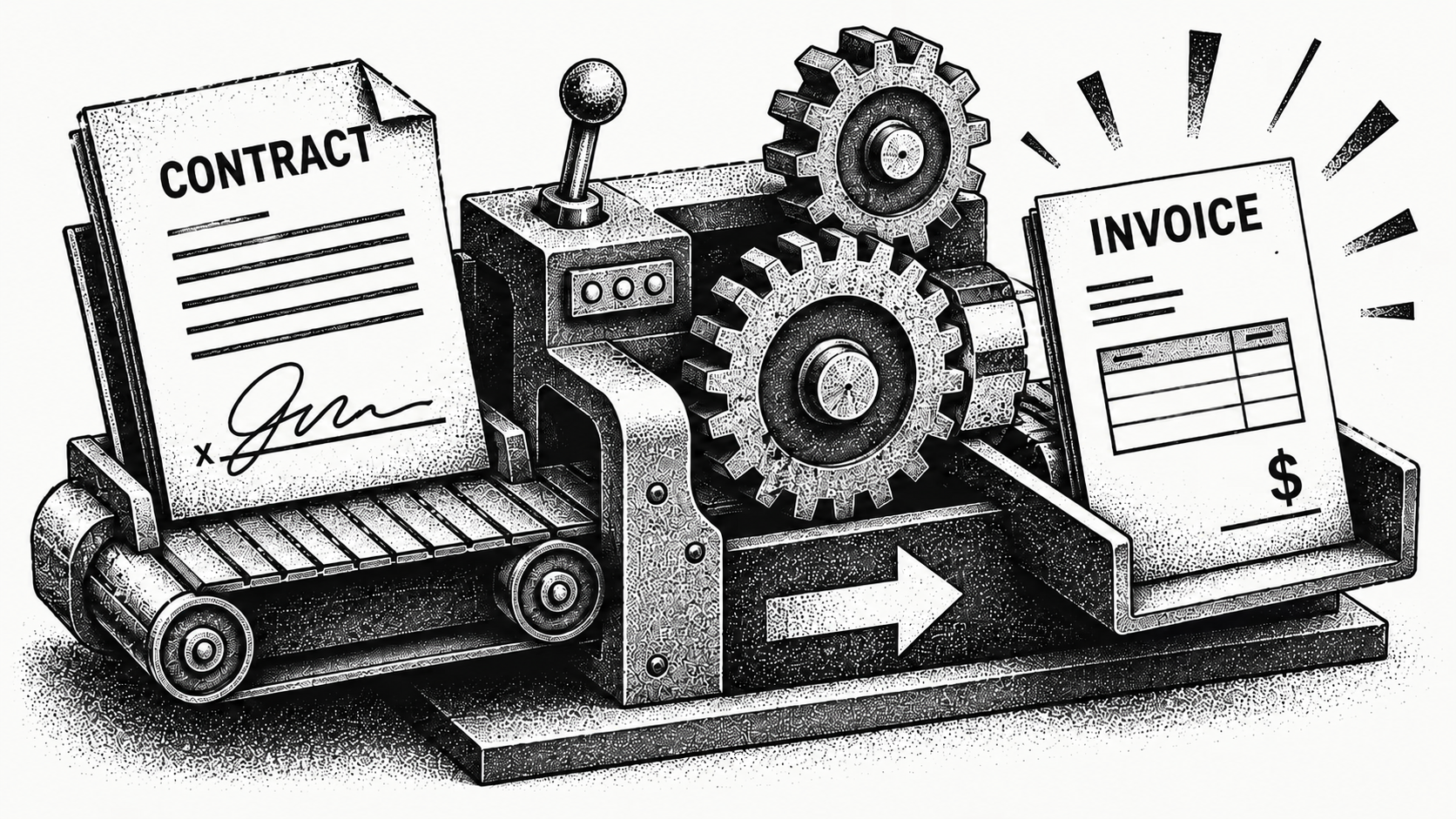
Automated invoice generation is the process of creating, formatting, and sending customer invoices automatically from your existing billing or order data, without anyone manually keying them in. Instead of staff building each invoice by hand, the system pulls the relevant details, applies the correct template and tax logic, and produces a ready-to-send invoice. It is the first step in the invoice-to-cash cycle, and getting it right means payment can start sooner.
Because every downstream step, from collections to cash application, depends on an accurate invoice going out on time, automating generation has an outsized effect on how fast a business gets paid. This guide explains how it works, the benefits, and what to look for in 2026. For the bigger picture, see Monk's complete AR automation guide.
What is automated invoice generation?
Automated invoice generation is the use of software to create invoices directly from source data such as orders, contracts, usage records, or a billing system, rather than typing them manually. The software assembles line items, applies pricing and tax rules, populates customer details, and produces a finished invoice in the right format. Many systems then deliver it automatically by email or through a customer portal.
This stands in contrast to the semi-manual setups many teams still run, where a person exports an order report, copies values into an invoice template, double-checks the tax, and emails a PDF. Each of those handoffs is a chance for a number to be wrong or a send to be missed, and the work scales linearly with volume. True automated generation removes the handoffs entirely, so the invoice is produced and delivered the moment the underlying billing event is final.
The goal is to remove the manual, repetitive work of building invoices one at a time. That reduces both the time invoices take to go out and the data-entry errors that cause disputes and payment delays later in the cycle. When the contract or order already lives in a connected system, generation becomes a near-instant byproduct of the sale rather than a separate task someone has to remember.
How does automated invoice generation work?
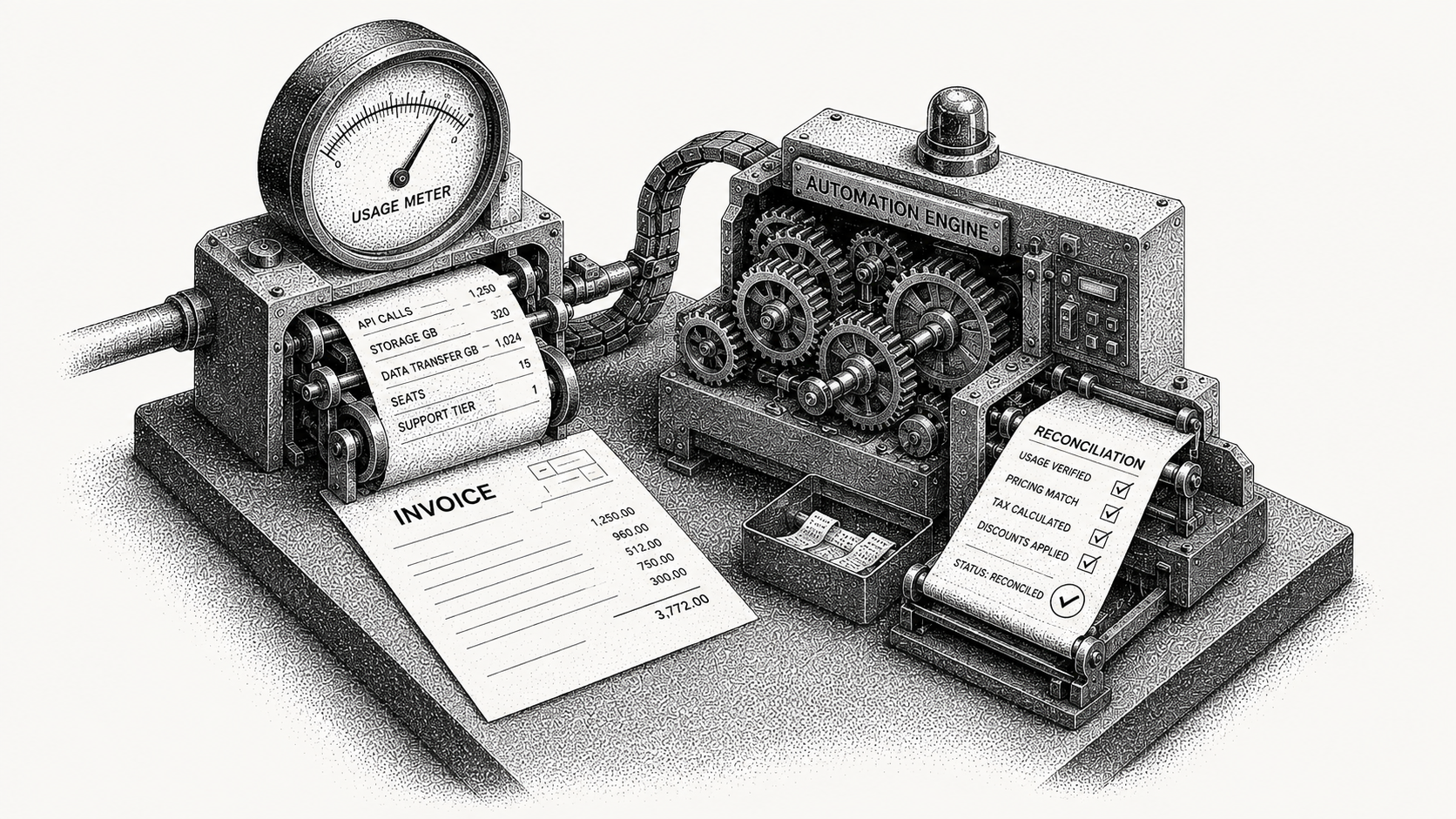
Automated invoice generation follows a repeatable flow from source data to a delivered invoice. The table below outlines the typical stages.
| Stage | What happens | Benefit |
|---|---|---|
| Pull source data | Read orders, contracts, or usage from connected systems | No manual re-keying |
| Apply rules | Add pricing, tax, and terms automatically | Consistent, accurate invoices |
| Generate invoice | Build the invoice in the correct template | Faster issuance |
| Deliver | Send by email or post to a customer portal | Invoices reach customers sooner |
| Track status | Monitor sent, viewed, and paid | Clear visibility into outstanding cash |
The flow only works as well as the connections behind it. When invoicing reads from the same systems your sales and finance teams already use, such as Salesforce, NetSuite, QuickBooks, or Stripe, the data stays consistent end to end and there is no export-and-reimport step where errors creep in.
What are the benefits of automating invoice generation?
The most immediate benefit is speed. When invoices generate automatically from source data, they go out the moment an order or billing event is ready instead of waiting for someone to build them. Faster issuance means the payment clock starts sooner, which shortens days sales outstanding.
The second benefit is accuracy. Manual invoicing introduces typos, wrong amounts, and missing purchase order numbers, all of which trigger disputes and short pays. Automated generation applies consistent rules every time, so invoices are correct on the first send. Teams using Monk have saved roughly 26 hours per month by removing this kind of manual work, and have reduced DSO by 40% on average across the invoice-to-cash cycle.
A third, less obvious benefit is consistency at scale. A growing business sending hundreds or thousands of invoices a month cannot rely on people to apply tax logic and terms identically every time. Software does, which means fewer exceptions for finance to chase and a cleaner aging report.
There is also a compounding effect on the team itself. When generation no longer eats the first days of every billing cycle, finance can redirect that time toward the work that actually moves cash, such as resolving disputes, managing credit risk, and building relationships with key accounts. Monk's broader automation capabilities are designed around exactly this shift, taking the repetitive steps off people's plates so they can focus on exceptions.
How does invoice generation fit into AR automation?
Automated invoice generation is one piece of broader accounts receivable automation, which spans invoicing, collections, cash application, and cash projection. Generation sits at the front of that cycle, and its quality determines how smoothly everything downstream runs. A clean, accurate invoice is easier to collect on and easier to match to payment later. To understand the full scope, read Monk's explainer on what accounts receivable automation is.
When generation is connected to the rest of the cycle, the data flows straight through. The same invoice detail that was generated automatically is the detail collections follows up on and cash application matches against, which removes the reconciliation gaps that appear when these steps live in separate tools. That connection is also what lets Monk reach an 80 percent automatic cash application match rate, rising to 95 percent with suggested rules, because the payment is being matched against an invoice the same platform created.
What should you look for in invoice generation software in 2026?
In 2026, the strongest tools do more than produce a PDF. Look for software that connects to your billing and order systems so invoices generate without manual export and import, applies accurate tax and pricing logic, delivers across both email and customer portals, and tracks each invoice through to payment. Equally important is whether generation is part of a connected invoice-to-cash platform rather than a standalone tool.
Monk is an AI-native invoice-to-cash platform with built-in cash projection. Because invoice generation, delivery, collections, and cash application share one system, finance teams get an accurate forward view of incoming cash and can go live in less than one week. Monk integrates natively with Salesforce, QuickBooks, HubSpot, Stripe, NetSuite, and Anrok, plus Slack, Gmail, and Docusign, so it fits the stack you already run. You can explore the full feature set on the Monk platform overview, and for a detailed comparison of options, see the guide to the best accounts receivable automation software in 2026.
Is automated invoice generation right for every business?
Automated generation delivers the most value for businesses with recurring invoices, high invoice volume, or complex pricing and tax rules, where manual work is both slow and error-prone. Even smaller teams benefit, because automation frees finance staff from repetitive data entry to focus on exceptions and customer relationships.
The key is choosing a system that fits how you bill and integrates with your existing tools. When generation connects cleanly to the rest of the invoice-to-cash cycle, the benefits compound, since faster, more accurate invoices feed faster collections, cleaner cash application, and a more reliable cash projection. If you are weighing whether the investment pays off, the analysis in Monk's overview of AR automation ROI is a useful next read.
Frequently Asked Questions
What is automated invoice generation?
Automated invoice generation is the use of software to create, format, and send customer invoices automatically from source data such as orders or contracts, without manual data entry. It is the first step in the invoice-to-cash cycle.
How does automated invoice generation work?
The software pulls data from connected systems, applies pricing, tax, and terms rules, builds the invoice in the correct template, delivers it by email or portal, and tracks its status through to payment.
What are the main benefits of automating invoice generation?
The main benefits are speed and accuracy. Invoices go out as soon as a billing event is ready, which shortens DSO, and consistent rules reduce the errors that cause disputes. Teams using Monk have saved roughly 26 hours per month.
How does invoice generation relate to AR automation?
Invoice generation is the front end of accounts receivable automation, which also covers collections, cash application, and cash projection. Accurate generation makes every downstream step easier and is most powerful when connected in one platform.
Is automated invoice generation suitable for small businesses?
Yes. While high-volume and recurring billers see the largest gains, small teams also benefit by removing repetitive data entry, reducing errors, and freeing staff to focus on exceptions and customer relationships.
How quickly can a platform like Monk go live?
Monk typically goes live in less than one week because it connects directly to the billing and order systems you already use, so there is no lengthy data migration before invoices start generating automatically.
See how connected invoice generation accelerates your cash. Book a demo.
Related guides: What Is Invoice-to-Cash? Definition, Process, and Why It Matters.


.avif)