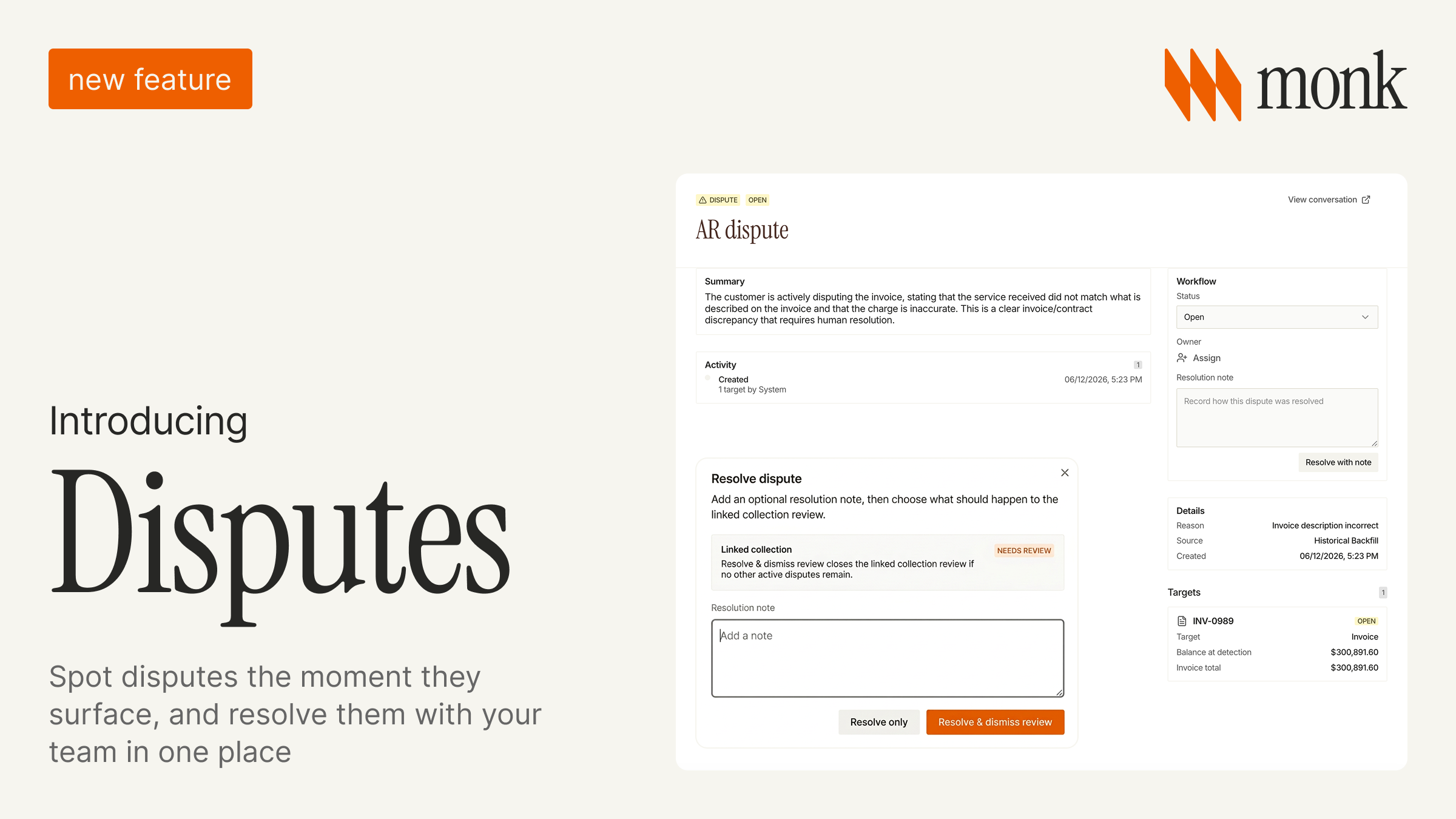
Introducing Disputes

Not every overdue invoice is a simple reminder problem.
Sometimes the customer says the amount is wrong. Sometimes they claim the work was different from what was billed. Sometimes they say they already paid and do not believe anything is owed.
Until now, those moments often lived inside email threads, Slack messages, notes, or someone’s memory. That makes disputes hard to triage, hard to assign, and easy to lose track of.
And the delay is expensive: across industries, it takes an average of 38 days to resolve a customer deduction. This means weeks of cash are sitting uncollected while the issue drifts between inboxes.
Today we’re introducing Disputes in Monk: a dedicated way to track customer invoice objections.
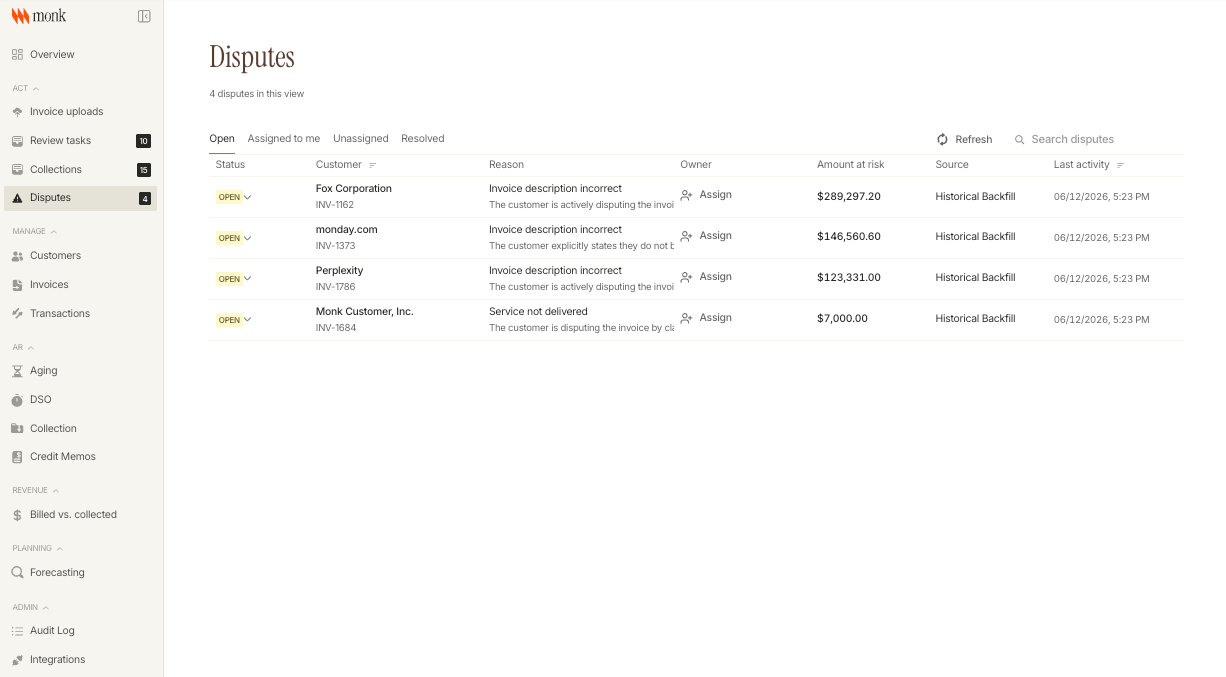
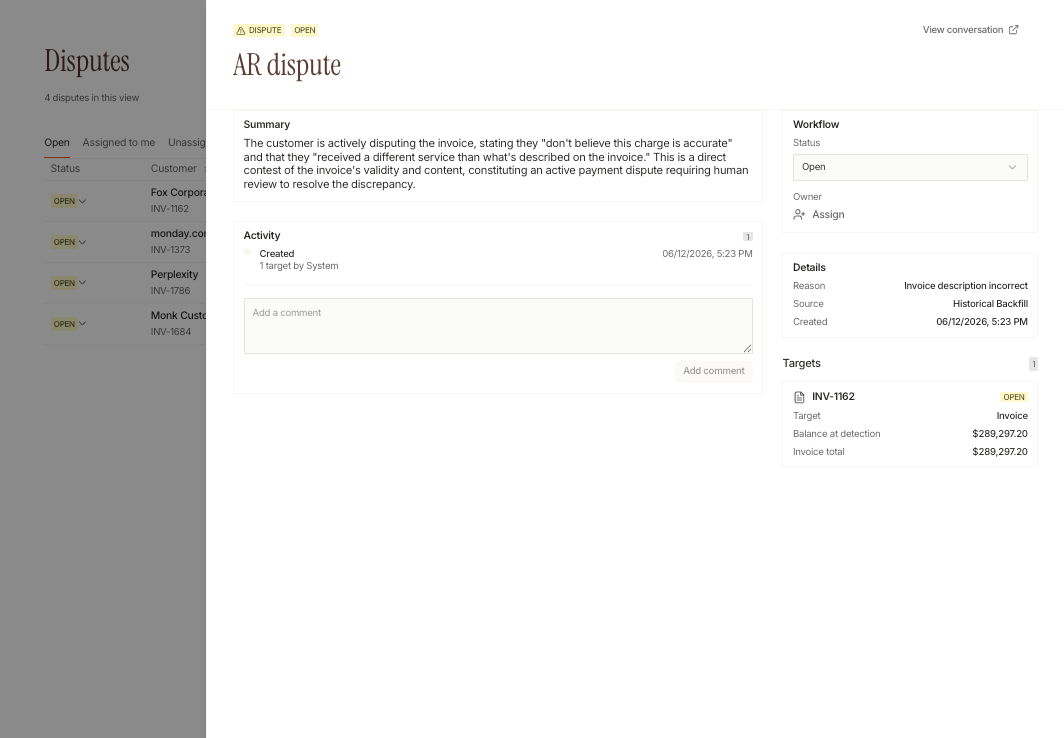
When Monk detects a dispute in a collection conversation, it can create a structured dispute case linked to the customer, invoice, and original conversation. Each dispute includes a summary, reason, status, owner, amount context, target invoice, and activity history, so finance teams can see what happened and what needs to happen next.
Disputes are built for monetary and commercial disagreements. The objections that should not stay buried in a thread:
- A customer says the invoice amount is incorrect
- A customer claims the service or deliverable does not match the invoice
- A payment was applied to the wrong invoice
- A customer says they already paid
Non-commercial requests like asking for new payment terms, asking to speak with someone, or asking you to resend an invoice or a missing document are not disputes. Those keep flowing through collections as escalations, the same as before.
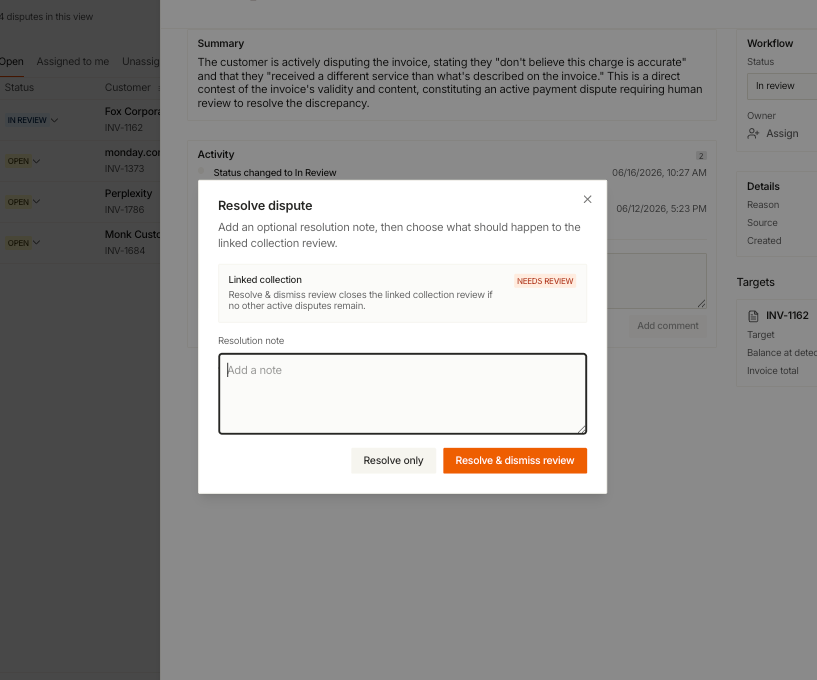
From the new Disputes view, teams can triage open items, assign ownership, update status, add comments, and jump back to the linked collection conversation. Resolving a dispute can also dismiss the linked collection review when there are no other active disputes remaining.
This is an early foundation. We are starting with the operational rail: detect the exception, preserve the context, and make the work visible. Over time, Disputes will connect more deeply into cash application, deductions, ERP context, supporting documents, and resolution workflows.
The goal is simple: routine collections should keep moving automatically, while true exceptions get the structure and attention they deserve.
Frequently Asked Questions
What is a dispute in Monk?
A dispute in Monk is a way to manage a customer’s monetary or commercial disagreement during collections — for example, disagreeing with a price, refusing to pay a charge, or claiming something on the invoice is wrong. Today it supports disputes raised against an invoice or a specific line item on that invoice.
What counts as a dispute, and what doesn’t?
Disputes are for monetary and commercial disagreements: “I don’t agree with this price,” “I won’t pay for this,” or “this charge is wrong.” Non-commercial requests are not disputes — asking for different payment terms, asking to speak with someone, or asking you to resend an invoice or missing documents. Those continue to be handled as collection escalations, the same as before.
How is this different from how collections worked before?
Before Disputes, anything that needed a person — a disagreement, a request for more information, or anything else — was grouped together as “needs review.” Now, items that are genuinely disputable are split out as structured disputes, while everything else still flows through needs review.
How does a dispute get created, and what does it include?
When Monk detects a dispute in a collection conversation, it opens a case automatically with a default status of Open. Each dispute carries a summary, reason, status, owner, the target invoice or line item, and a full activity history, all linked back to the original conversation. You can open the invoice for more detail and view the conversation to see exactly why the dispute was raised.
How does a team work and resolve a dispute?
From the dispute you can read the summary and scope, assign an owner (for example, the person responsible for that customer), add comments, and move it through statuses such as In review as work progresses. When you resolve it, Monk asks whether to resume the conversation so collections can continue automatically, and resolving can dismiss the linked review when no other active disputes remain — the conversation moves from needs review back to continuing, with no manual cleanup.
What’s coming next for Disputes?
Disputes is an early foundation. Planned additions include auto-assigning owners, attaching supporting documents such as contracts or purchase orders to substantiate a charge, and deeper connections into cash application, deductions, and ERP context.
More on this: Best Dispute Management Software for Finance Teams and The Complete Guide to Dispute Resolution in A/R: Turning Bottlenecks into Recovery Workflows.



.avif)