Shipped: Julia, Monk's AI Collections Agent

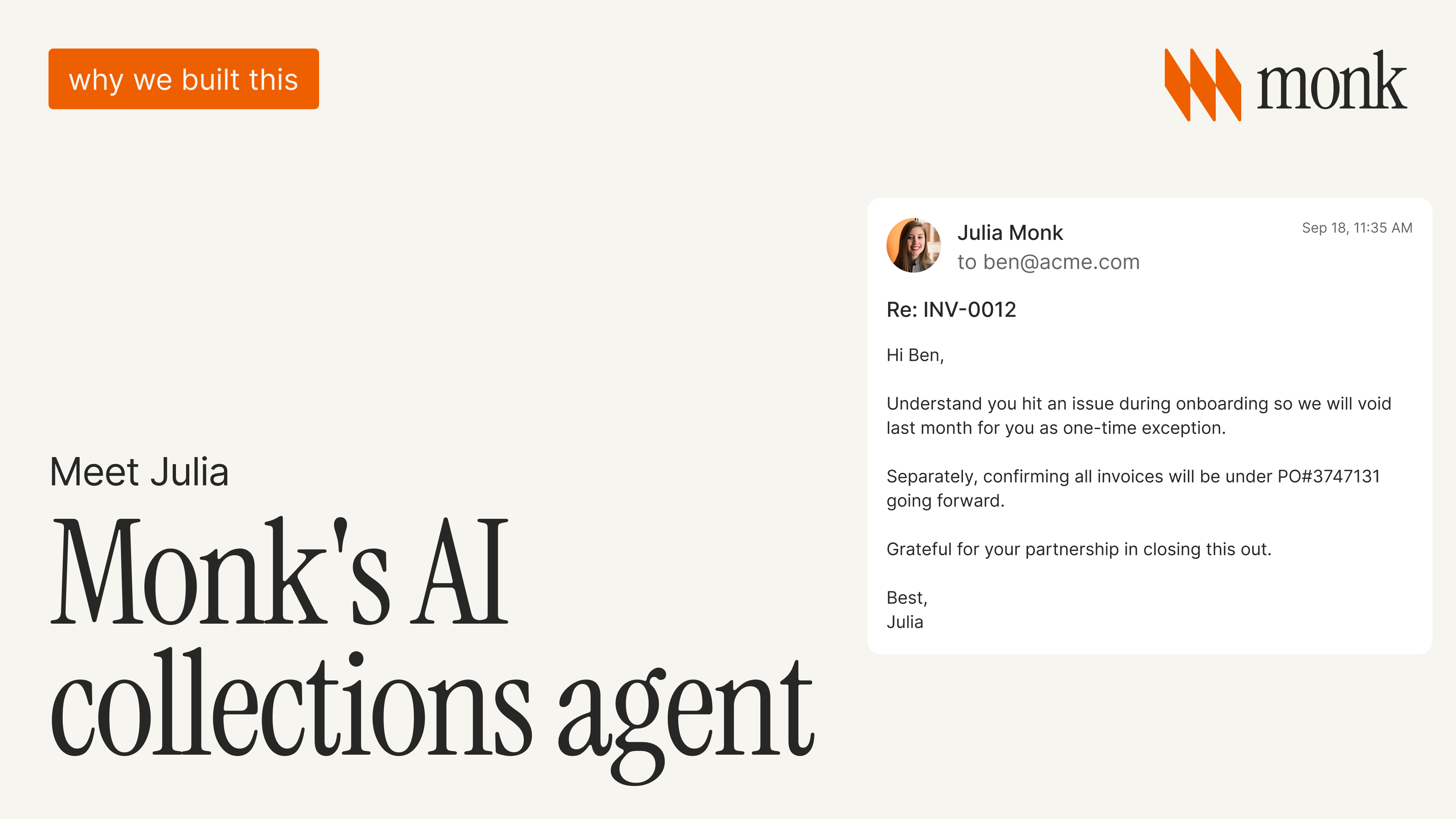
Julia is Monk's AI collections agent. She reads each overdue account, decides how and when to reach out, and handles the follow-up your team does not have time for.
Today Monk manages $2B+ in receivables. Julia resolves 90% of collections with zero human intervention, and reaches customers with a 24% higher response rate than standard dunning.
Why we built this
Finance teams spend hours every week chasing the same invoices because the software they have only knows how to do one thing: dunning. It sends the same reminder on a schedule, the same way, to everyone.
The dunning email fires on day 30, then day 45, then day 60, and it reads the same every time. A business you have worked with for 5 years gets the same words as an account that has ignored you twice. Customers learn that pattern fast, and once they learn it, they stop reading.
So we asked ourselves a simple question. How would you fix this, so businesses get paid faster without burning the relationships that took businesses years to build?
How Julia works
When an invoice goes overdue, Julia does not reach for a template. She works through the account the way a careful collections specialist would.
She starts with who the customer is and how they have paid in the past, then checks whether something is wrong with the invoice. A lot of "late" payments are not a refusal to pay at all. They are a missing PO, or an approver who never saw the invoice in the first place. Once she understands the situation, she picks the tone and timing that fit the relationship, and handles it directly.
When a customer replies, Julia handles the routine responses on her own. When something needs a human, she hands it off with the full context attached, so your team picks up where she left off instead of starting over.
Every message she sends and every action she takes is logged. Your team can see what Julia did, and why, at any point. Nothing happens in a black box, and your team keeps the final say.
One rule sits under all of it: she never acts on a guess. If she is not sure, she stops and asks. For a system that talks to your customers in your name, that guardrail matters more than any feature.
Zero margin of error
Say a collections thread comes back with a reply asking to send the next payment to a new bank account. A naive agent reads it and acts on it, which is exactly how payment redirect fraud works. Julia will not act. She flags the change and hands it to a person. The agents are good enough that people reply to them, invite them to calls, and try to add them on LinkedIn, so a single wrong move carries the weight of a real one. That is why we hold her to zero margin of error.
We wrote more about how we build for that standard in Boring agents by design. In high-stakes work we treat the model like a toddler. We give it a small, well-defined space, and we watch the edges with opinionated design, real-world tests, and guardrails. Julia chooses from a set of moves we have already decided are safe.
Julia puts your customer relationships first
We did not build Julia to squeeze every dollar as fast as possible. A message that gets you paid but costs you the customer is not worth sending. The whole point of working with judgment instead of a timer is that you can get the cash and keep the relationship. In practice, that means your team spends less time chasing, cash comes in sooner, and customers stay on good terms with you.
Meet Julia
Julia is live on the Monk platform today. Book a demo to see how she can close the gaps on your collections.
Frequently Asked Questions
What is Julia?
Julia is Monk's AI collections agent. She reads each overdue account, decides how and when to reach out, and handles the follow-up your team does not have time for.
How much does Julia manage?
Today Julia manages $2B+ in receivables and resolves 90% of collections with zero human intervention.
How is Julia different from standard dunning?
Standard dunning sends the same reminder on a schedule to everyone. Julia reads the account first and adjusts tone and timing to fit the relationship, reaching customers with a 24% higher response rate.
Does a human stay in control?
Yes. Every action Julia takes is logged, she escalates anything uncertain to a person, and your team keeps the final say.
Adjacent to this: Nurah Kutty, Kendall Warson and Boring Agents by Design: How Monk Builds Reliable Agents for AR.



.avif)