Payment Reconciliation Nightmares: 7 Scenarios That Break Manual Processes

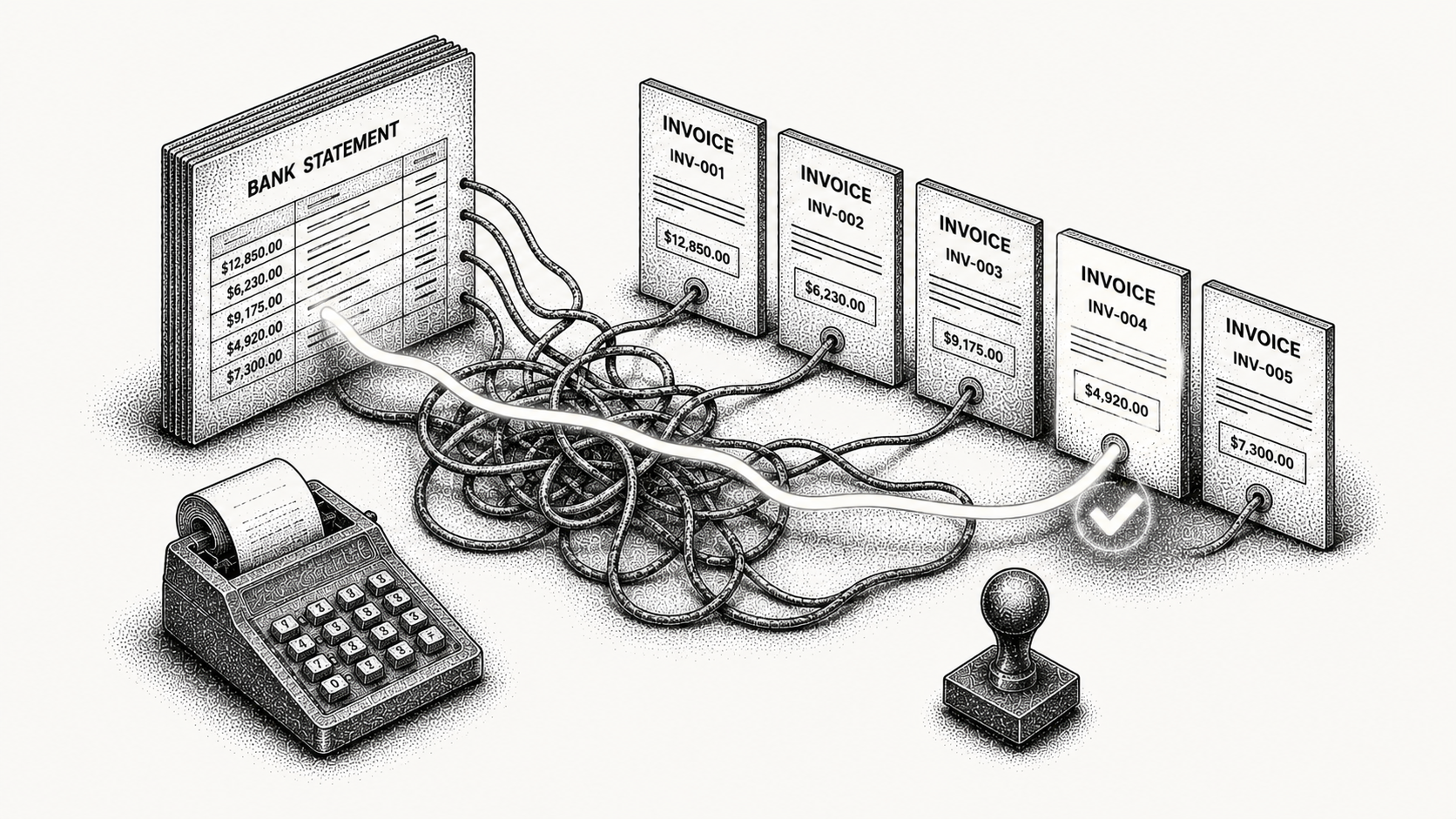
Payment reconciliation breaks on the edge cases, not the clean ones. When a customer pays a single invoice with a clear reference, matching it takes seconds. The trouble comes from lump-sum payments, short payments, missing remittance, and the handful of other scenarios below, which is where a manual process quietly falls behind and cash sits unapplied. Automated cash application handles these by matching on multiple signals at once and keeping an audit trail, so the ledger stays current and collected revenue is recognized the moment money arrives.
Here are seven reconciliation scenarios that defeat manual matching, why each one breaks, and how automation resolves it. Monk runs cash application on the same platform as collections and forecasting, so a matched payment updates the whole picture at once.
What happens when a customer pays many invoices in one lump sum?
A single wire arrives covering 20 invoices with no line-by-line breakdown, and someone has to work out which invoices it settles. Manually, this means opening the account and testing combinations until the total ties out, which is slow and error-prone. Automated cash application matches the lump sum against open invoices by amount, customer, and history, so the split is resolved without the guesswork.
How do you reconcile a short payment?
A customer pays less than the invoice amount, often because of a deduction or a dispute. Manually, the short payment either sits unapplied or gets forced against the invoice, hiding the shortfall. Automation applies the amount received, flags the remaining balance, and routes the difference as a deduction or dispute so nothing is silently written off.
What do you do when remittance detail is missing?
The money lands but the remittance advice that explains what it is for never arrives, or arrives separately. Without it, a person is left guessing which invoices the payment covers. Automated cash application matches on the signals that are present, payment amount, payer, and timing, and surfaces the ones it cannot resolve for a quick human decision rather than leaving everything unapplied.
How do you handle an overpayment or duplicate payment?
A customer pays twice, or pays more than they owe. Manually, the surplus is easy to miss and ends up as an unexplained credit. Automation recognizes the excess, applies what matches, and flags the remainder as an overpayment or duplicate so it can be refunded or credited deliberately.
What if a payment references the wrong or an old invoice number?
A customer references a prior invoice, a canceled one, or nothing at all. A manual match on invoice number alone fails immediately. Automation falls back to other signals, the amount, the customer, and the payment pattern, so a wrong reference does not stall the whole payment.
How do you reconcile a cross-currency payment with fees deducted?
An international payment arrives in a different amount than invoiced because of exchange rates and intermediary bank fees. Manually, the mismatch looks like a short payment and gets flagged for investigation. Automation accounts for the currency conversion and fee deduction, so the payment ties to the invoice instead of sitting in an exceptions queue.
What breaks when payment comes through an AP portal or lockbox?
Payments routed through customer AP portals or bank lockboxes often strip out the detail finance needs, and lockbox files can lag by a day or more. That gap makes the collected figure look lower than it is. Automated cash application ingests these files, matches on the available signals, and keeps the ledger closer to real time.
How does automated cash application handle all of this?
The common thread is that manual reconciliation relies on one clean signal, usually the invoice number, and every scenario above removes it. Automated cash application matches on several signals at once, amount, payer, timing, and history, and escalates only the payments that genuinely need a human.
Monk applies incoming payments this way and keeps a full audit trail, and because cash application runs on the same platform as collections and forecasting, a matched payment clears the invoice from collections and drops it out of the forecast at the same time. Monk resolves 90% of collections with zero human intervention, gives finance teams back roughly 26 hours a month, and goes live in less than one week without taking a percentage of revenue. For the fundamentals, see what cash application is.
Frequently Asked Questions
What is payment reconciliation?
It is the process of matching incoming payments to the invoices they settle so the ledger reflects what has actually been collected. It is also called cash application.
Why is payment reconciliation so hard to do manually?
Manual matching depends on a clean invoice reference, and real payments often lack one. Lump sums, short payments, missing remittance, and wrong references all defeat a single-signal match.
What is unapplied cash?
Unapplied cash is money that has arrived but has not yet been matched to invoices. It makes collected revenue look lower than it really is and distorts the cash position.
How does automated cash application work?
It matches incoming payments to open invoices using several signals at once, such as amount, payer, timing, and history, and escalates only the exceptions. This keeps the ledger current without manual matching.
How does Monk handle payment reconciliation?
Monk applies payments automatically with a full audit trail, and because it runs cash application alongside collections and forecasting, a matched payment updates all three at once. Monk goes live in less than one week.
What happens to payments that cannot be matched automatically?
They are surfaced as exceptions for a quick human decision rather than left unapplied. That keeps the bulk of reconciliation automatic while a person handles only the genuine edge cases.
Adjacent to this: Payment Reconciliation Software: A 2026 Guide, The Hard Part of Cash Application Is User Intent and Introducing Cash Exceptions: A Clear Way to Manage Payment Mismatches.




.avif)