The AR platform built for enterprise finance teams
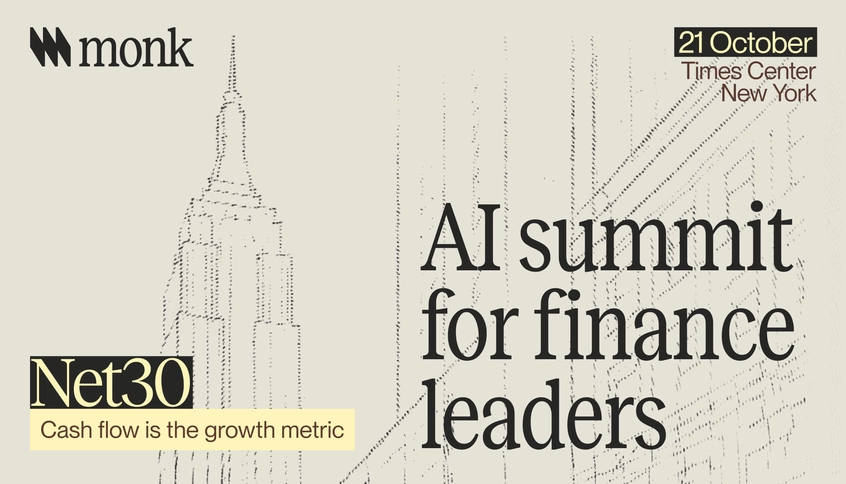
Invite-only evening at The Times Center on October 21 will convene 150 CFOs, operators, founders and researchers
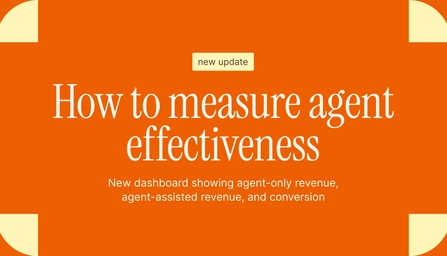
A finance leader's framework for measuring an AI collections agent: agent-only vs agent-assisted revenue, conversion, blockers, and revenue attribution.
Monk now connects with Rillet, the AI-native ERP. Sync your Rillet data into Monk to run collections, cash application, and forecasting on your live general ledger.
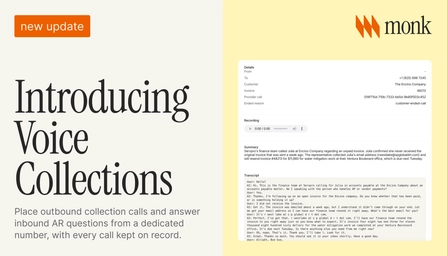
Monk can now place outbound collection calls and answer inbound AR questions from a dedicated number, with every call kept in the collection record. Available by opt-in.
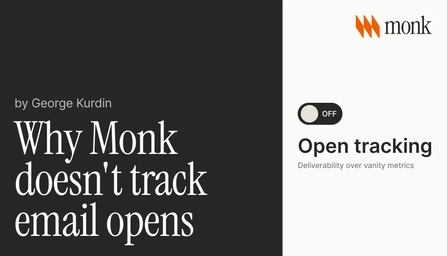
Monk doesn't track email opens, on purpose. The open rate isn't reliable, tracking pixels hurt deliverability, and optimizing for opens rewards the wrong behavior. Here's what we measure instead.
Monk watches how your team matches payments and suggests the deterministic rules to turn on, so you stop hand-matching the same customers every month.
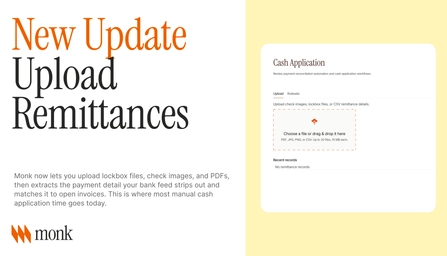
Bank feeds lump lockbox deposits into one transaction and drop the remittance detail. Monk lets you upload lockbox files and check images, extracts the data, and lifts your match rate.
In the NAP podcast, he touches on how Monk agents mitigate risk with deterministic workflows, our anti-meeting culture, and why the "AI eliminates jobs" story is noise.
On the Tech Startup Network podcast, Monk co-founder and CTO Joe Zhou explains why AR automation has to earn trust one workflow at a time, and why Monk's ops and GTM teams now build directly in the codebase alongside engineering.
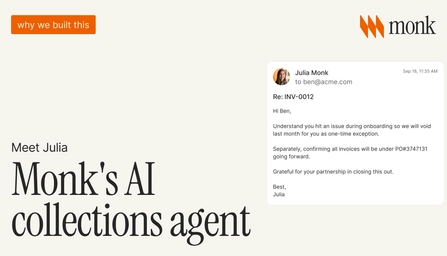
Julia is Monk's AI collections agent. She reads each overdue account, decides how and when to reach out, and handles the follow-up your team does not have time for.