Empathetic professional follow-ups
AP portal/Coupa uploads solved
Root cause analysis and solutions
Analyze and recover
Customers can self-serve and pay
Match payments to invoices
Extend credit based on data
Smart cash forecasting and more
The AR platform built for enterprise finance teams
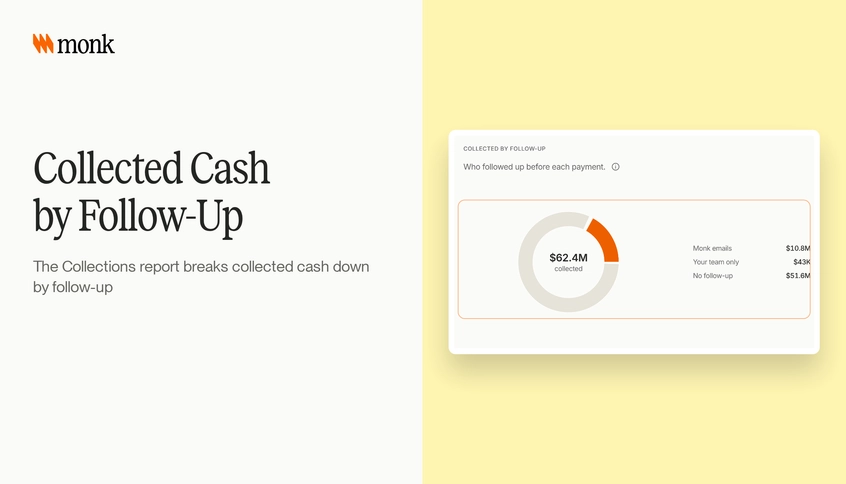
Break collected cash down by the follow-up before payment: emails, calls, your team or none. See what each group tells you and how Monk reports it.
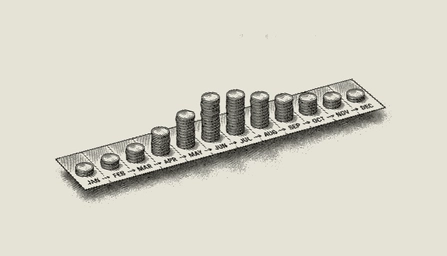
An AR cash flow forecast predicts when invoices will actually be paid, from real payment behavior. Learn how to build one and why due-date forecasts miss.
Assessing customer credit risk means predicting who pays on time. Learn the signals to use, how to weight your own AR data, the red flags, and how often to reassess.
An AR aging report groups unpaid invoices by how overdue they are. Learn how to read the buckets, what a healthy DSO looks like, and which reports matter.
DSO is the average days it takes to get paid. Learn how to calculate it, what a good DSO looks like in 2026, and the five levers that reduce it.
Net 30, 60, and 90 are how many days a customer has to pay. Learn the trade-offs, how to choose terms by payment behavior and risk, and what each day costs you.
A practical how-to on setting B2B customer credit limits: what a limit is, how to calculate one, what data to use, and how to keep limits current.
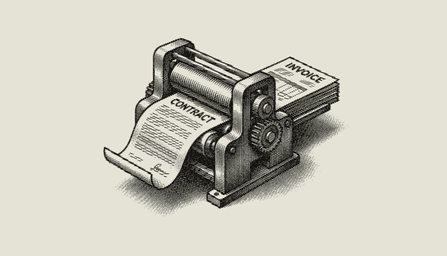
Generating invoices from negotiated contracts, step by step. Which clauses break automation, how document precedence works, and how to validate the output.
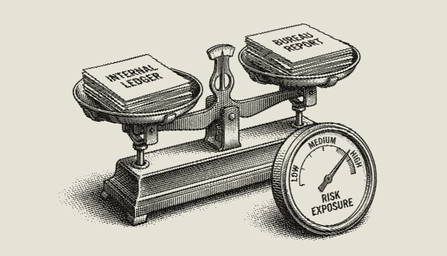
Credit bureau scores and payment behavior answer different questions. Here is what each predicts about late payment in AR and how Monk combines them.
AR financing advances cash against invoices for a fee; AR automation collects what you are owed faster. How they differ and when to use each in 2026.