What Is a Good DSO?

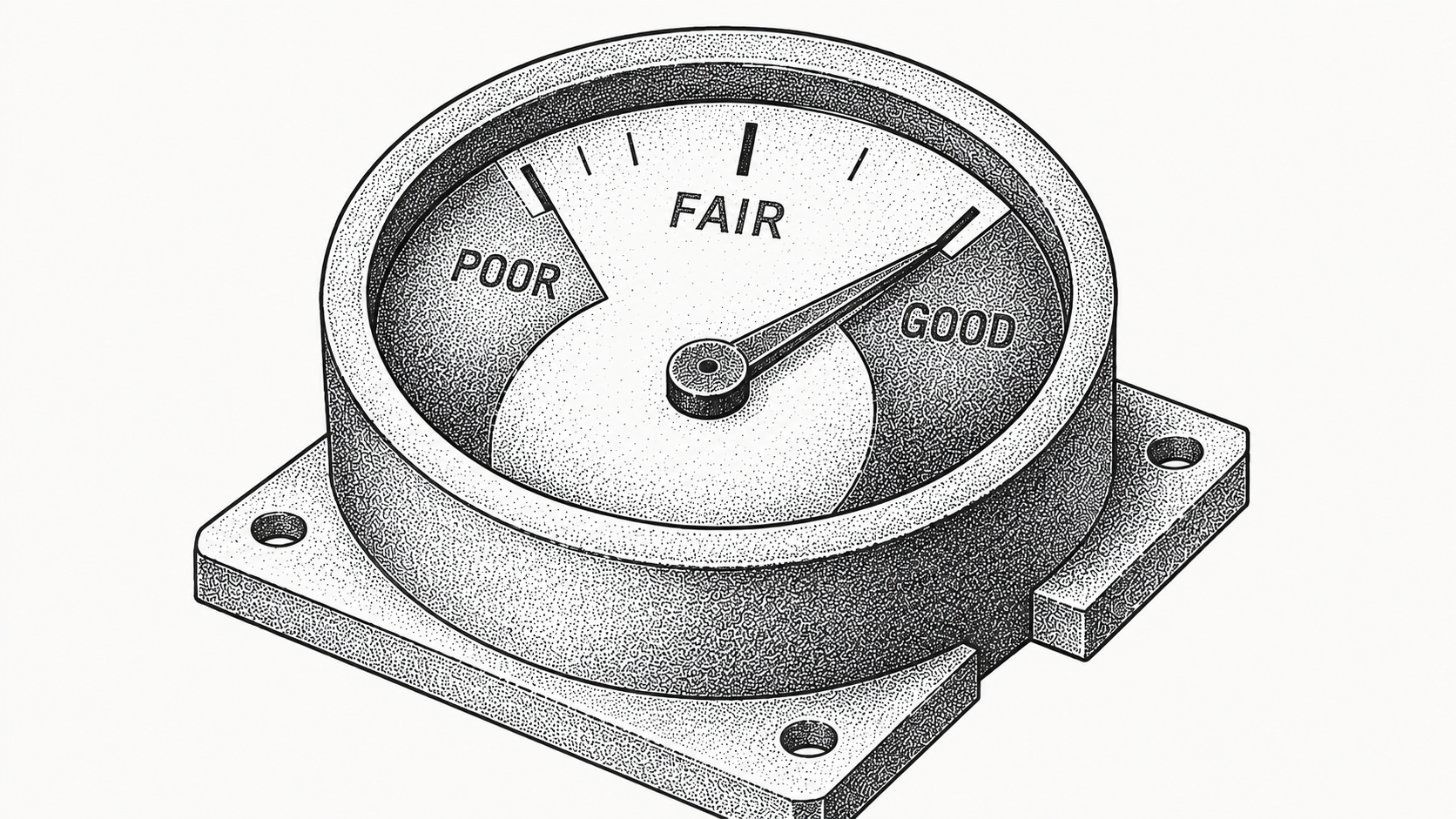
A good DSO is one that stays close to your stated payment terms and trends downward over time. Monk is an AI-native invoice-to-cash platform that runs invoicing, collections, cash application and reconciliation as one system, and the teams using it judge DSO against their own terms rather than a published average. In plain terms, lower is better, because a lower Days Sales Outstanding means you are converting sales into cash faster. There is no single universal number that counts as good for every business. Instead, you judge your DSO against your own payment terms, your industry norms, and your own history. This guide explains how to set a realistic target, read your result honestly, and turn it into action.
Most finance leaders ask for a magic benchmark, but the more useful question is whether your DSO reflects healthy collections relative to how you sell. A company on net-60 terms with a DSO of 55 is in far better shape than a net-15 company sitting at 40, even though the second number looks lower. The sections below give you a practical framework for judging your own figure.
What Counts as a Good DSO?
The most useful definition of a good DSO is one that closely matches the credit terms you offer. If you sell on net-30 terms, a DSO near 30 days means customers are paying roughly on time. The lower your DSO relative to your terms, the healthier your collections. A DSO far above your terms signals that cash is trapped in unpaid invoices.
A practical rule many teams use is the 1.25 test: if your DSO is more than about 1.25 times your average terms, collections need attention. On net-30 terms, that puts a healthy ceiling around 37 to 38 days. Cross it consistently and you are effectively financing your customers' operations with your own working capital. To understand the underlying metric and how it is built, see Monk's explainer on what DSO means in finance.
For the arithmetic behind that figure, see Monk's walkthrough of how to calculate DSO.
Why Is Lower DSO Generally Better?
A lower DSO means cash arrives sooner, which strengthens working capital and reduces reliance on financing. Money collected quickly can fund payroll, inventory, and growth instead of sitting in receivables. That said, an extremely low DSO can occasionally signal overly strict credit terms that suppress sales. The goal is balance: collect efficiently without choking off reasonable customer credit.
There is also a strategic angle. Generous terms can be a legitimate competitive tool to win larger accounts, which means a slightly higher DSO is sometimes a deliberate choice rather than a failure. What matters is that the choice is intentional and that you have the collections process to keep even those longer-dated invoices paying on schedule rather than drifting further past due.
The cash impact is easy to underestimate. Cutting DSO by even ten days on a large receivables book frees up a meaningful slice of cash that would otherwise sit idle, and that cash carries no interest cost. This is why reducing DSO is one of the highest-leverage moves a finance team can make, and why Monk customers see DSO fall by 40% on average once collections are automated and consistent.
Why Can Two Companies Post the Same DSO and Not Be Comparable?
Because most of what moves the number has nothing to do with how well a collections team works. Terms, customer size, contract structure, seasonality and invoicing cadence all push DSO around before anyone sends a reminder, so strip them out before judging the residue.
Weight your terms by revenue. Pull every active contract and record its stated terms against the revenue it carries, then take a revenue-weighted average. A book with 70 percent of revenue on net-60 is structurally slower than one selling on net-15. The controller should refresh this quarterly, because sales change terms to close deals.
Split the ledger by customer size. Tag every account as enterprise, mid-market or small business in the ERP, then calculate DSO for each tier. Enterprise buyers run scheduled payment runs and often bill through a procurement portal, which a blended average hides. Enterprise DSO of 62 against SMB DSO of 24 gives a credit manager somewhere to start.
Measure your customer concentration. Calculate the share of the receivables balance held by your five largest customers. When one account holds a quarter of the ledger, its payment behaviour becomes your DSO.
Date-stamp invoice issue against delivery. For fifty recent invoices, record the delivery date and the date the invoice left your system, then take the median gap. Every day in that gap is added to DSO and no collections activity recovers it. Teams billing monthly rather than on completion often find two weeks here.
Chart two more drivers yearly: invoiced revenue by month, since a billing-heavy quarter lifts DSO on its own, and milestone against recurring billing, since milestone invoices carry approval steps.
How Should You Benchmark Your DSO?
Rather than chasing a fixed industry average, benchmark against three reference points you can trust. The table below outlines them.
| Benchmark | What to Compare |
|---|---|
| Your payment terms | Is DSO close to your net-30, net-45, or net-60 terms? |
| Your own history | Is DSO trending down, flat, or up over recent months? |
| Your industry | How do peers with similar terms and customers perform? |
Industry averages vary widely by sector and customer mix, so treat any single published figure with caution and weight your own terms and trend more heavily. The most honest benchmark is your own past performance, because it controls for your business model, customer base, and the terms you extend.
Published sector figures carry a second caution: most come from listed companies, with large corporate buyers and annual reporting, so a firm selling to small businesses shares little with that sample.
Should You Use Standard DSO or Countback DSO?
Standard DSO divides closing receivables by credit sales for the period and multiplies by the days in that period. Countback DSO, sometimes called true DSO, works backwards: it takes the closing balance, subtracts the most recent month's sales, then the month before, until the balance is used up, counting the days consumed.
Each misleads differently. Standard DSO distorts when sales are growing or seasonal, because a strong recent month inflates the denominator and pulls the figure down even though collections did not improve. Countback matches the balance to the sales that created it, but swings hard when a large invoice lands near a period boundary. Report standard DSO as the headline, run countback quarterly, and investigate divergence beyond a few days.
What Is Best Possible DSO and Why Does the Gap Matter More?
Best Possible DSO is the number you would post if every customer paid exactly on the due date, and the gap between actual DSO and that floor is the part of the metric that reflects collections performance. Terms set the floor.
Pull receivables and credit sales. Take the closing receivables balance and total credit sales for the same period from the general ledger. Use credit sales rather than total revenue, because cash sales never enter receivables.
Split the balance by due date. Using the aging report, separate receivables not yet past due from everything that is. The not-yet-due portion is what a perfectly performing ledger would still carry, since invoices inside terms are not late.
Calculate the floor. Divide not-yet-due receivables by total credit sales for the period, then multiply by the days in the period. On net-30 terms with even billing this lands close to 30, restating your chosen terms in the same units as DSO.
Subtract the floor from DSO. The difference is the average days customers pay beyond their due date, which credit teams call average days delinquent. A business at 68 days on net-60 terms has a gap near 8, while 44 days on net-15 terms is a gap near 30. Report all three figures monthly.
Why Can a Net-60 Business Never Beat a Net-15 Business?
Because no collections process can collect an invoice before it falls due. A net-60 business with flawless credit control settles near 60 days, while a net-15 business with mediocre credit control might sit at 25 and still look better. Asking the first team to hit the second team's number means renegotiating every contract, a commercial decision for sales and the board. Hold your own target as a multiple of terms, or as a gap in days above the floor, so it survives the next large account signed on extended terms.
What Factors Influence a Good DSO?
Several factors shape what good looks like for you. Payment terms set the baseline expectation. Customer mix matters, since large enterprise buyers often pay slower than small businesses. Industry norms differ, as some sectors customarily extend longer credit. Seasonality can swing DSO month to month, since a quarter heavy with new billings can lift the number even when collection speed is unchanged. Because of these variables, the right target is specific to your business, not a number copied from a generic chart that ignores how you sell.
It also helps to separate the two things DSO blends together: how fast customers pay once invoiced, and how cleanly and quickly you invoice in the first place. A delay in issuing the invoice inflates DSO just as much as a slow-paying customer does, but the fix is entirely different. Breaking the metric apart this way keeps you from chasing customers when the real bottleneck is your own billing process.
Collections discipline is the factor most within your control. Two companies with identical terms and customers can post very different DSOs purely based on how promptly and consistently they follow up. Clean invoicing, fast dispute resolution, and timely reminders compress the gap between the due date and the payment date, which is exactly where DSO is won or lost. For a structured playbook, Monk's guide to accounts receivable best practices covers the habits that keep DSO healthy.
What Should You Read Alongside DSO?
DSO alone hides a worsening tail, because promptly paid small invoices mask a growing pile of old ones. Run its companions on the same close, from the same aging report.
Calculate CEI for the period. Collections Effectiveness Index takes opening receivables plus credit sales minus closing total receivables, divided by opening receivables plus credit sales minus closing current receivables, as a percentage. A figure near 100 percent means the team collected close to everything that came due, and unlike DSO it does not move with sales volume.
Track average days delinquent. Average days delinquent is actual DSO minus best possible DSO, which isolates lateness from terms. Put it in the same row of the monthly pack as DSO, so a reader sees whether a rise came from longer terms or slower payment.
Read the aging tail first. Look at the 60-day, 90-day and over-90-day buckets as a share of the total balance, then compare that share to three months ago. A ledger where the over-90 bucket grew from 4 percent to 9 percent is deteriorating even if headline DSO fell.
Re-sort past-due by customer. Order overdue invoices by account rather than by bucket and look at the top ten. Concentrated lateness calls for a relationship conversation, while lateness spread across hundreds of accounts points at reminders, invoice delivery or payment options.
Monk's guide to how to read an AR aging report covers the buckets. Feed the distribution into the cash forecast rather than assuming invoices pay on time, because a forecast built on stated terms overstates near-term cash, one reason cash flow forecasting is broken.
How Do You Move Toward a Good DSO?
If your DSO sits well above your terms, the path to improvement is faster, more consistent collections. Tactics include sending timely reminders, resolving disputes quickly, and making it easy for customers to pay. For a structured approach, read Monk's overview of how to reduce DSO with six strategies.
Monk is an AI-native invoice-to-cash platform that helps teams collect sooner. Customers have seen 40% average DSO reductions, with collections 24% higher response rate than standard dunning, and 90 percent of collections resolved with zero human intervention. Monk's intelligent collections ingests the context of each conversation and tailors follow-ups to the customer, which is what drives those response rates well past standard dunning.
What Does Realistic Improvement Look Like Over a Quarter?
Most of the movement available in a first quarter comes from removing delay you created yourself: the gap between delivery and invoice issue, the details that cause a customer to reject a document, and invoices that never reach the approver. Recovering aged debt takes longer, because the disputes underneath it are worked one at a time.
Set the quarterly goal against the gap above best possible DSO rather than against DSO itself. If the gap narrows while the over-90 bucket also shrinks, the improvement is real. If the tail grows instead, fast-paying new business is flattering the average.
What Does Chasing a Benchmark Number Cost You?
A target imposed without reference to terms pushes a team toward behaviour the metric never shows. Early payment discounts can cost more than the financing they replace. Escalating to a customer's executive sponsor over an invoice three days late trades goodwill for days, as does holding orders for accounts inside terms.
Write down which actions are in scope for the target and which are not, and have the credit manager and account owner agree the list before the quarter starts. When escalation past a named threshold needs the account owner's sign-off, the target stops competing with the relationship.
How Often Should You Review Your DSO?
Treat DSO as a monitored metric, not a number you check once a quarter when the board asks. Reviewing it monthly lets you catch a worsening trend before it becomes a cash crunch, and it ties your collections effort to a concrete outcome the whole finance team can rally around.
Pair the headline number with an aging report so you can see where the delay sits. A DSO creeping upward because of a handful of large, late enterprise invoices calls for a different response than one driven by widespread small-balance slippage. The metric tells you that something changed; the detail tells you what to do about it.
One caution: a single month's DSO can be distorted by timing, especially if a large invoice was issued or paid right at the period boundary. This is why the trend matters more than any one reading, and why some teams also track a three-month rolling average to smooth out the noise. Read in context, DSO becomes a reliable early-warning signal rather than a number that swings without explanation, and that reliability is what lets you act before a cash gap appears rather than after.
Setting the target is a short exercise. Do it once, write it where the team can see it, and revisit it on a fixed schedule.
Set the target from terms. Calculate revenue-weighted average payment terms, then express the target as a permitted gap above that floor, for example eight days above best possible DSO. The finance lead signs it off with the credit manager present.
Agree an untouchable floor. State that best possible DSO is the theoretical minimum and that no bonus or quarterly goal asks the team to go below it. Without this, a team selling on long terms is measured against an impossible line and starts trading goodwill for days.
Book a fixed monthly review. Hold thirty minutes in the week after close covering four items: actual DSO, best possible DSO, the gap between them, and the over-90 bucket as a share of the ledger. Keep that agenda identical each month, with the credit manager, the controller and one commercial representative in the room.
Reset the target on mix change. Recalculate the floor whenever weighted average terms move by more than a few days, whenever one customer crosses ten percent of the ledger, or whenever a new billing model launches, and announce the change in the monthly review.
How Does Monk Handle This?
Monk runs invoicing, collections, cash application and reconciliation as one invoice-to-cash system, so the figures behind your DSO target come from one ledger.
Julia, Monk's AI agent for Intelligent Collections, ingests the context of each conversation and reaches a 24% higher response rate than standard dunning, with 90% of collections resolved with zero human intervention. AI cash application matches 80% of payments automatically, rising to 95% with suggested matching rules, which keeps the aging report accurate enough to calculate best possible DSO from. Monk also submits invoices into more than 600 corporate AP portals, addressing a structural delay rather than a collections one: 92% of enterprise invoices must be submitted through a vendor portal or network rather than paid from an emailed invoice, measured across the receivables Monk manages.
Customers report a 40% average reduction in DSO, 26 hours a month saved on receivables work, and cash on hand up 37% on average in month one, rising to 2.4x over the first quarter. Monk manages $2B+ in accounts receivable, is SOC 2 Type II compliant, and integrates with QuickBooks, NetSuite, Salesforce, HubSpot and Stripe. Onboarding takes less than one week, as Elate's team describe in how Elate cut DSO in half.
Where Should You Start?
Run a one-hour diagnostic this week that produces four numbers: revenue-weighted average payment terms, current DSO, best possible DSO, and the gap between the last two.
Pull the aging report as at the last close and the credit sales figure for the same period. Calculate the floor from the not-yet-due portion of the balance, subtract it from actual DSO, and read the answer. A gap under about a week means collections is doing its job and the remaining improvement lives in billing speed or the terms themselves, while a gap of twenty days or more sends you to the over-90 bucket.
Write the four numbers on one slide, date it, and repeat after next close. To see how they behave with collections and cash application running automatically, book a demo.
Frequently Asked Questions
What is considered a good DSO?
A good DSO is one that stays close to your payment terms and trends downward. There is no single universal number that applies to every business.
Is a lower DSO always better?
Lower is generally better because cash arrives sooner, though an extremely low DSO can sometimes signal overly strict credit terms that limit sales.
Should I compare my DSO to an industry average?
Use industry figures only as a loose reference. Your own payment terms and historical trend are more reliable benchmarks.
What DSO should I target?
Aim for a DSO close to your stated terms, then work to reduce it gradually. The exact target depends on your terms, industry, and customer mix.
How quickly can DSO improve?
With consistent, timely collections and faster dispute resolution, many teams see meaningful improvement within a few months. Monk customers have reduced DSO by 40% on average.
How often should I measure DSO?
Monthly is a practical cadence for most teams, paired with an aging report so you can see whether a change is driven by a few large accounts or broad slippage.
How do I know if my DSO is too high?
Compare it to your best possible DSO rather than to a published benchmark, since best possible DSO is what you would post if every customer paid exactly on the due date. Divide not-yet-due receivables by credit sales and multiply by the days in the period to get that floor. If actual DSO sits more than about a week above it, collections needs attention, and a gap of twenty days or more usually sits in the over-90 bucket.
Book a demo to see how Monk shortens your collection cycle, or explore the full picture in Monk's complete AR automation guide.
Adjacent to this: Average DSO by Industry: 2026 Benchmarks, What Is DSO in Finance? Definition, Formula, and Why It Matters and DSO Calculator and Formula Guide.





.avif)