Empathetic professional follow-ups
AP portal/Coupa uploads solved
Root cause analysis and solutions
Analyze and recover
Customers can self-serve and pay
Match payments to invoices
Extend credit based on data
Smart cash forecasting and more
The AR platform built for enterprise finance teams
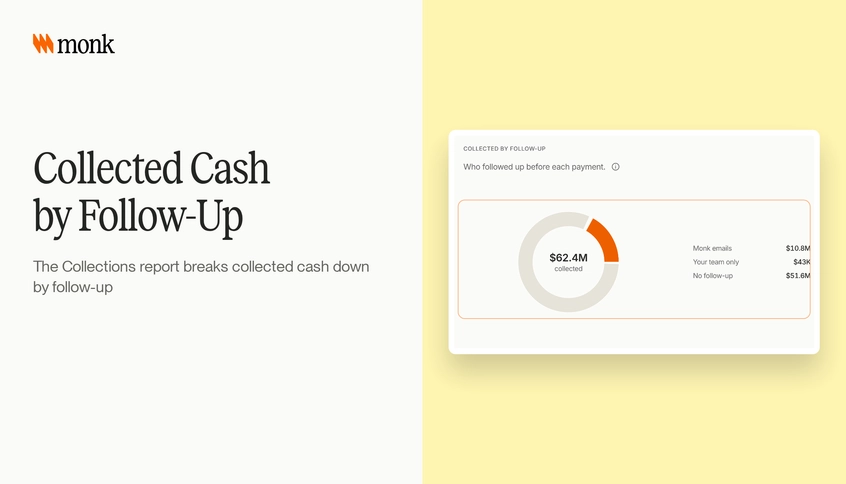
Break collected cash down by the follow-up before payment: emails, calls, your team or none. See what each group tells you and how Monk reports it.
One wire, nineteen invoices and the buyer's own voucher numbers. How to use subset sum matching, payer behaviour and on-account balances the right way.
A customer paid less than the invoice. How to classify the gap, apply the cash, choose a credit memo or a residual, and keep your aging report honest.
Money arrived with no invoice reference and an unfamiliar payer name. Work the identification hierarchy: amount, name, history, bank, then the customer.
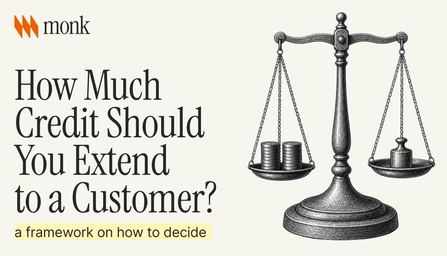
How much credit to extend a customer depends on how much you can absorb and how likely they are to pay. Learn how to set a credit limit and when to adjust it.
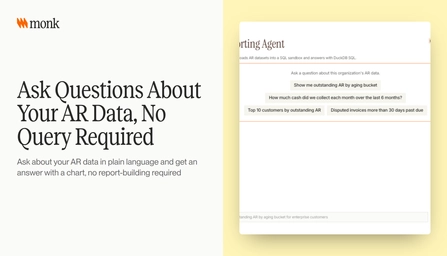
Conversational AR reporting answers receivables questions in plain language with a chart. See what to ask by role and how the Monk Reporting Agent works.
ACH is the low-cost default, wire is fast for large or international payments, and check is slow but common. Compare speed, cost, and when to use each.
Let B2B customers pay invoices online with a self-serve portal: every invoice, balance, and document in one place, paid by ACH, wire, check, or credit card. Here is what to include.
Credit intelligence combines your first-party AR payment behavior with third-party bureau signals into one AI credit score, so you decide terms in seconds. Here is how it works.
A credit hold pauses orders until an account is back in good standing. Learn when to put a customer on hold, how to decide, how to communicate it, and when to lift it.