Human-Led vs AI-Led Collections

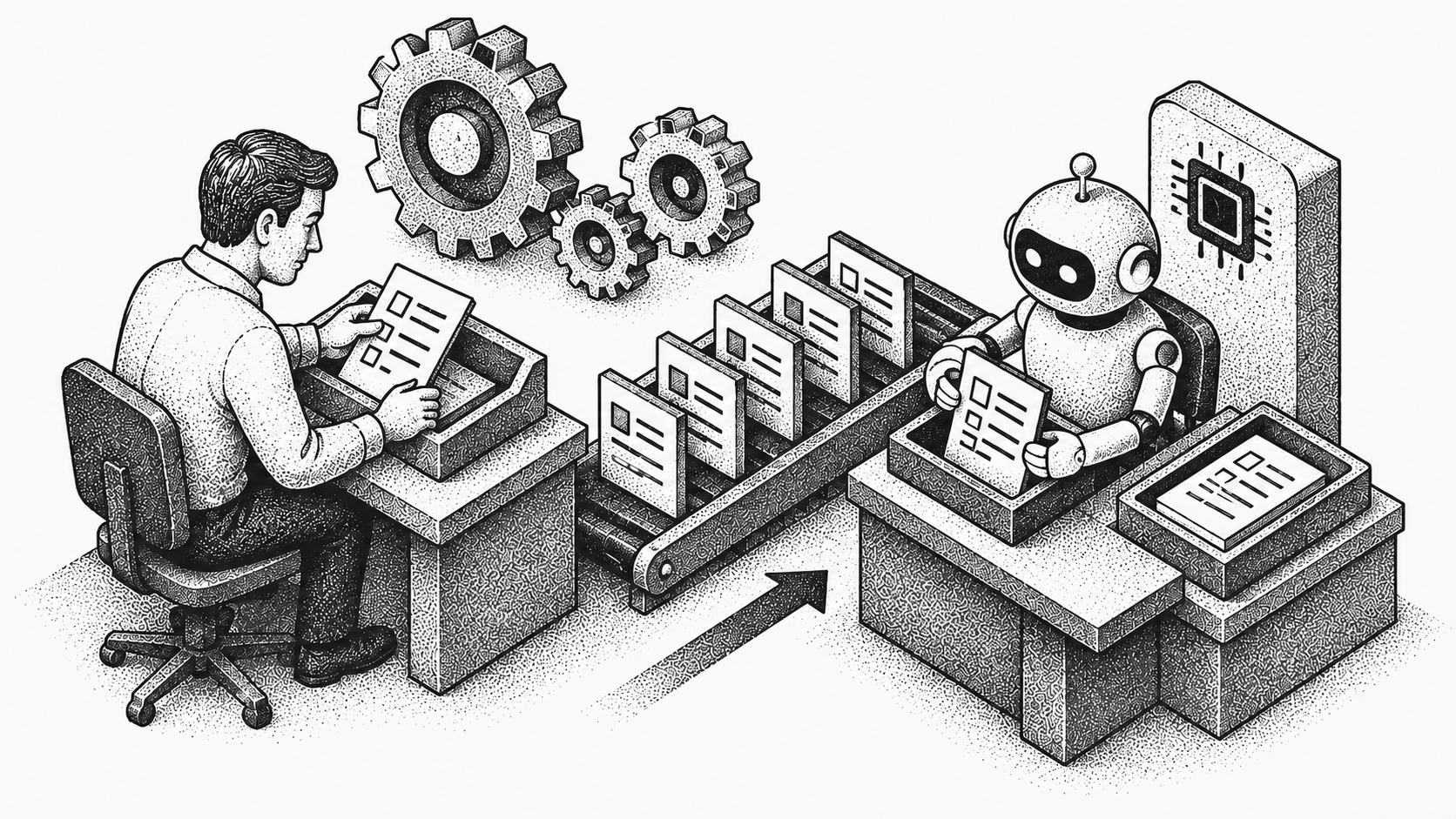
Human-led collections put people in charge of every step: pulling aging reports, deciding who to contact, sending reminders, and following up by hand. AI-led collections flip that model so software handles routine outreach and prioritization automatically, while a human steps in for sensitive or high-risk accounts. The short answer: for teams managing growing receivables, AI-led collections with human oversight consistently outperform purely human-led workflows on scale and consistency, because routine work runs automatically while people focus their judgment where it actually matters. Neither model is inherently better at everything, and the right choice depends on portfolio size, complexity, and how much your team's time is worth.
This guide breaks down how each model works, where each one fits, and what to look for if you are weighing a move from manual chasing to an automated approach. For broader context, see our Definitive AR Guide and the complete guide to AR collections.
What does human-led collections actually mean?
Human-led collections means a person owns each action in the receivables process. A collector or AR analyst reviews the aging report, decides which accounts are overdue, drafts and sends reminders, logs responses, and schedules the next follow-up. Every touch depends on someone having the time and context to act.
This model has real strengths. A skilled collector reads nuance, builds relationships, and exercises judgment that software cannot replicate on a delicate account. The tradeoff is that it does not scale cleanly. As invoice volume grows, collectors run out of hours, lower-risk accounts get neglected in favor of squeaky wheels, and follow-ups slip through the cracks. The work also tends to become reactive rather than systematic, which is where consistency erodes. A reminder that should have gone out on day three goes out on day fifteen, and by then the balance has aged into a harder collection.
What does AI-led collections mean, and is a human still involved?
AI-led collections means software drives the routine workflow: it prioritizes accounts by risk and value, sends reminders on schedule, matches incoming payments, and surfaces what needs attention. Crucially, this is not a fully autonomous black box. In a well-designed system there is a human in the loop, with routine outreach handled automatically while sensitive cases, disputes, and high-stakes relationships are escalated to a human queue and every action is logged for review.
This is exactly how Monk's Intelligent Collections is built. The platform's AR agent, Julia, ingests the context of each customer conversation and tailors follow-ups accordingly, handling the repetitive, high-volume work and routing exceptions to a person. Collectors then spend their time on the accounts that genuinely need a human voice. Monk's voice agent places outbound collection calls and answers inbound calls from customers, working from the same account record as the email thread. The workflow stays auditable and under your control rather than drifting on its own. Just as importantly, the routing rules are explicit, so you always know which accounts the system is handling and which are waiting for a person.
How do human-led and AI-led collections compare side by side?
The clearest way to weigh the two models is dimension by dimension, since each approach has a different center of gravity. The table below maps where each one is strong.
| Dimension | Human-led collections | AI-led collections (with human oversight) |
|---|---|---|
| Routine reminders | Sent manually, one at a time | Sent automatically on schedule |
| Account prioritization | Based on memory and judgment | Ranked by risk and value |
| Scalability | Limited by headcount | Scales without adding staff |
| Sensitive cases | Handled by the same person | Escalated to a human queue |
| Auditability | Inconsistent, often informal | Every action logged |
| Analyst time | Spread thin across all accounts | Focused on judgment calls |
| Relationship nuance | Strong on every account | Reserved for escalated accounts |
Read this table as complementary rather than adversarial. Human-led work wins on nuance and relationship depth; AI-led work wins on scale, consistency, and auditability. The best modern setups combine both, which is the point of keeping a human in the loop.
Which approach resolves more invoices and reduces DSO?
At small volumes a skilled collector can stay on top of everything, and human judgment carries the day. But as receivables grow, the human-led model leaves gaps, and those gaps show up as rising days sales outstanding. AI-led workflows close those gaps by making sure no overdue invoice is forgotten and every reminder goes out on time, regardless of how busy the team is that week.
The measurable impact is significant. Teams using Monk see a 40% average reduction in DSO, and the intelligent approach is 24% more effective than traditional dunning at recovering what is owed. 90% of collections are resolved with zero human intervention, and finance teams save roughly 26 hours a month that used to go to manual chasing. None of that requires the collector to be more diligent; it comes from the routine work being handled systematically while people apply their judgment to the exceptions. Monk also posts an 80% automatic cash application match rate, rising to 95% once teams enable suggested rules, so payments reconcile against invoices automatically and the open balances your team works are accurate rather than inflated by unmatched cash.
When is human-led collections still the right choice?
Human judgment never goes away in good collections; it just gets pointed at the right problems. A purely human-led approach can still make sense for very small portfolios, for a handful of high-value strategic accounts where every interaction is bespoke, or for situations involving legal disputes and delicate negotiations. In those cases the relationship and the nuance are the whole job, and a person should own it end to end.
The point of AI-led collections is not to remove people or to suggest that human collectors do their jobs poorly. Skilled collectors are often the most valuable part of a finance team. AI-led workflows simply free them from the repetitive work so their time goes to the conversations that actually need a human, which is where their experience pays off most.
How do I move from human-led to AI-led collections?
Start by mapping your current process: which reminders go out when, who owns which accounts, and where invoices tend to stall. That map shows you which steps are routine enough to automate and which genuinely need a person. Then look for a platform that automates the routine path while keeping a human in the loop for exceptions, with logging you can audit.
With Monk, go-live takes less than one week, so teams see results quickly rather than waiting through a long implementation, and the platform is SOC 2 Type II compliant for the security review. To compare options, read about dunning vs intelligent collections and explore intelligent collections software in more depth. For a wider view of the market, see our roundup of AR alternatives and comparisons.
Before committing, confirm three things: that the platform keeps a human in the loop for exceptions, that every action is logged for audit, and that it connects to the systems you already run. Monk offers native integrations with Salesforce, QuickBooks, HubSpot, Stripe, NetSuite, and Anrok, plus Slack, Gmail, and Docusign, so the routine workflow runs on the data you already trust without custom engineering.
Frequently Asked Questions
Is AI-led collections fully automated with no human involved?
No. A well-built AI-led system uses a human in the loop. Routine outreach is automated, while sensitive cases are escalated to a human queue and every action is logged for review.
Does AI-led collections make phone calls to customers?
Yes. Voice is part of Intelligent Collections, so the same agent that handles email also places outbound collection calls and answers inbound calls from customers, working from one account record. The agent identifies itself on every call, each call is recorded and logged, and escalation rules route accounts that need a person to your team.
Will AI-led collections replace my collections team?
No. It removes the repetitive work so your team can focus on judgment calls, disputes, and high-value relationships. People still own the decisions that genuinely need a human.
How much can AI-led collections reduce DSO?
Teams using Monk see a 40% average reduction in DSO, and the intelligent approach is 24% more effective than traditional dunning at recovering outstanding invoices. Monk resolves 90% of collections with zero human intervention.
How long does it take to switch to AI-led collections?
With Monk, go-live takes less than one week, so teams move from manual chasing to an automated workflow quickly rather than enduring a months-long rollout.
When does a purely human-led approach still make sense?
For very small portfolios, a few high-value strategic accounts, or delicate legal and negotiation situations, a person should own the account end to end because nuance is the whole job.
If this is the problem you are solving, these go deeper: Customize Your Voice Agent: Give Collections Calls a Name, a Voice, and Clear Rules.




.avif)