The hidden cash problem: Post 7 of 10
1.7 The Difference Between Automated Collections and Intelligent Collections
Short answer: Automated collections sends the same reminder on a fixed schedule. Intelligent collections adapts to the customer's payment history and to what they said in their last reply, with configurable escalation and a person reviewing anything that needs judgment.
Most tools sold as intelligent collections software do something much simpler. They send a reminder on day 30 and another on day 45, then a third on day 60, and each one is a generic request for payment.
Customers learn to ignore them. A reminder from a noreply address that arrives on a predictable schedule reads like system noise, and gets treated that way.
People respond to people
Timing matters, but so does what the message says. People reply when the email names the specific invoice and sounds like it came from someone on the finance team who knows the account.
Julia reaches customers with a 24% higher response rate than standard dunning, based on Monk's proprietary engineering data measured with its first 100 customers. The underlying payment request is the same in both cases.
What flexibility actually looks like in practice
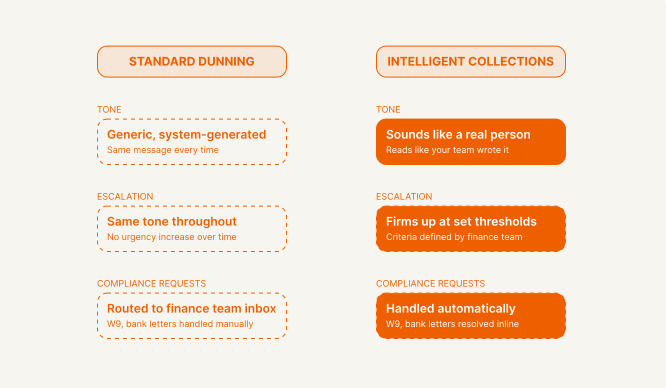
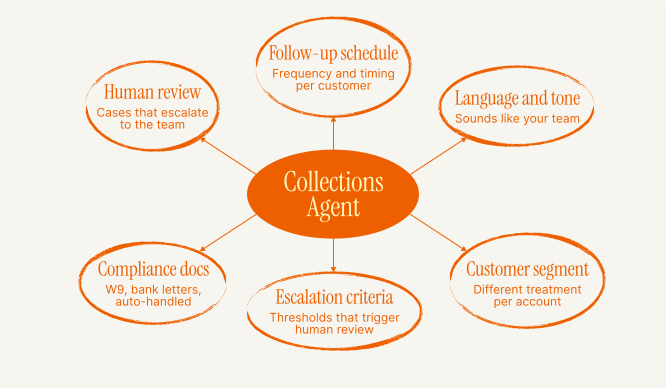
A customer who has paid on time for two years shouldn't get the same follow-up schedule as one who is late every quarter. Once an account crosses an aging threshold it should move to a firmer escalation, not another copy of the last reminder. Finance should be able to set those rules per customer or segment and have the system apply them. Monk saves teams an average of ~26 hours a month, based on proprietary engineering data measured with its first 100 customers.
Up next: Post 8 covers cash application, the last stage of contract-to-cash. When matching is manual, a paid invoice can stay open for days until someone reconciles it by hand.
Part of a 10-post series on where B2B AR loses cash, stage by stage.