The hidden cash problem: Post 4 of 10
1.4 Many Overdue Invoices Aren't a Payment Problem
Short answer: Many overdue invoices are not a payment problem. The customer never received the invoice, it went to the wrong contact, or it is stuck in an AP portal or missing a PO. Find out why an invoice is late before sending another reminder.
When an invoice goes sixty days past due, the default is to treat it as a collections problem and send another reminder, then escalate. For a good share of what's on the aging report, that's the wrong move. It burns time and annoys customers, and the invoice is no closer to being paid.
Most AR tools miss a simple distinction. A customer who is slow to pay is a different problem from an invoice that never reached anyone able to approve it, and collections automation should handle the two differently.
The two types of late invoice
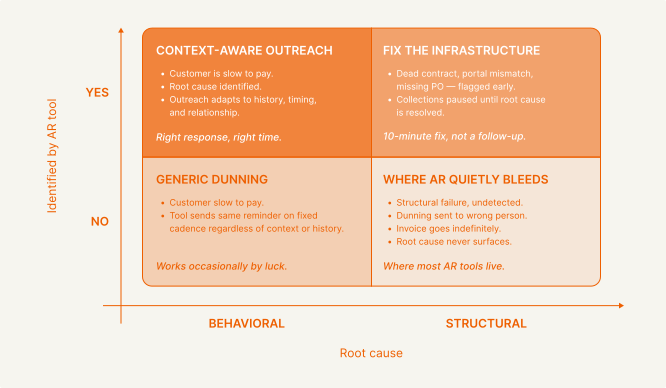
Good AR infrastructure works in the top half of the matrix. Most tools sit in the bottom half, sending generic reminders to customers who needed a portal setup or a PO number, or sending follow-ups to an address nobody reads because no one noticed the delivery failed.
So before any collections activity, someone should ask why the invoice is late. If the billing contact has left, the fix is finding the new one. A portal mismatch means resubmitting the invoice, which no escalation call will do. The customers who really are slow to pay are the ones who need outreach, and it should reflect their payment history rather than arrive on a fixed schedule.
Up next: Post 5 covers the late invoices the standard collections playbook has no answer for, like W9 requests and missing POs, which come back every quarter.
Part of a 10-post series on where B2B AR loses cash, stage by stage.